

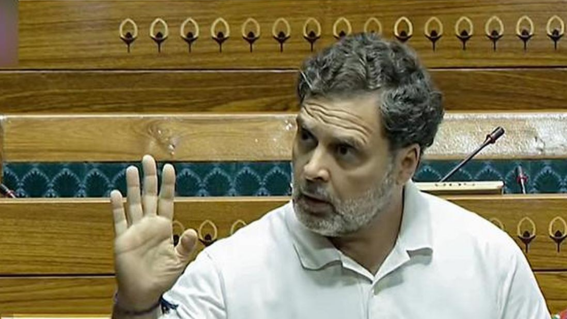
December 12, 2025 (Navroze Bureau) ; Senior Congress leader Rahul Gandhi has called for an urgent and comprehensive discussion on the escalating air pollution crisis in India in the Lok Sabha (Lower House of Parliament), highlighting its severe health, economic, and environmental impacts. In his address to the House, Gandhi emphasised that deteriorating air quality has become a national emergency affecting millions across states, particularly in the north, and demanded accountability and strategic action from the government.
Speaking passionately during a zero-hour intervention, Gandhi urged the Speaker and members across party lines to bring the issue to the forefront of parliamentary discourse. He noted that air pollution is not a regional problem confined to select states but a nationwide public health challenge that requires coordinated action at both central and state levels.
Pollution: A Growing Public Health Crisis
Air pollution has been a persistent concern in India, especially during winter months when stagnant cold air and agricultural stubble burning in neighboring regions contribute to a dangerous rise in particulate matter. According to environmental experts, harmful pollutants such as PM2.5 and PM10 have reached levels that exceed national safety standards in many urban centres, resulting in respiratory and cardiovascular ailments, especially among children, the elderly, and vulnerable populations.
Gandhi drew attention to the health burden of poor air quality, citing increases in asthma, chronic bronchitis, and reduced lung function. He argued that the government must recognise the crisis not only as an environmental issue but also as a public health emergency that could have long-term socioeconomic consequences.
Demands for Parliamentary Discussion
In calling for a discussion in the Lok Sabha, Rahul Gandhi laid out several key areas that he believes urgently need debate, including:
- Comprehensive evaluation of current pollution control policies
- Assessment of air quality data from urban and rural regions
- Strategies to curb vehicular emissions and industrial pollutants
- Measures to address agricultural burning contributing to smog
- Accountability mechanisms for environmental regulation
Gandhi emphasised that any meaningful solution must involve cross-party cooperation and incorporate views from scientists, health professionals, urban planners, and affected communities.
“Air pollution affects every household,” Gandhi remarked. “It is not a political issue but a human issue. Our people are breathing toxic air, and Parliament must discuss this with the seriousness it deserves.”
Regional Impact: Northern India in the Spotlight
While air quality concerns persist nationwide, northern states such as Punjab, Haryana, Uttar Pradesh, and Delhi NCR face acute deterioration, especially in late autumn and winter. Factors including crop residue burning, cold climatic conditions, and high vehicular traffic compound the problem, frequently resulting in hazardous air quality indices (AQIs).
Gandhi pointed out that children miss school due to smog, outdoor activities are restricted, and patients with respiratory conditions flood hospitals each year as pollution worsens. He called for immediate steps to protect public health, including real-time air monitoring, pollution alerts, and community awareness initiatives.
Government Response and Policy Measures
In response to mounting pollution concerns over the years, the central and state governments have introduced a range of policy measures. These include monitoring networks, emission standards for vehicles and industries, and initiatives to promote cleaner fuels and renewable energy sources. Governments have also periodically implemented emergency measures such as odd-even vehicle schemes, restrictions on heavy diesel vehicles, and bans on construction activity during severe smog events in key areas.
However, Gandhi argued that piecemeal approaches are insufficient. He stressed the need for a long-term national strategy that tackles root causes and integrates scientific research with enforceable action plans.
He also urged that the parliamentary discussion should examine the effectiveness of existing programmes, identify failures, and propose holistic solutions that align with health, economic, and sustainability goals.
Political Dynamics and Cross-Party Cooperation
The issue of air pollution has seen broad concern across political parties, with several leaders acknowledging its impact on public health and demanding stronger governance. Gandhi’s call for a Lok Sabha discussion reflects the urgency expressed by citizens, environmental groups, and medical professionals calling for decisive action.
Cross-party cooperation, Gandhi asserted, is essential to navigating the complex layers of this crisis. He highlighted that effective policy must go beyond short-term measures and encourage long-term investment in clean energy, sustainable agriculture practices, efficient public transport, and urban development planning.
Public Reaction and Civil Society Voices
Civil society organisations and environmental activists have welcomed Gandhi’s demand for a parliamentary debate. Many grassroots groups working in pollution-affected regions echoed his sentiments, calling for national-level attention and robust policy responses tailored to local realities.
Parents, students, and health professionals have also raised concerns about the impact of polluted air on quality of life, urging elected representatives to prioritise the issue. “This isn’t just about numbers or indices,” said one public health worker. “Pollution is affecting our children’s lungs, our elders’ health, and our country’s future.”
The Road Ahead
As Parliament prepares for further sessions, all eyes remain on how the government will respond to Rahul Gandhi’s call for a focused debate on air pollution. Lawmakers from various states and parties may put forth motions, question government commitments, and seek clarity on timelines for action.
A comprehensive parliamentary discussion could set the tone for stronger legislative and administrative steps to curb pollution, protect health, and ensure cleaner air for future generations.
Gandhi’s intervention is likely to renew focus on environmental challenges at a time when climate change, urbanisation, and industrial growth increasingly intersect with public health imperatives.
Summary
Rahul Gandhi has urged the Lok Sabha to hold a discussion on India’s worsening air pollution crisis, emphasising its public health impacts and calling for cross-party cooperation and long-term solutions.