

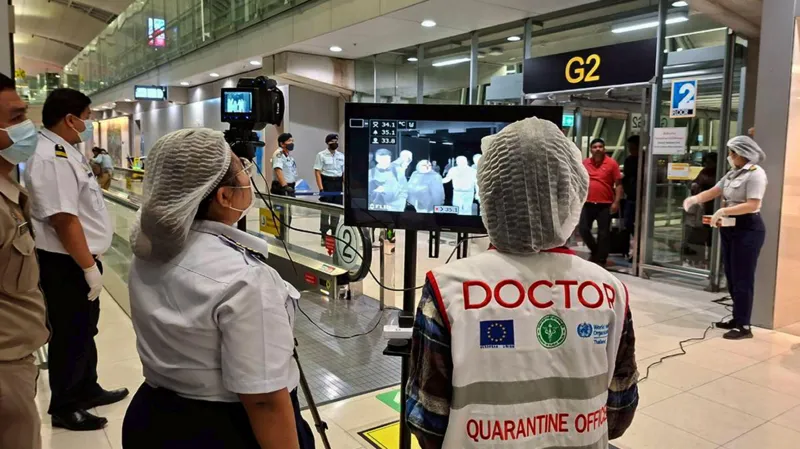
January 27, 2026 (Navroze Bureau) : A fresh Nipah virus outbreak in India has prompted several Asian countries to introduce enhanced health screenings at airports, as authorities move quickly to prevent the possible cross-border spread of the deadly virus. The development has reignited public health concerns across the region, with governments activating surveillance systems and urging vigilance among travellers and healthcare providers.
The outbreak, reported in parts of India, has led health agencies across Asia to increase monitoring of passengers arriving from affected areas. Thermal screening, health declarations, and symptom-based checks have been reintroduced at select international airports, reflecting the seriousness with which authorities are treating the situation.
What is the Nipah Virus?
Nipah virus (NiV) is a zoonotic disease, meaning it spreads from animals to humans. It was first identified in 1999 during an outbreak in Malaysia and has since caused periodic outbreaks in South and Southeast Asia, including India and Bangladesh. Fruit bats are considered the natural hosts of the virus, with transmission to humans occurring through contaminated food, direct contact with infected animals, or human-to-human spread.
Nipah infection can cause severe respiratory illness and fatal encephalitis (brain inflammation). Symptoms often include fever, headache, cough, breathing difficulties, and confusion, which can progress rapidly to coma in serious cases. Fatality rates in past outbreaks have ranged between 40% and 75%, making it one of the most dangerous infectious diseases monitored by global health authorities.
Asia Steps Up Precautions
In response to the outbreak, several Asian countries have strengthened preventive measures at airports and border entry points. Health desks have been activated, medical teams deployed, and advisories issued to airline staff and immigration officials to identify passengers displaying symptoms.
Some airports have reintroduced measures reminiscent of pandemic-era protocols, including temperature checks and visual assessments of travellers arriving from high-risk regions. Passengers are also being advised to report symptoms promptly and seek medical help if they experience illness after travel.
Public health experts say these proactive measures are critical because early detection is key to containing any potential spread. Even though Nipah is not as easily transmissible as some respiratory viruses, its high fatality rate makes prevention a top priority.
India’s Response to the Outbreak
Within India, health authorities have intensified containment efforts in affected regions. Contact tracing, isolation of suspected cases, and monitoring of high-risk individuals are being carried out. Hospitals have been instructed to maintain strict infection control protocols, and specialised medical teams have been deployed to manage cases.
State governments have also launched awareness campaigns, educating the public about symptoms, preventive measures, and the importance of avoiding panic. People have been advised to avoid consuming fruits that may have been partially eaten by bats, maintain hygiene, and report symptoms without delay.
Medical experts have emphasised that while outbreaks are concerning, India has developed stronger surveillance and response mechanisms in recent years, allowing faster containment than in the past.
Lessons from Previous Nipah Outbreaks
India has experienced Nipah outbreaks before, most notably in Kerala. These incidents highlighted both the dangers posed by the virus and the importance of coordinated public health responses. Through rapid testing, aggressive contact tracing, and community cooperation, authorities were able to control previous outbreaks effectively.
These experiences have strengthened India’s preparedness, with improved laboratory networks, trained healthcare workers, and established protocols for handling high-risk infectious diseases. Other Asian countries are now applying similar lessons by acting early rather than waiting for cases to appear within their borders.
Impact on Travel and Public Sentiment
The introduction of airport screenings has led to a noticeable rise in caution among travellers. While no widespread travel bans have been announced, some passengers have reported delays and additional checks during immigration procedures.
Airlines have begun issuing advisories to passengers travelling to and from India, encouraging them to monitor their health and follow guidelines issued by authorities. Travel industry experts believe that while the measures may cause temporary inconvenience, they are unlikely to cause large-scale disruption unless the outbreak significantly worsens.
Public health officials have urged the public to remain calm, stressing that precautionary measures are designed to ensure safety rather than signal imminent danger.
Global Health Community Watches Closely
The Nipah virus is classified as a priority pathogen by international health agencies due to its high mortality rate and lack of widely available vaccines or specific treatments. The current outbreak in India has therefore attracted attention from the global medical community.
Researchers worldwide continue to work on vaccine development and antiviral therapies. Several experimental vaccines are in various stages of research, though none are yet widely available for public use. Until then, prevention, surveillance, and rapid response remain the most effective tools against the virus.
The Importance of Regional Cooperation
Health experts say the current situation highlights the need for strong regional cooperation in managing infectious disease threats. Information sharing, coordinated surveillance, and joint preparedness strategies can significantly reduce the risk of cross-border spread.
Asia, with its high population density and frequent cross-border travel, remains particularly vulnerable to emerging infectious diseases. The swift reaction to the Nipah outbreak suggests that governments are increasingly applying lessons learned from past global health crises.
Conclusion
The Nipah virus outbreak in India has served as a reminder of the constant threat posed by emerging infectious diseases. With Asian countries introducing airport screenings and tightening surveillance, the focus remains firmly on prevention, early detection, and containment.
While authorities continue to monitor the situation closely, health experts emphasize that informed public behaviour, strong healthcare systems, and international cooperation will be crucial in preventing the outbreak from escalating into a broader regional crisis.
Summary
A Nipah virus outbreak in India has prompted several Asian countries to introduce airport health screenings, strengthening surveillance and preventive measures to reduce cross-border transmission risks and ensure early detection of potential cases.