

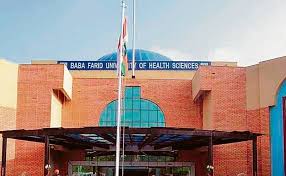
January 30, 2026 (Navroze Bureau) : In a major administrative move aimed at strengthening medical education and healthcare delivery, the Punjab government has transferred four key health facilities to Baba Farid University of Health Sciences (BFUHS). The decision is expected to enhance academic integration, improve clinical training, and streamline the functioning of health institutions across the state.
According to official sources, the transfer involves prominent government-run health facilities that will now function under the administrative and academic control of BFUHS, Faridkot. The move aligns with the state government’s broader objective of improving the quality of medical education while ensuring better patient care through structured governance.
Facilities Transferred to BFUHS
The four health facilities handed over include major hospitals and allied medical institutions that play a crucial role in providing tertiary and secondary healthcare services. While these institutions were earlier under the direct control of the state health department, their transfer to BFUHS is expected to bring uniformity in academic standards, research practices, and hospital administration.
Officials said that these facilities are closely linked with medical teaching and training, making their integration with the university a logical step. With BFUHS already overseeing multiple medical, dental, nursing, and paramedical colleges, the addition of these health facilities will further strengthen its academic ecosystem.
Rationale Behind the Decision
The Punjab government’s decision is rooted in the need to bridge gaps between medical education and clinical practice. By placing hospitals and health facilities under a medical university, the government aims to ensure that teaching, research, and patient care function in close coordination.
“Medical education is most effective when students receive hands-on training in well-managed clinical settings,” said a senior health department official. “Transferring these facilities to BFUHS will help align hospital services with academic requirements and improve overall outcomes.”
The move is also expected to reduce administrative overlap and improve accountability by placing both education and clinical training under a single authority.
Impact on Medical Education
BFUHS plays a central role in regulating medical education in Punjab, including curriculum design, examinations, and academic standards. With the transfer of these health facilities, undergraduate and postgraduate students are likely to benefit from improved access to clinical exposure, modernized teaching infrastructure, and research opportunities.
Medical faculty members believe the move will encourage better coordination between teaching staff and hospital administrators. “When hospitals and colleges operate under one umbrella, it becomes easier to implement academic reforms, introduce new courses, and promote research,” a senior professor said.
The integration is also expected to help BFUHS meet regulatory requirements set by national bodies for medical education and accreditation.
Benefits for Healthcare Services
Beyond academics, the government has emphasized that patient care will remain a priority. Officials said the transfer will not disrupt existing healthcare services and that all facilities will continue to function as public hospitals serving the general population.
In fact, authorities believe that university oversight could lead to improved healthcare delivery. Teaching hospitals often benefit from better staffing, updated protocols, and continuous academic input, which can enhance the quality of diagnosis and treatment.
The government has assured that services will remain affordable and accessible, and that no existing welfare schemes or patient benefits will be affected by the administrative change.
Administrative and Financial Aspects
As part of the transfer, BFUHS will take charge of administrative operations, including staffing, academic coordination, and institutional management. Financial responsibilities, including budgeting and resource allocation, are expected to be managed through a structured framework involving both the university and the state government.
Sources indicated that employees working at the transferred facilities will continue in their existing roles, with service conditions protected. Any future changes, officials said, will be implemented in consultation with stakeholders to ensure a smooth transition.
Political and Expert Reactions
The decision has drawn mixed reactions. Supporters of the move have described it as a long-overdue reform that brings Punjab in line with best practices followed in other states, where medical universities manage teaching hospitals directly.
Health policy experts have largely welcomed the decision, saying it could lead to better governance and accountability. “Medical universities are better equipped to manage teaching hospitals because their primary focus is training and research alongside patient care,” said a public health expert.
However, some opposition leaders and employee unions have sought clarity on implementation timelines and administrative autonomy. They have urged the government to ensure transparency and address any concerns of staff working at the affected facilities.
Strengthening BFUHS’s Role
Founded in 1998, Baba Farid University of Health Sciences has steadily expanded its footprint in Punjab’s healthcare and education sectors. The transfer of these four key health facilities is seen as a significant step in reinforcing its role as the central hub for health sciences education in the state.
University officials have expressed readiness to take on the additional responsibility. They stated that plans are underway to improve infrastructure, promote research, and enhance student training through the newly integrated facilities.
The Road Ahead
The Punjab government has indicated that the transition process will be carried out in phases to avoid disruption. Committees are expected to be formed to oversee the handover, address operational challenges, and monitor performance.
In the long term, the move is expected to contribute to better-trained medical professionals, improved patient care, and a stronger public healthcare system in Punjab. If implemented effectively, the transfer could serve as a model for integrating education and healthcare administration in other states as well.
As Punjab continues to grapple with healthcare challenges, the government’s decision to place key health facilities under BFUHS reflects a strategic attempt to strengthen institutional capacity and improve outcomes for both students and patients.
Summary:
The Punjab government has transferred four major health facilities to Baba Farid University of Health Sciences to strengthen medical education, streamline administration, and improve clinical training and healthcare delivery across the state.