

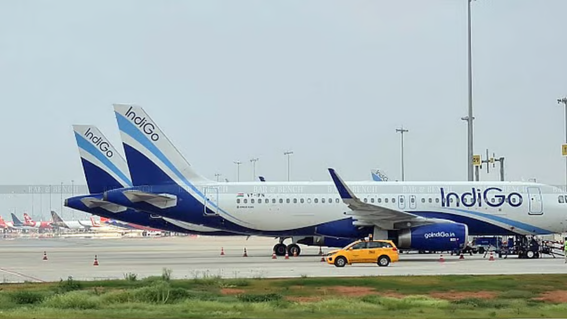
5 February 2026 (Navroze Bureau) : The Competition Commission of India (CCI) has ordered a detailed investigation into IndiGo, the country’s largest airline, over allegations of unfair practices related to large-scale flight cancellations and a sharp surge in airfares. The move comes amid growing complaints from passengers and consumer groups who have accused the airline of exploiting high demand periods and operational disruptions to increase ticket prices disproportionately.
According to sources familiar with the matter, the CCI has directed its Director General to conduct a prima facie probe to examine whether IndiGo violated competition norms by abusing its dominant market position. The investigation will focus on whether the airline engaged in price manipulation, unfair cancellation practices, or actions that restricted consumer choice, especially during peak travel seasons and periods of reduced capacity.
IndiGo, which commands a significant share of India’s domestic aviation market, has often defended its pricing strategy by citing market-driven dynamics such as fuel costs, demand-supply imbalance, and operational challenges. However, the competition watchdog has taken note of repeated passenger grievances alleging abrupt cancellations, limited alternatives, and steep fare hikes on remaining flights.
The issue gained prominence after multiple instances where flights were cancelled at short notice, forcing passengers to rebook tickets at much higher prices. In several cases, travellers reported that alternative flights operated by the same airline were available only at significantly inflated fares, raising concerns about potential exploitation of market dominance.
The CCI’s order comes at a time when India’s aviation sector is undergoing rapid expansion but also facing operational stress due to aircraft groundings, supply chain issues, and increased passenger traffic. While airlines argue that dynamic pricing is a standard global practice, regulators are increasingly scrutinising whether such practices cross the line into anti-competitive behaviour.
In its preliminary observations, the CCI noted that IndiGo’s market share and extensive route network could give it the ability to influence prices and capacity decisions in a manner that disadvantages consumers. The probe will examine whether fare increases were justified by cost factors or whether they amounted to excessive pricing during periods of constrained competition.
The investigation will also look into the airline’s cancellation policies, including refund timelines, compensation mechanisms, and communication with passengers. Consumer rights groups have alleged that cancellations often occurred without adequate notice or transparency, leaving passengers with limited recourse.
IndiGo has stated in the past that cancellations are sometimes unavoidable due to operational constraints such as aircraft availability, weather conditions, or air traffic control issues. The airline has also maintained that its fares are determined by automated systems based on demand and availability, not arbitrary decisions.
Industry experts say the CCI’s probe could have far-reaching implications for the aviation sector. If the watchdog finds evidence of abuse of dominance, it could lead to penalties, directives to change business practices, or stricter oversight of airline pricing and cancellation policies.
The move has been welcomed by consumer advocacy groups, who argue that air travel has become increasingly unaffordable for many Indians during peak seasons. They have long demanded stronger regulatory intervention to ensure transparency and fairness in airline pricing.
At the same time, some aviation analysts caution against over-regulation, noting that airlines operate on thin margins and face volatile costs. They argue that price controls or excessive scrutiny could discourage investment and capacity expansion in a sector critical to India’s economic growth.
The government has so far maintained that airfares are deregulated and determined by market forces, though it has occasionally stepped in to cap prices during extraordinary circumstances. The CCI’s involvement adds a new dimension by focusing not on price levels alone, but on competition and market conduct.
For IndiGo, the probe represents a significant regulatory challenge. As the dominant player, the airline has often been under the scanner for its market influence. The outcome of the investigation could set a precedent for how dominance is assessed and regulated in India’s aviation market.
The Director General is expected to submit its findings to the CCI after completing the investigation, following which the commission will decide on further action. IndiGo will have the opportunity to present its defence and respond to the allegations during the process.
As air travel demand continues to rise, the case underscores the growing tension between market-driven pricing and consumer protection. The CCI’s probe signals that regulators are willing to intervene when competition concerns intersect with widespread public interest.
Summary:
The Competition Commission of India has ordered a probe into IndiGo over alleged unfair flight cancellations and steep fare hikes, examining whether the airline abused its dominant position in the domestic aviation market.