

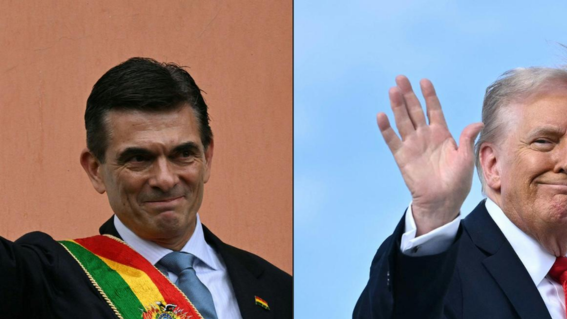
6 February 2026 (Navroze Bureau) : The United States and Bolivia have agreed to appoint ambassadors to each other’s countries, marking a major step toward restoring full diplomatic relations after an 18-year hiatus. The decision signals a thaw in ties that have remained strained since 2008, when both nations expelled each other’s ambassadors amid political and ideological disagreements.
The move comes after months of behind-the-scenes diplomatic engagement and reflects a broader effort by both sides to reset relations based on mutual respect and pragmatic cooperation. Officials from both countries confirmed that the process to name ambassadors will begin soon, though exact timelines have not yet been disclosed.
Diplomatic relations between Washington and La Paz deteriorated sharply in 2008 during the presidency of Evo Morales. At the time, Bolivia accused the U.S. ambassador of interfering in its internal affairs and supporting opposition movements, allegations that Washington strongly denied. The expulsions led to a prolonged period of limited engagement, with both countries maintaining only chargé d’affaires-level representation.
Despite the absence of ambassadors, the U.S. and Bolivia have continued to cooperate on select issues, including trade, health, and regional security, though often with significant political friction. The decision to restore ambassadorial ties is widely seen as an acknowledgment that sustained diplomatic dialogue is necessary in an increasingly complex geopolitical environment.
Bolivian officials described the agreement as a step toward “normalising relations” while safeguarding national sovereignty. They emphasised that Bolivia seeks a relationship based on equality and non-interference, principles that have long shaped its foreign policy stance. The government also highlighted potential benefits in areas such as trade, climate cooperation, and development assistance.
From the U.S. perspective, restoring ambassadors is viewed as an opportunity to strengthen engagement in Latin America at a time when global competition for influence in the region is intensifying. U.S. officials have repeatedly stated the importance of maintaining constructive relations with countries across the hemisphere, regardless of ideological differences.
Analysts note that the decision reflects a broader shift in diplomatic strategy, prioritising dialogue over isolation. With challenges such as climate change, migration, drug trafficking, and economic instability affecting the region, sustained communication channels are seen as essential.
The restoration of ambassadorial ties could also have economic implications. While trade between the two countries has continued, relations have not reached their full potential. Business groups in Bolivia have expressed hope that improved diplomatic ties could lead to increased investment, better market access, and renewed cooperation in sectors such as energy and mining.
Bolivia, which holds some of the world’s largest lithium reserves, is a particularly strategic partner in the context of the global energy transition. Stronger diplomatic engagement could open avenues for cooperation in critical minerals, though Bolivian authorities have stressed that any such partnerships must align with national development priorities.
Human rights and democracy have historically been points of contention in U.S.-Bolivia relations. Observers suggest that the return of ambassadors could facilitate more direct and constructive discussions on these sensitive topics, reducing the risk of misunderstandings and public diplomatic spats.
Regional experts also point out that Bolivia’s political landscape has evolved significantly since 2008. Changes in leadership, domestic priorities, and regional dynamics have created space for recalibrating foreign policy relationships, including with the United States.
The announcement has drawn mixed reactions within Bolivia. Supporters argue that engagement with Washington is pragmatic and necessary for economic and diplomatic reasons. Critics, however, caution against undue influence and stress the importance of maintaining an independent foreign policy aligned with regional partners.
In the United States, the move has been welcomed as a positive development for hemispheric diplomacy. Lawmakers and foreign policy experts have said that maintaining open channels of communication is preferable to prolonged diplomatic freezes, especially in a region where geopolitical competition is growing.
The process of appointing ambassadors will require careful negotiation and vetting on both sides. Once appointed, the ambassadors are expected to play a key role in rebuilding trust, expanding cooperation, and managing differences through diplomatic channels rather than public confrontation.
As the U.S. and Bolivia prepare to restore full diplomatic representation, the development is being viewed as a significant milestone after nearly two decades of strained relations. While challenges remain, the decision underscores a shared recognition that engagement and dialogue are essential for addressing common interests and regional stability.
Summary
The U.S. and Bolivia have agreed to appoint ambassadors after an 18-year break, signalling a thaw in relations and a renewed commitment to dialogue, cooperation, and pragmatic diplomatic engagement.