

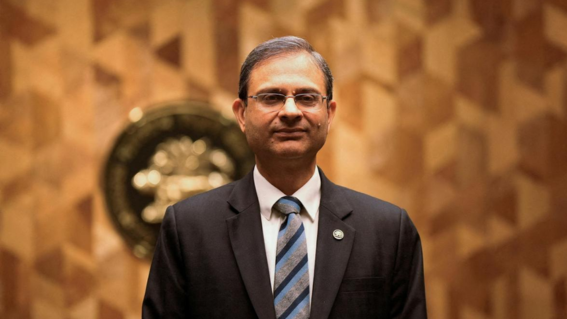
6 February 2026 (Navroze Bureau) : The Reserve Bank of India’s Monetary Policy Committee (MPC) on Wednesday decided to keep the benchmark repo rate unchanged at 5.25%, opting for continuity amid global uncertainty and mixed domestic signals. The decision came at a time when the Indian rupee slipped to an all-time low of 92 against the U.S. dollar, underscoring mounting pressure on the currency from global and domestic factors.
The MPC’s decision to maintain status quo was widely expected by economists and market participants, given easing inflation trends but persistent external risks. The central bank reiterated its commitment to maintaining price stability while supporting growth, stating that monetary policy must remain cautious and data-dependent.
Inflation in India has shown signs of moderation in recent months, helped by softer food prices and stable core inflation. However, policymakers remain wary of potential upside risks stemming from volatile global commodity prices, geopolitical tensions, and weather-related disruptions that could affect food supplies. The RBI emphasised that while inflation is currently within the target band, it is too early to declare victory.
At the same time, economic growth has shown resilience, supported by strong government spending, steady consumption demand, and improving private investment. The central bank retained its growth outlook, noting that domestic demand continues to be the main driver of economic momentum. However, officials acknowledged that global growth headwinds and tighter financial conditions abroad could pose challenges.
While the rate decision provided policy continuity, the spotlight remained firmly on the rupee, which breached the psychologically significant 92-per-dollar mark during intra-day trade. This marked the weakest level ever for the Indian currency and raised concerns among importers, investors, and policymakers.
The rupee’s sharp depreciation has been driven by a combination of factors, including sustained strength in the U.S. dollar, higher U.S. bond yields, and risk aversion among global investors. Expectations that U.S. interest rates will remain higher for longer have led to capital outflows from emerging markets, putting pressure on their currencies, including the rupee.
Additionally, India’s widening trade deficit, driven by higher crude oil imports and strong domestic demand for foreign goods, has added to the strain. Rising oil prices tend to weigh heavily on the rupee, as India is a major importer of crude, increasing the demand for dollars.
Market participants also pointed to speculative pressures and importer hedging activity, which intensified as the rupee approached record lows. Some analysts noted that while the depreciation has been gradual rather than abrupt, the breach of 92 could trigger further volatility in the near term.
The RBI, however, signalled that it is closely monitoring currency movements and stands ready to intervene if volatility becomes excessive. Historically, the central bank has used its foreign exchange reserves to smooth sharp fluctuations rather than defend any specific exchange rate level. India’s forex reserves remain substantial, providing a buffer against external shocks.
From a policy perspective, the weaker rupee presents both challenges and opportunities. On the downside, currency depreciation can fuel imported inflation by making goods such as fuel, edible oils, and electronics more expensive. This could complicate the RBI’s inflation management efforts if global prices rise simultaneously.
On the positive side, a weaker rupee can improve export competitiveness, benefiting sectors such as IT services, pharmaceuticals, textiles, and engineering goods. Exporters typically gain from higher rupee realisations, which can support corporate earnings and employment.
Financial markets reacted cautiously to the MPC decision. Equity indices remained range-bound, reflecting mixed sentiments over stable interest rates and currency weakness. Bond yields were largely steady, as investors had largely priced in the pause. Currency markets, however, remained volatile, with traders closely watching global cues and potential RBI action.
Economists remain divided on the outlook for the rupee. Some believe that further depreciation cannot be ruled out if global financial conditions tighten further or if crude oil prices spike. Others argue that India’s strong macroeconomic fundamentals, including steady growth and manageable inflation, will help limit downside risks over the medium term.
Looking ahead, the RBI is expected to continue walking a fine line between supporting growth and ensuring price and financial stability. The central bank has made it clear that future policy moves will depend on evolving data, particularly inflation trends, global monetary policy developments, and currency movements.
As global uncertainty persists, the combination of a steady policy rate and proactive liquidity and forex management is likely to remain the RBI’s preferred approach. For now, the unchanged repo rate provides stability, even as the rupee’s record low highlights the challenges posed by an increasingly complex global economic environment.
Summary
The RBI MPC kept the repo rate unchanged at 5.25% amid easing inflation, while the rupee hit a record low of 92 per dollar due to global pressures and a strong U.S. currency.