

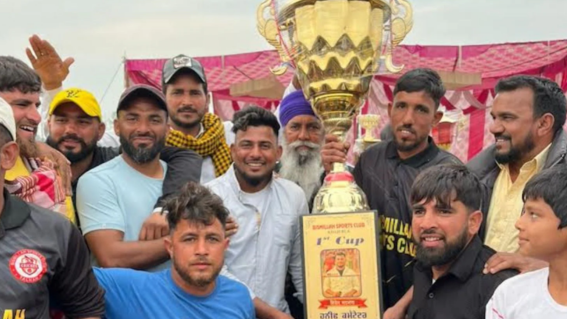
12 February 2026 (Navroze Bureau) : In the heart of rural Punjab, where lush green fields stretch endlessly and farming remains a way of life, an unusual but powerful movement is gaining momentum. Punjab’s first-ever all-Gujjar cricket tournament is not just about runs, wickets, and trophies—it is about reclaiming young lives from the shadow of drug abuse that has plagued the state for years.
Organised by community elders, local sports enthusiasts, and former players, the tournament brings together Gujjar youth from villages across Punjab. Most participants are farmers or children of farming families who spend their mornings tending fields and evenings practising cricket on makeshift pitches. For many, the tournament represents hope, purpose, and a much-needed alternative to substance abuse.
Punjab has long battled a reputation for high rates of drug addiction, particularly among rural youth. Easy access to narcotics, unemployment, and social pressure have pushed many young people toward addiction. Community leaders say the Gujjar belt has not been immune to this crisis. The cricket tournament, they believe, is a way to intervene early and redirect energy toward something positive.
“This is not just a sports event—it’s a social mission,” said one of the organisers. “We want our youth to choose the bat and ball over drugs. Cricket teaches discipline, teamwork, and self-respect.”
What makes the tournament unique is its all-Gujjar identity. Teams are exclusively made up of Gujjar players, reinforcing cultural pride and unity. Elders say this sense of belonging plays a crucial role in keeping young people engaged and motivated. By celebrating their identity through sport, the organisers aim to strengthen community bonds that have weakened under modern pressures.
Matches are held on village grounds, often converted from farmland after the harvest season. Spectators include entire families—children, parents, and grandparents—creating an atmosphere more like a festival than a sporting contest. Loud cheers, traditional food stalls, and folk music add to the energy, turning each match into a celebration of rural life.
Several participants shared personal stories of how cricket helped them stay away from drugs. One young player said many of his friends had fallen into addiction, but regular practice sessions and the dream of representing his village kept him focused. “When you are training every day, you can’t afford bad habits,” he said. “You feel responsible to your team.”
Former amateur cricketers and physical education teachers volunteer as coaches, offering guidance not only in cricketing skills but also in life choices. Sessions often begin with discussions about fitness, mental strength, and the dangers of substance abuse. Organisers believe these conversations are as important as the matches themselves.
Local police and social workers have welcomed the initiative, calling it a grassroots solution to a complex problem. Officials say enforcement alone cannot solve Punjab’s drug crisis and that community-led prevention efforts are essential. Some have even suggested replicating the model in other regions and communities.
Parents, too, see the tournament as a lifeline. Many worry about their children falling prey to addiction, especially during periods of unemployment or academic pressure. “Earlier, boys would waste time or fall into bad company,” said a parent watching a match. “Now they wake up early for practice. There is discipline in their lives.”
The organisers have deliberately kept the tournament simple and accessible. Entry fees are minimal, sponsorships are local, and prizes focus more on recognition than money. Winners receive trophies, sports kits, and certificates, reinforcing the idea that achievement and respect—not quick money—are the real rewards.
Beyond fighting drug abuse, the tournament has sparked interest in fitness and sports careers. Some players now dream of district-level competitions or professional cricket, while others say the experience has taught them leadership and confidence that will help in other professions.
Social media has amplified the tournament’s impact, with match highlights and success stories shared widely. This visibility has helped challenge stereotypes about rural youth and showcased how traditional communities can lead modern solutions.
As the final matches approach, the organisers are already planning future editions and considering expanding to include coaching camps and inter-community friendly matches. Their goal is long-term engagement, not a one-time event.
From farms to the cricket pitch, Punjab’s first all-Gujjar tournament is proving that sport can be a powerful tool for social change. In a state searching for answers to the drug menace, this community-driven initiative offers a hopeful reminder that sometimes, the strongest solutions begin at the grassroots.
Summary
Punjab’s first all-Gujjar cricket tournament is using sport, discipline, and community pride to steer rural youth away from drugs, offering hope and purpose through grassroots participation and cultural unity.