

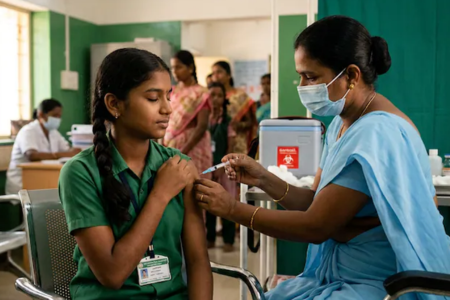
26 March 2026 (Navroze Bureau) : In a significant public health initiative, the government of Madhya Pradesh has successfully vaccinated over 2 lakh adolescent girls as part of a large-scale campaign aimed at preventing infections caused by Human Papillomavirus. The drive marks a major step forward in protecting young girls from future health risks, particularly cervical cancer.
A Major Public Health Milestone
The vaccination campaign is being hailed as a milestone in preventive healthcare. By targeting adolescent girls—typically between the ages of 9 and 14—the programme aims to provide early protection against HPV, a virus known to cause several types of cancers.
Health officials have emphasized that early vaccination is crucial, as it is most effective before individuals are exposed to the virus.
Focus on Cervical Cancer Prevention
Human Papillomavirus is the leading cause of cervical cancer, one of the most common cancers among women in India. By expanding vaccination coverage, authorities aim to significantly reduce the incidence of this disease in the long term.
Medical experts note that widespread HPV vaccination can prevent a large percentage of cervical cancer cases, making it one of the most effective preventive measures available.
Implementation Strategy
The campaign in Madhya Pradesh has been carried out through schools, community health centres, and outreach programmes. Health workers, including ASHA and Anganwadi staff, played a key role in identifying eligible beneficiaries and ensuring smooth implementation.
Special awareness drives were also conducted to educate parents and communities about the benefits and safety of the vaccine.
Addressing Vaccine Hesitancy
One of the challenges faced during the campaign was vaccine hesitancy among certain sections of the population. To address this, authorities focused on awareness programmes, counseling sessions, and engagement with local leaders.
By providing accurate information and addressing misconceptions, the campaign was able to achieve significant coverage.
Role of Healthcare Workers
Frontline healthcare workers were instrumental in the success of the initiative. Their efforts in mobilizing communities, administering vaccines, and maintaining records ensured that the campaign reached a large number of beneficiaries.
Officials have acknowledged their contribution as a key factor in achieving the milestone.
Expansion Plans
Encouraged by the success of the drive, the state government is considering expanding the programme to cover more districts and increase the number of beneficiaries.
There are also discussions about integrating HPV vaccination into routine immunization programmes to ensure sustained coverage.
National Perspective
India has been gradually scaling up HPV vaccination efforts, recognizing its importance in cancer prevention. Initiatives like the one in Madhya Pradesh serve as models for other states to follow.
Public health experts believe that nationwide adoption of such programmes could significantly reduce the burden of cervical cancer.
Long-Term Impact
The benefits of the vaccination drive will be seen over the coming years, as vaccinated individuals are less likely to develop HPV-related diseases.
This not only improves individual health outcomes but also reduces the overall burden on the healthcare system.
Public Response
The campaign has received a positive response from communities, with many parents welcoming the initiative as a step toward safeguarding their children’s health.
Awareness about HPV and its risks has also increased, contributing to better health-seeking behavior.
Conclusion
The successful vaccination of over 2 lakh adolescent girls in Madhya Pradesh highlights the importance of preventive healthcare and community engagement. As efforts continue to expand, the initiative stands as a significant step toward reducing HPV-related diseases and improving public health outcomes.
Summary
Madhya Pradesh vaccinated over 2 lakh girls against HPV, aiming to prevent cervical cancer. The campaign highlights the importance of early vaccination, awareness, and expanding preventive healthcare initiatives across India.