

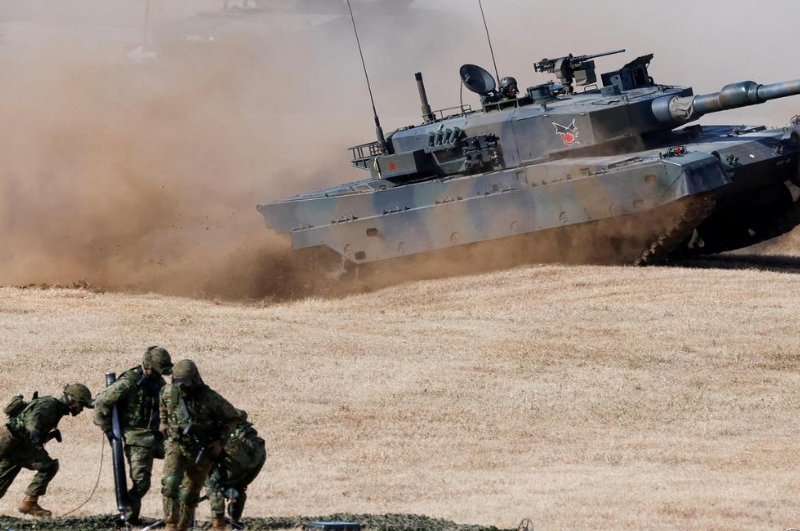
April 21, 2026: In a significant policy shift, Japan has approved the scrapping of long-standing restrictions on the export of lethal weapons, marking a major departure from its postwar pacifist stance. The move reflects changing security dynamics in the region and a broader reassessment of Japan’s defence and foreign policy priorities.
For decades, Japan maintained strict limitations on arms exports, rooted in its pacifist constitution adopted after World War II. The country’s defence policy emphasised self-defence and non-aggression, with minimal involvement in global arms trade. However, evolving geopolitical challenges have prompted a reconsideration of these principles.
The decision to allow the export of lethal weapons is seen as part of Japan’s efforts to strengthen its security partnerships and contribute more actively to international defence cooperation. Officials argue that the change will enable Japan to support allies and partners, particularly in regions facing security threats.
The policy shift also aligns with Japan’s broader strategy of enhancing its defence capabilities amid rising tensions in the Asia-Pacific region. Concerns over regional stability, including developments involving neighbouring countries, have played a role in shaping the new approach.
Under the revised framework, Japan will permit the export of certain categories of lethal weapons, subject to strict conditions and oversight. The government has emphasised that exports will be limited to countries that meet specific criteria, including adherence to international law and alignment with Japan’s security interests.
Supporters of the move argue that it will strengthen Japan’s defence industry by opening new markets and fostering technological innovation. Increased collaboration with international partners could also enhance the country’s capabilities in areas such as advanced weapon systems and defence technology.
Critics, however, have raised concerns about the implications of the policy change. Some argue that it could undermine Japan’s pacifist identity and increase the risk of involvement in global conflicts. There are also worries about the potential for weapons to be used in ways that conflict with Japan’s values.
Public opinion on the issue remains divided. While some view the shift as a necessary response to changing security realities, others are cautious about moving away from principles that have guided Japan’s postwar policy for decades.
The decision has also drawn international attention, with allies and observers closely monitoring its impact on regional and global security dynamics. Japan’s role in defence cooperation is expected to evolve as a result of the policy change.
Experts note that the move does not signal a complete abandonment of Japan’s pacifist principles but rather an adaptation to contemporary challenges. The government has reiterated its commitment to maintaining a defensive posture and ensuring that exports are conducted responsibly.
The policy change is part of a broader trend among countries reassessing their defence strategies in response to shifting geopolitical conditions. As global security challenges become more complex, nations are exploring new ways to balance security needs with ethical considerations.
In practical terms, the implementation of the new policy will require robust regulatory mechanisms to ensure transparency and accountability. Monitoring end-use and preventing misuse of exported weapons will be critical components of the framework.
The defence industry in Japan is expected to benefit from the new opportunities, with companies potentially expanding their presence in international markets. This could also lead to increased investment in research and development.
At the same time, the government will need to address concerns about the ethical and strategic implications of arms exports. Engaging with the public and maintaining transparency will be essential in building trust and ensuring support for the policy.
In conclusion, Japan’s decision to scrap its ban on lethal weapons exports marks a significant shift in its postwar pacifist policy. While the move reflects changing security realities and aims to strengthen international cooperation, it also raises important questions about the country’s future role in global defence dynamics.
Summary
Japan has eased its ban on lethal weapons exports, marking a shift from its pacifist policy, aiming to strengthen security ties while raising concerns over its evolving role in global defence.