

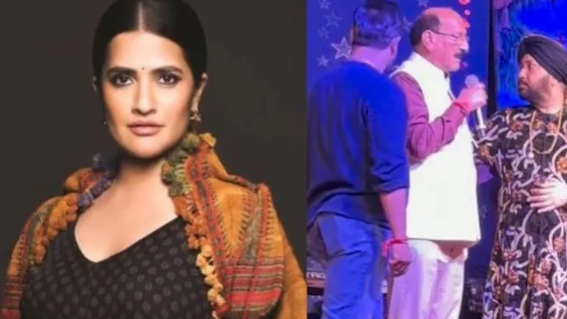
23 October 2026 (Navroze Bureau) Singer Sona Mahapatra has stood by her comments on professional accountability in the music industry amid the ongoing controversy surrounding veteran Punjabi singer Daler Mehndi’s performance at a cultural event in Uttarakhand. Her remarks have reignited a debate over artistic dignity, audience expectations and the responsibilities of performers who accept payment for live shows.
Sona has argued that respect for an established artist should not prevent people from raising questions about the quality of a performance. Her position comes after Daler was publicly reprimanded by Uttarakhand Cabinet Minister Subodh Uniyal during an event in New Tehri, an incident that triggered widespread reactions from the entertainment industry.
The controversy began when videos from the Siddhpeeth Maa Kunjapuri Tourism and Development Fair circulated on social media. In the footage, Uniyal can be seen interrupting Daler and questioning his ability to perform. The minister expressed dissatisfaction with the singer’s performance and said the audience had expected to be entertained by an artist with an established reputation.
Following the incident, several celebrities came out in support of Daler, criticising the decision to confront him publicly. Singers Mika Singh, Badshah, Alisha Chinai and Harshdeep Kaur, among others, expressed support for the veteran performer. Actor Anupam Kher also questioned whether the minister could have raised his concerns in a more respectful manner.
Amid the debate, Sona shared her own experience of watching Daler perform at the Sufi Heritage Festival at Sunder Nursery in New Delhi on March 1, 2026. She said she and her team had stayed in the city specifically to watch the singer, expecting a different, Sufi-oriented musical set.
However, Sona described the experience as disappointing. According to her account, Daler appeared disoriented and struggled to hold notes, while the performance repeatedly returned to the same musical phrase. She also said she noticed members of the audience gradually leaving the venue.
Sona expressed sympathy for the festival organisers, saying they had invested time, resources and their professional reputations in putting together the event. She acknowledged that she and her team had remained silent at the time out of respect for the singer, but later questioned whether that silence had helped anyone.
In her statement, Sona emphasised that two things could be true at the same time: a veteran artist deserved dignity and empathy for a lifetime of contribution, while audiences also deserved an honest performance or a clear explanation if the performer was unable to deliver one.
She further clarified that she did not know Daler’s personal circumstances or health and would not presume to diagnose what she had witnessed. She also maintained that publicly humiliating an artist was not an appropriate solution.
Sona’s central argument is that an artist’s age, legacy and reputation should not exempt them from professional accountability. She said respect should be reciprocal and should extend to the people who purchase tickets, attend performances and support the music industry.
The singer also questioned whether criticism of the way the Uttarakhand minister handled the situation should automatically invalidate the concerns raised about the performance itself. She treated the two questions separately, arguing that a performer’s dignity and the audience’s expectations both deserve consideration.
The controversy has also brought attention to allegations made after the Uttarakhand event. Uniyal later claimed that Daler had been lip-syncing rather than singing live and said the singer had been paid ₹35 lakh for the performance. Allegations also circulated online that Daler was under the influence of alcohol, but these claims have not been independently verified.
Daler’s supporters have challenged the public criticism and emphasised his contribution to Indian music over several decades. Mika Singh, in particular, defended his brother, while other members of the entertainment industry argued that concerns about a performance should be addressed privately rather than through public humiliation.
The debate has consequently moved beyond one concert to broader questions about how organisers, management teams and performers should respond when a live show does not meet expectations. It has also highlighted the difficulty of balancing compassion for an artist with transparency towards audiences who have paid to attend an event.
Sona’s comments have drawn attention because she is addressing the issue from the perspective of a fellow performer rather than as an outside observer. Her account also raises questions about the role of colleagues and organisers who may hesitate to speak up when a well-known artist is involved.
While some industry figures have focused on the treatment Daler received on stage, Sona has stressed that audience interests should not be overlooked. She has maintained that respect for an artist’s legacy and scrutiny of professional responsibilities are not mutually exclusive.
The disagreement continues to generate discussion across social media, with supporters on both sides debating the difference between legitimate criticism and public disrespect. The incident has also prompted renewed discussion about the standards expected at paid live performances.
For Sona, the issue is ultimately about mutual respect. She believes artists should be treated with dignity, particularly when personal or health-related circumstances may be involved, but audiences and event organisers should also receive honesty and accountability. Her stance has ensured that the Daler Mehndi controversy remains a wider conversation about responsibility within the entertainment industry.