

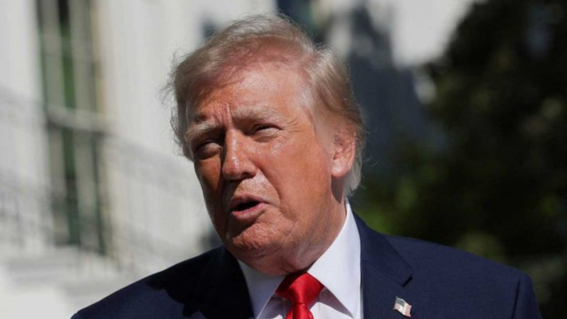
23 October 2026 (Navroze Bureau) US President Donald Trump has warned that the United States could take further action against Iran, declaring that Tehran will never be allowed to acquire nuclear weapons. Trump defended his administration’s hardline approach towards the Iranian government and claimed that US military operations had significantly weakened Iran’s capabilities.
Speaking to reporters at the White House on October 22, Trump said, “This should have been done a long time ago by other presidents. We’ve knocked the hell out of them, and we may do it a little bit further.”
His remarks signal the possibility of additional US action as tensions continue between Washington and Tehran. Trump reiterated that preventing Iran from obtaining a nuclear weapon remains a central objective of his administration.
Trump Warns of Further Action Against Iran
Trump said his administration was taking steps that he believed previous US presidents should have taken earlier. He acknowledged that the policy had attracted mixed public reactions but argued that many Americans supported his approach towards Iran.
The US president also stressed that Washington could not allow Tehran to develop nuclear weapons. His comments came amid uncertainty over whether diplomatic efforts would lead to a lasting agreement between the two countries.
Trump’s statement that the United States might go further did not include a specific timeline or details about what additional military measures could involve. However, the remarks have renewed attention on the possibility of another escalation in the conflict.
On October 21, Trump said that something would happen fairly soon regarding the situation with Iran, while indicating that the United States was not engaged in negotiations at that moment. The statements have added to uncertainty surrounding the future of diplomatic efforts.
US-Iran Conflict and Military Tensions
The United States and Israel launched military operations against Iran on February 28, 2026, triggering retaliatory missile and drone attacks by Tehran across the region.
The conflict has affected regional security and raised concerns about international energy supplies, particularly because of tensions surrounding the Strait of Hormuz. The strategic waterway is a major route for global oil shipments, making disruptions a concern for energy markets and importing countries.
In his latest remarks, Trump claimed that US operations had substantially weakened Iran’s military capabilities. These statements reflect the US administration’s position on the results of its campaign, rather than an independently established assessment of Iran’s remaining military strength.
The possibility of further strikes has raised questions about whether the conflict could intensify again and what consequences that might have for regional stability.
Iran’s Nuclear Programme Remains a Central Issue
Trump has repeatedly insisted that Iran must never be allowed to acquire nuclear weapons. His administration has presented preventing a nuclear-armed Iran as a key justification for its policy towards Tehran.
The dispute over Iran’s nuclear programme has been a longstanding source of tension between Iran and Western governments. Questions about uranium enrichment, international inspections, sanctions and the future of diplomatic agreements have repeatedly complicated efforts to reach a settlement.
The United States has argued that restrictions must prevent Iran from developing nuclear weapons. Iran, meanwhile, has historically maintained that its nuclear programme is intended for peaceful purposes, although its activities and the level of international oversight have remained subjects of international dispute.
Trump’s latest comments did not provide new technical evidence about the current status of Iran’s nuclear capabilities. His statement was primarily a warning about the US administration’s determination to prevent Tehran from obtaining a nuclear weapon.
Strait of Hormuz and Global Oil Markets
The Strait of Hormuz has remained a significant concern during the conflict because of its importance to international energy trade. Any prolonged disruption to shipping through the waterway could affect oil supplies, transportation costs and energy prices.
Trump has accused Iran of attempting to push global oil prices higher and has disputed some Iranian claims concerning security incidents in the Persian Gulf. Such allegations have been part of the wider exchange of statements between Washington and Tehran.
Developments in the conflict are being closely watched by energy-importing countries, including India, because changes in crude oil prices can affect fuel costs, inflation and the broader economy.
However, the actual impact on oil markets will depend on shipping conditions, supply availability, the duration of the conflict and the response of international producers and traders.
Diplomatic Efforts Face Uncertainty
Diplomatic efforts to end the conflict have faced significant challenges. A memorandum of understanding signed in June was intended to provide a path towards a broader peace agreement, but disagreements, including over navigation through the Strait of Hormuz, undermined the process.
Trump’s latest remarks suggest that Washington continues to maintain pressure on Iran while leaving open the possibility of further action. It remains unclear whether the two sides will return to negotiations or whether additional military operations will take place.
Any lasting agreement would likely need to address nuclear restrictions, regional security concerns and arrangements governing shipping through the strategic waterway.
What Happens Next?
Trump’s warning has renewed uncertainty over the next phase of the US-Iran conflict. Although he said the United States might take further action, he did not announce a specific operation or provide a timetable.
The situation will depend on developments on the ground, decisions by the governments involved and whether diplomatic channels can produce an agreement.
For now, preventing Iran from acquiring nuclear weapons remains a central part of Trump’s stated policy. His latest comments underline Washington’s willingness to maintain pressure on Tehran, while the prospects for a lasting settlement remain uncertain.