

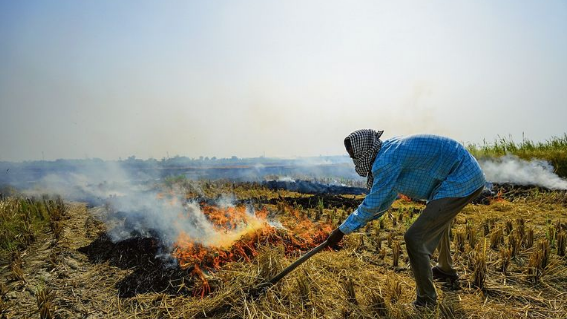
3 November 2026 (Navroze Bureau) Efforts to control paddy stubble burning in Punjab are facing a major communication challenge, with many farmers receiving information about crop residue management too late to make practical use of it. A new study by the Council on Energy, Environment and Water (CEEW) has highlighted gaps in awareness, training, access to machinery and farmers’ understanding of alternatives to burning.
The study, based on a survey of 102 farmers in Punjab, found that around 63 per cent of respondents had never received information about crop residue management at the time they actually needed it. Nearly 30 per cent said the pre-harvest period was the most suitable time to receive such information, but communication efforts often failed to reach farmers during this crucial window.
The findings suggest that awareness campaigns need to become more timely and practical if the state is to encourage farmers to adopt alternatives to stubble burning.
Farmers Lack Timely Information and Training
According to the CEEW study, nearly 78 per cent of surveyed farmers had never attended a crop residue management training programme. Several reasons contributed to this gap, including a lack of information about training schedules, late communication, busy agricultural routines and inconvenient timings.
Some farmers also believed they already had sufficient knowledge and therefore did not consider attending training sessions necessary.
The report highlights that simply organising awareness programmes may not be enough. Farmers need information that helps them make decisions before harvesting begins, when they can plan machinery requirements, labour arrangements and residue management methods.
During the harvesting period, communication should focus on immediate practical needs, including where machinery is available, how it can be accessed and how other farmers are successfully managing crop residue without burning it.
Unnat Kisan App Has Limited Awareness
The study also identified a significant gap in the use of digital platforms. Around 86 per cent of surveyed farmers said they had never heard of the Unnat Kisan mobile application, which is intended to help farmers access machinery for crop residue management.
The finding raises questions about the reach of digital awareness campaigns and whether information about government-supported services is reaching the intended beneficiaries.
The report suggests that digital platforms can support communication, but they should not replace direct interaction with farmers. Personal engagement, local demonstrations and information shared through trusted agricultural networks can help farmers understand how available services work.
Partial Burning Remains a Major Challenge
One of the important findings concerns farmers who use machinery but still burn some of their crop residue. The study classified around 31 per cent of surveyed farmers as partial burners.
These farmers have adopted certain crop residue management practices but continue to burn a portion of the residue. Concerns about possible pest attacks were identified as a key reason behind this behaviour.
The CEEW study suggests that this group offers an important opportunity for targeted intervention. Instead of treating all farmers in the same way, communication programmes could address the specific concerns of those who have already started using machinery but remain hesitant to completely stop burning.
Practical demonstrations and technical guidance from agriculture experts could help farmers evaluate their concerns and make informed decisions about residue management.
Farmers Prefer Simple and Direct Messages
The research also found that lengthy awareness material may not be the most effective way to communicate with farmers. Around 73 per cent of respondents preferred receiving one or two clear messages rather than detailed information.
This indicates that communication campaigns should focus on simple instructions that explain what farmers need to do, when they should do it and where they can access the required support.
The study also highlighted the importance of trusted messengers. Farmers often rely on fellow farmers, local contacts and agricultural extension officers when seeking information. Direct engagement can therefore play an important role in improving confidence in alternative practices.
Study Calls for Behaviour-Based Communication Strategy
The CEEW study recommends moving beyond general awareness campaigns towards a structured Behaviour Change Communication strategy. The proposed approach focuses on four key areas: coverage, clarity, credibility and conversion.
Under this approach, information should reach farmers at the right time, use simple and locally relevant messages, come through trusted sources and help translate awareness into actual changes in farming practices.
The report also recommends greater use of field demonstrations and targeted communication for farmers who partially burn crop residue. It suggests that resources under the Crop Residue Management scheme could support pilot initiatives to test behaviour-focused communication strategies before expanding them across the state.
A Wider Challenge for Punjab’s Stubble Management Efforts
Punjab has taken several steps to promote alternatives to stubble burning, including machinery support, custom hiring centres and awareness programmes. However, the latest findings indicate that providing equipment and information does not automatically ensure that every farmer can adopt no-burn practices.
The survey covered 102 farmers and included focus group discussions and consultations with agriculture officials. CEEW has clarified that the findings are exploratory and non-representative, so they should not be treated as a measurement of the entire farming population of Punjab.
Nevertheless, the research highlights practical issues that policymakers and agricultural departments may need to address. Timely information, accessible machinery, trusted guidance and solutions to farmers’ specific concerns will be important in encouraging wider adoption of crop residue management practices.