

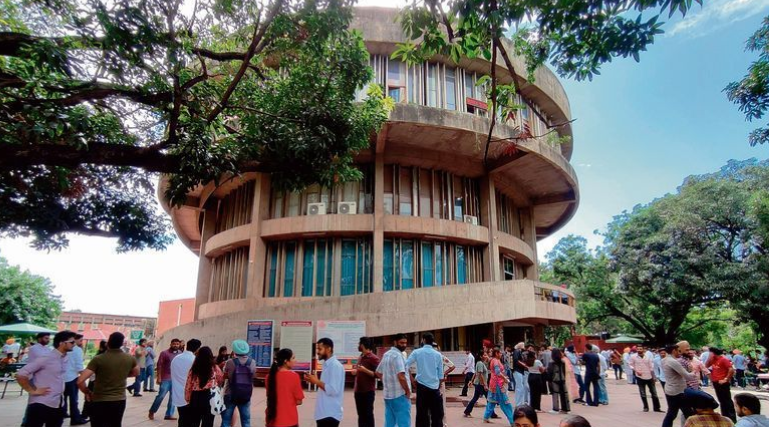
19 November 2026 (Navroze Bureau) Panjab University (PU), Chandigarh, has achieved a significant improvement in its global academic standing, climbing 24 places to secure the joint 150th position in the Times Higher Education (THE) Interdisciplinary Science Rankings 2027. The university’s improved ranking reflects progress in institutional support for interdisciplinary research, academic collaboration and efforts to strengthen its research ecosystem.
The university’s overall score has increased to 55 in the 2027 edition, compared with 52.8 in 2026 and 48.6 in 2025. The improvement marks a consistent rise in its overall performance score over the past two years, strengthening its position among globally ranked institutions in interdisciplinary scientific research.
According to the rankings, Panjab University was placed 165th in 2025 before slipping to 174th in 2026. It has now made a strong recovery, gaining 24 places to reach joint 150th position in the latest edition. The overall score has registered a cumulative improvement of 13.2 per cent since 2025.
Vice-Chancellor Prof. Meenakshi Goyal congratulated the university community on the achievement and said the improved global standing reflected PU’s continued commitment to strengthening interdisciplinary research and academic collaboration.
She attributed the achievement to the collective efforts of faculty members, researchers, students and staff. She said the university would continue to develop an enabling research ecosystem that promotes collaboration across academic disciplines, encourages innovation and supports research addressing complex societal challenges.
The rankings are prepared by Times Higher Education in association with Schmidt Science Fellows and assess universities on their ability to bring together knowledge, methods and expertise from different academic fields to address complex scientific and societal issues.
The 2027 edition assessed 1,058 institutions across 102 countries and territories, compared with 911 institutions from 94 countries and territories in the previous edition. Asia recorded an increase in participation, with 565 institutions featuring in the rankings, up from 478 last year.
India emerged as the most represented country in the rankings, with 102 institutions included, highlighting the growing participation of Indian universities in global research assessments.
The Interdisciplinary Science Rankings evaluate research that combines multiple scientific disciplines as well as studies integrating science with fields such as social sciences, economics, psychology, law, education, clinical studies and health research. Such research is increasingly important in addressing issues that require expertise from multiple academic areas, including climate change, public health, technology, environmental sustainability and social development.
The assessment framework is based on 11 indicators grouped under three broad pillars — Inputs, Process and Outputs — which collectively measure a university’s commitment, support and performance in interdisciplinary research.
Among the three categories, Panjab University recorded its most significant improvement in the Process pillar. Its score in this category rose from 33.3 in 2026 to 58.3 in 2027, registering an increase of 75.1 per cent. The Process category evaluates institutional support available to interdisciplinary research teams, including research facilities, administrative assistance and recognition of interdisciplinary work in academic promotion and tenure processes.
The university scored 54.6 in the Inputs category in 2027, compared with 57.4 in 2026 and 30.3 in 2025. This category primarily assesses research funding, resources and support from industry for interdisciplinary scientific work.
Meanwhile, the Outputs score stood at 54.2 in 2027, compared with 56.2 in 2026 and 57.7 in 2025. This category examines research publications, their quality, interdisciplinary impact and institutional reputation among active researchers.
The ranking methodology gives the highest weightage to Outputs, accounting for 65 per cent of the overall score. Inputs carry 19 per cent weightage, while Process accounts for 16 per cent. The framework therefore places considerable emphasis on research outcomes, quality, reach and impact, alongside institutional resources and support mechanisms.
The latest ranking is expected to further strengthen Panjab University’s international academic visibility and highlight the importance of interdisciplinary research in higher education. Bringing together researchers from different fields can help institutions develop innovative approaches, improve knowledge exchange and generate solutions to emerging challenges.
The university’s improved position also underlines the importance of sustained institutional support, research funding, collaboration and academic infrastructure in strengthening global research performance. With continued efforts to promote interdisciplinary work and innovation, Panjab University aims to further enhance its research capabilities and contribute to scientific advancement and societal development.
The achievement marks an encouraging step for the university as it continues to pursue excellence in research, education and international academic collaboration.