

26 November 2026 (Navroze Bureau) Researchers from Mysuru have presented their scientific papers at an international conference on cancer prevention, highlighting important challenges in cervical cancer screening and the reliability of human papillomavirus (HPV) testing.
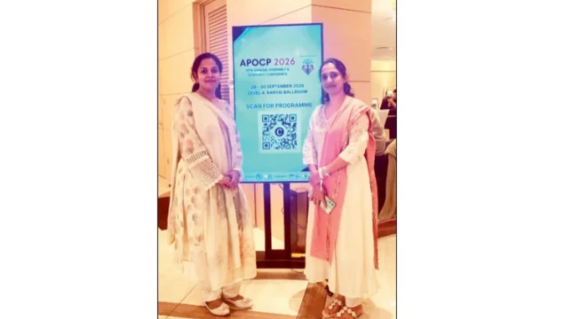
Nagalambika Ningaiah and S.K. Anisa, researchers associated with the city-based Public Health Research Institute of India (PHRII), presented their research at the 13th General Assembly and Scientific Conference of the Asian Pacific Organisation for Cancer Prevention (APOCP).
The conference was recently held in Malaysia under the theme ‘Cancer Intelligence for Action: Data, Equity and the Next 25 Years of Cancer Control in Asia-Pacific’. It brought attention to the role of research, reliable health data and equal access to cancer prevention services across the Asia-Pacific region.
The two researchers shared findings from their respective studies, focusing on cervical cancer screening among rural women and the impact of laboratory procedures on HPV test results.
Research Highlights Challenges in Cervical Cancer Screening
Nagalambika Ningaiah presented a paper titled ‘Awareness Alone Is Not Enough: Examining Gaps in Cervical Cancer Screening Uptake in Rural Mysore, India’.
The research examined barriers that prevent women in rural areas from participating in cervical cancer screening programmes. It highlighted the gap between awareness about the disease and actual participation in screening services.
Cervical cancer remains an important public health concern, particularly in communities where access to healthcare facilities, screening services and timely medical guidance can be limited.
Although awareness campaigns can help women understand the importance of early detection, awareness alone may not always translate into action. Several practical and social barriers can influence whether women access screening services.
The study highlighted the need to understand these challenges and develop approaches that encourage greater participation among rural women.
Improving screening uptake is important because identifying cervical abnormalities at an early stage can help women receive appropriate medical evaluation and treatment.
Second Paper Focuses on HPV Testing Methods
S.K. Anisa presented another research paper titled ‘Impact of DNA Extraction Methods on HPV Test Results: A Pilot Comparison Using Seegene PCR and Cobas Assay’.
The study examined how different DNA extraction methods can influence HPV testing outcomes. It involved a pilot comparison using Seegene PCR and the Cobas assay.
HPV testing plays an important role in cervical cancer prevention because certain types of human papillomavirus are associated with the development of cervical cancer.
Reliable test results are essential for identifying women who may require further medical assessment. Laboratory procedures, including DNA extraction, can influence the quality of samples and the results obtained through testing.
The research therefore focused on understanding how different extraction approaches affect HPV test outcomes. Such comparisons can contribute to discussions about laboratory accuracy and the reliability of screening programmes.
The findings are particularly relevant for healthcare organisations working to strengthen cervical cancer screening and improve the quality of diagnostic services.
PHRII’s Work on Cancer Prevention
The presentations reflect the ongoing work of the Public Health Research Institute of India in the areas of cervical cancer prevention, screening participation and HPV testing.
The organisation’s research focuses on improving access to preventive healthcare, particularly among underserved populations.
Cervical cancer prevention requires a combination of public awareness, accessible screening facilities, reliable testing and timely medical follow-up. Research into these areas can help healthcare organisations identify gaps and develop more effective programmes.
The findings shared at the conference also underline the importance of addressing healthcare inequalities. Women living in rural and underserved communities may face additional difficulties in accessing preventive services compared with those living in urban areas.
Strengthening community-level health programmes and improving access to screening could help address some of these challenges.
International Platform for Cancer Prevention Research
The APOCP conference provided an international platform for researchers, healthcare professionals and public health organisations to exchange knowledge and discuss strategies for cancer control.
Its theme focused on using cancer-related data, improving healthcare equity and developing stronger prevention strategies for the next 25 years across the Asia-Pacific region.
The participation of Mysuru-based researchers brought attention to issues affecting cervical cancer prevention in India, while also contributing to broader discussions about screening and diagnostic practices.
Their presentations covered two important aspects of cancer prevention: ensuring that women participate in screening programmes and improving the reliability of laboratory testing.
Both areas are essential for strengthening early detection efforts and making preventive healthcare more effective.
The research presentations by Nagalambika Ningaiah and S.K. Anisa highlighted the contribution of local research institutions to international public health discussions. Their work also emphasised that improving cancer prevention requires not only awareness but also accessible services, dependable testing methods and focused efforts to reach underserved communities.