

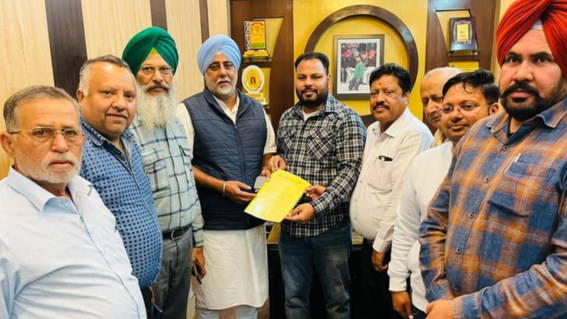
3 March 2026 (Navroze Bureau) : Rice mill owners from Amloh have flagged a storage crisis affecting their operations and urged immediate policy action after a meeting with former Punjab minister Tript Rajinder Singh Bajwa.
Millers say that limited storage infrastructure and skyrocketing warehousing costs have forced them to sell paddy and rice stocks at unfavourable prices soon after harvest, resulting in financial strain. With paddy arrivals peaking in the current season, the lack of adequate godowns and modern silos is leaving mills with little choice but to offload grains prematurely, often below expected market rates.
Representatives from the Amloh Rice Millers Association met the former minister to highlight these challenges and seek government intervention. In the meeting, millers detailed how inadequate storage capacity — especially facilities that maintain quality and protect grain from spoilage — is undermining profitability and long-term planning.
According to the group, existing storage facilities are overstretched, pushing millers to rely on expensive private contractors or makeshift storage solutions that offer little protection. They argue that this situation negatively impacts both producers and mill owners, potentially depressing prices for farmers as well.
The millers sought assurances from Bajwa that their concerns would be taken up with state authorities and relevant agencies. They urged renewed focus on infrastructure development — including the construction of new warehouses, modern cold storage units, and public-private partnership models to expand capacities.
In response, the former minister acknowledged the seriousness of the situation and expressed understanding of the millers’ frustrations. He said rice production and milling form a critical part of Punjab’s agrarian economy and that supply chain bottlenecks like storage issues can ripple into wider farm income and market stability problems.
Bajwa indicated that efforts should be made to ensure existing storage schemes under state and central government programmes are fully utilised. He also suggested exploring incentives for private investment in agrarian storage infrastructure to augment capacities quickly.
Industry observers note that storage constraints during peak harvest seasons can lead to rapid price swings and quality deterioration, affecting both domestic food security and export potential. Efficient storage helps mills time sales strategically, supply grains steadily through lean seasons, and meet quality standards demanded by international buyers.
Farmers in the Amloh belt, a region known for high paddy and basmati cultivation, are closely watching developments. Many depend on timely procurement and fair pricing, which can be influenced by how effectively millers manage stocks post-harvest.
Millers have also urged that intermediary charges and handling costs at existing warehouses be rationalised to reduce the financial burden on smaller operators. They advocate for transparent fee structures and monitoring to prevent cost escalation that squeezes margins.
The meeting concluded with a commitment from both sides to lobby for immediate relief measures and engage with policymakers to fast-track storage expansion plans. Millers emphasized that sustainable improvements would require coordinated action from government agencies, private investors, and agricultural stakeholders.
For now, rice millers in Amloh are planning a wider campaign to raise public awareness about the storage crunch and its impact on the crop value chain. They hope that a combination of policy support and infrastructure investment can help protect local agrarian interests and enhance Punjab’s role in the national rice market.
Summary
Rice millers from Amloh flagged a severe storage crisis affecting operations and pricing. They met former Punjab minister Tript Rajinder Singh Bajwa, urging government action and infrastructure expansion to ease constraints.