

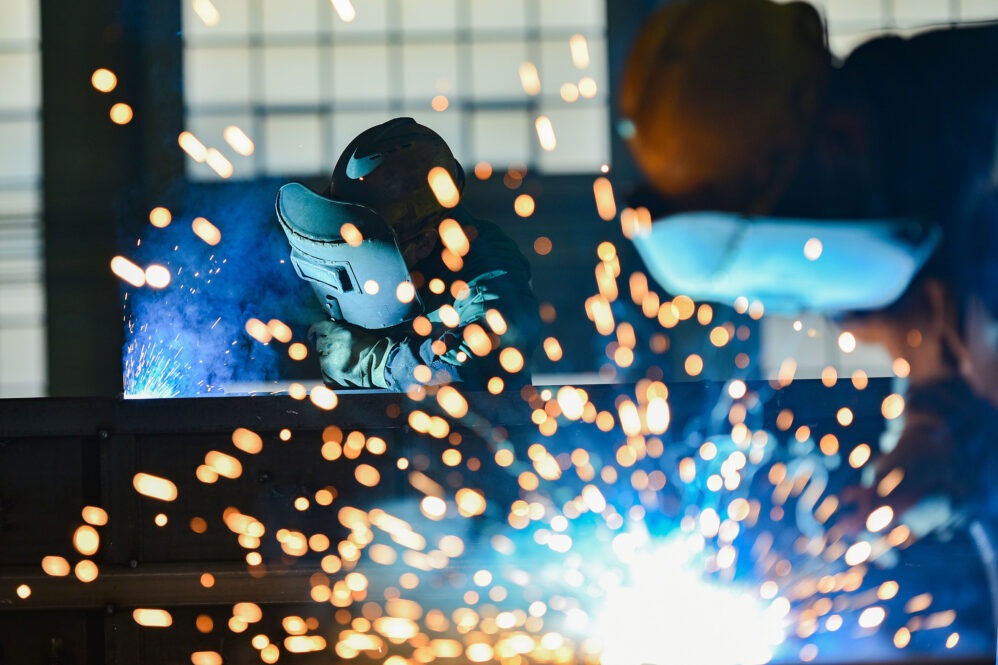
January 27, 2026 (Navroze Bureau) : China’s industrial enterprises reported modest profit growth in 2025, offering cautious optimism about the country’s economic recovery while also highlighting persistent structural challenges. The latest figures suggest that although government stimulus measures and improving domestic demand have provided some support, the overall pace of recovery remains uneven across sectors.
Industrial profits are widely seen as a key indicator of the health of China’s manufacturing-driven economy. The modest growth recorded this year reflects a delicate balance between policy support, weakening external demand, and ongoing pressure on certain industries such as real estate and traditional heavy manufacturing.
Signs of Stabilisation After a Volatile Period
After facing multiple headwinds in recent years—including pandemic disruptions, property sector stress, and slowing global demand—China’s industrial sector is gradually showing signs of stabilisation. The moderate rise in profits suggests that businesses are beginning to adjust to new market realities while benefiting from targeted government interventions.
Several manufacturing segments, particularly high-tech manufacturing, renewable energy equipment, and advanced electronics, have performed better than traditional industries. These sectors have benefited from Beijing’s strategic focus on technological self-reliance and industrial upgrading.
However, analysts caution that the overall improvement remains fragile. Profit margins in many traditional sectors continue to face pressure due to weak pricing power, high input costs, and sluggish consumer confidence.
Impact of Government Policy Support
Beijing has rolled out a series of policy measures aimed at stabilising growth and supporting industrial activity. These include tax relief for small and medium enterprises, easier credit conditions, infrastructure spending, and targeted support for strategic sectors.
Such measures have helped reduce financing pressure on companies and encouraged investment in innovation and production capacity. In particular, manufacturers involved in electric vehicles, batteries, semiconductors, and green technologies have seen stronger demand, both domestically and internationally.
The government has also emphasised the importance of boosting domestic consumption to offset weakness in exports. While progress has been made, consumer spending growth has remained moderate, limiting the extent to which domestic demand can fully support industrial profitability.
Export Pressures and Global Uncertainty
External demand remains a significant challenge for Chinese manufacturers. With major global economies experiencing slower growth, export orders for Chinese goods have shown mixed trends throughout 2025. Trade tensions, geopolitical uncertainties, and shifting supply chains have added further complexity.
Many export-oriented enterprises have been forced to operate on thinner margins, even as they attempt to diversify markets and move up the value chain. Companies producing higher-value goods have been better positioned to withstand these pressures compared to those relying on low-cost manufacturing.
Economists note that China’s long-term strategy of focusing on innovation and advanced manufacturing could help strengthen resilience against future external shocks, but the transition will take time.
Property Sector Continues to Weigh on Confidence
One of the major drags on industrial sentiment remains the property sector slowdown. Construction-related industries such as steel, cement, and building materials have struggled due to weak real estate investment. This has had a ripple effect across supply chains, impacting demand for a wide range of industrial products.
Although authorities have introduced measures to stabilise the property market, recovery in this sector has been gradual. As long as property-related uncertainty persists, it is likely to continue weighing on broader industrial confidence.
Performance Varies Across Sectors
The profit growth recorded in 2025 has not been evenly distributed.
- High-tech manufacturing and green industries have generally outperformed, supported by policy backing and strong long-term demand.
- Traditional heavy industries, including coal, steel, and chemicals, have seen weaker performance due to overcapacity and price pressures.
- Consumer goods manufacturers have experienced mixed results, reflecting cautious household spending patterns.
This divergence highlights the ongoing structural transformation of China’s economy, as it gradually shifts away from old growth drivers toward more innovation-led development.
Business Sentiment Remains Cautious
Despite the modest improvement in profits, many business leaders remain cautious about the outlook. Rising competition, thin margins, and uncertainty about global demand continue to shape corporate decision-making. Investment plans are increasingly focused on efficiency improvements and technology upgrades rather than aggressive expansion.
At the same time, there is growing recognition among Chinese firms that upgrading product quality, strengthening branding, and investing in research and development are essential for long-term competitiveness.
What the Numbers Mean for China’s Economy
Industrial profit growth is closely watched by policymakers and investors because it influences employment, investment, and financial stability. The modest gains in 2025 suggest that while the economy is not in crisis, it is also far from a strong rebound.
For policymakers, the data reinforces the need to continue balancing short-term stabilisation with long-term structural reforms. Excessive stimulus could increase financial risks, while insufficient support could prolong weak growth.
Outlook for the Rest of the Year
Looking ahead, economists expect industrial profits to remain under moderate pressure but could gradually improve if domestic demand strengthens and policy support continues. Much will depend on factors such as consumer confidence, the health of the property sector, and global economic conditions.
If high-tech manufacturing and green industries continue to expand, they may play an increasingly important role in offsetting weakness in traditional sectors. However, most analysts agree that China’s industrial recovery is likely to be steady but slow, rather than rapid.
Conclusion
China’s industrial enterprises posting modest profit growth in 2025 reflects an economy that is stabilising but still navigating significant challenges. The data points to cautious progress driven by policy support and emerging industries, while also underscoring structural issues that will take longer to resolve.
As China continues its transition toward a more innovation-driven economic model, the performance of its industrial sector will remain a key indicator of both short-term resilience and long-term transformation.
Summary
China’s industrial firms recorded modest profit growth in 2025, signalling gradual economic stabilisation. While policy support and high-tech sectors helped, weak external demand, property stress, and uneven recovery continue to challenge broader industrial performance.