

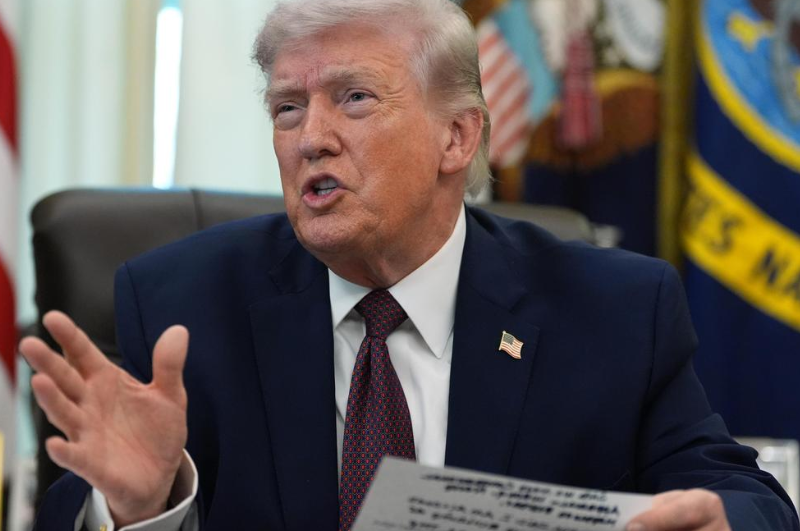
1 April 2026 (Navroze Bureau) : U.S. President Donald Trump has indicated that the ongoing conflict with Iran could come to an end within “two weeks, maybe three,” signaling a potential shift in Washington’s military strategy. The statement, made during remarks at the White House, marks one of the clearest timelines offered so far regarding the possible conclusion of the war.
Trump said the United States is nearing the completion of its objectives in the conflict, which has been ongoing for over a month and has significantly impacted the Middle East and global markets. He emphasized that the U.S. would “be leaving very soon,” suggesting that military operations could wind down in a relatively short timeframe.
The announcement comes as Trump prepares to address the nation, where he is expected to provide further details about the war, its outcomes, and the next steps for U.S. involvement in the region. The anticipated speech is likely to clarify whether the withdrawal will be tied to any diplomatic agreement or will proceed independently.
One of the most notable aspects of Trump’s remarks is his assertion that ending the war does not necessarily require a formal deal with Iran. He suggested that once key objectives—particularly neutralizing Iran’s ability to develop nuclear weapons—are achieved, the United States would withdraw regardless of diplomatic arrangements.
This stance reflects a strategic shift from earlier phases of the conflict, when negotiations and conditions were more prominently emphasized. By downplaying the need for a formal agreement, the U.S. administration appears to be prioritizing military outcomes over diplomatic closure.
The conflict itself has had far-reaching consequences. Since it began, the war has led to multiple airstrikes, missile exchanges, and disruptions across the region. Key infrastructure has been targeted, and tensions have spread beyond Iran to neighboring countries and maritime zones. The situation has also affected global energy markets, with oil prices experiencing volatility due to concerns over supply disruptions.
Trump’s comments have been interpreted by markets as a sign of possible de-escalation. Any indication that the conflict may end soon tends to boost investor confidence, as it reduces uncertainty and the risk of further disruptions. Reports suggest that global markets reacted positively to the news, reflecting optimism about a potential resolution.
However, the situation on the ground remains complex. Despite Trump’s optimistic timeline, Iranian officials have indicated that they are prepared for a longer conflict if necessary. This divergence in expectations highlights the uncertainty surrounding the war’s trajectory and the challenges involved in bringing it to a close.
The broader geopolitical context adds another layer of complexity. The conflict has involved multiple actors, including regional allies and proxy groups, making it difficult to achieve a swift and comprehensive resolution. Even if U.S. forces withdraw within the proposed timeline, underlying tensions in the region may persist.
Trump’s remarks also come amid domestic and international scrutiny. The economic impact of the war, including rising fuel prices and market volatility, has been a point of concern. At the same time, questions remain about the long-term outcomes of the conflict and whether the stated objectives have been fully achieved.
In his comments, Trump reiterated that the primary goal of the operation was to prevent Iran from acquiring nuclear weapons. He claimed that this objective has largely been met, suggesting that the most critical phase of the conflict is over.
Despite this, experts caution that assessing the success of such operations is complex. While military strikes can damage infrastructure and capabilities, long-term outcomes depend on a range of factors, including political stability, regional dynamics, and future policy decisions.
The possibility of a quick end to the war also raises questions about what comes next. A withdrawal of U.S. forces could shift responsibility for regional security to other countries, particularly in areas like the Strait of Hormuz, which is crucial for global oil transport. Ensuring stability in such areas will be a key challenge in the post-conflict phase.
As Trump prepares to address the nation, attention will be focused on whether he provides a detailed roadmap for ending the conflict and managing its aftermath. His speech is expected to outline the administration’s strategy and address concerns from both domestic and international audiences.
In conclusion, Trump’s statement that the Iran war could end within “two weeks, maybe three” signals a potential turning point in the conflict. While the timeline suggests optimism, the reality remains uncertain, with multiple factors influencing how and when the war will ultimately conclude.
Summary
Trump says Iran war could end in two to three weeks, signaling possible U.S. withdrawal soon, though uncertainties remain amid ongoing conflict, regional tensions, and lack of confirmed diplomatic agreement.