

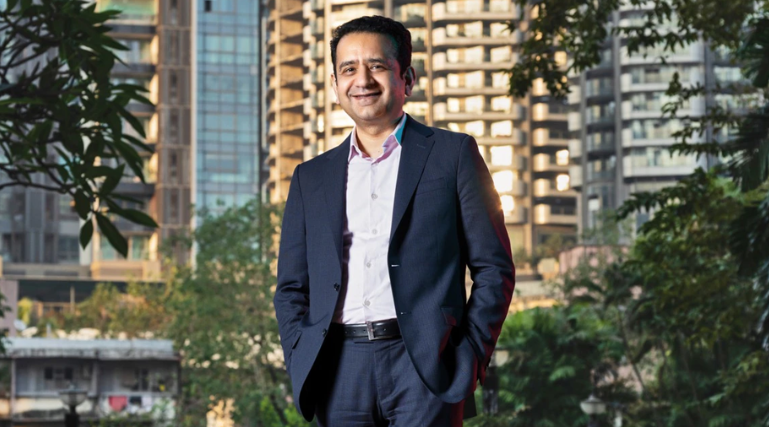
23 September 2026 (Navroze Bureau) : Tech Mahindra has undergone a significant transformation under CEO and Managing Director Mohit Joshi, with the company moving from a period of stabilisation towards stronger revenue growth, improving margins and higher deal momentum.
Joshi took charge in March 2024 and soon laid out a three-year transformation plan focused on growth, operations and organisational changes. The company is now entering the final phase of that plan with several of its financial targets within reach.
A Clear Three-Year Target
One of Joshi’s early decisions was to publicly establish specific financial targets rather than rely on broad corporate ambitions.
Tech Mahindra set a goal of achieving 15% EBIT margins by FY27, growing faster than its major Indian IT-services peers, delivering ROCE of more than 30% and returning more than 85% of free cash flow to shareholders.
The company’s FY26 annual report says the transformation has delivered 10 consecutive quarters of margin expansion, alongside its highest deal wins in five years.
Margins Have Improved Sharply
When the transformation plan was announced, Tech Mahindra’s EBIT margin was around 6% at the end of FY24.
By Q1 FY27, the margin had risen to 14.4%, up about 330 basis points year-on-year and around 60 basis points sequentially. Revenue for the quarter stood at $1.66 billion, while EBIT reached $238 million.
The improvement puts the company relatively close to its 15% FY27 margin objective.
Deal Momentum Becomes a Major Driver
A major component of the turnaround has been a renewed focus on large, profitable deals.
Tech Mahindra recorded $3.7 billion in net new deal wins during FY26, up 41.6% year-on-year, according to company commentary reported after its March-quarter results.
In Q1 FY27, new deal wins stood at $1.078 billion, up 33.3% from a year earlier. The company has also recorded more than $1 billion in quarterly deal wins for three consecutive quarters.
Growth Beyond Telecom
Tech Mahindra has historically had a strong exposure to the communications sector, making diversification an important part of its strategy.
Under Joshi, the company has been placing greater emphasis on areas including manufacturing, BFSI, healthcare and retail.
Manufacturing revenue grew 11.8% year-on-year in the March 2026 quarter, while BFSI revenue increased 4.7%. The communications business also grew 5.6% during the quarter.
A Shift Towards Organic Growth
Another major change has been a stronger emphasis on organic growth.
Instead of relying primarily on acquisitions to expand, the company has focused on increasing business from existing customers, winning new clients and improving its position in strategic industry segments.
Tech Mahindra added 182 clients during FY26 and deepened relationships with 29 clients generating more than $50 million each, according to its FY26 annual report.
Operational Discipline
Joshi’s transformation plan has also placed significant emphasis on operational efficiency.
The company has worked on employee utilisation, pricing, delivery efficiency and cost optimisation. Management has also introduced stricter discipline around deals, with greater emphasis on whether projects make economic sense rather than simply pursuing revenue.
This approach is designed to protect margins while still allowing the company to grow.
AI Becomes Central to the Next Phase
Artificial intelligence is another major component of Tech Mahindra’s strategy.
The company is investing in AI-led services, platforms, domain-specific AI and sovereign AI capabilities while using automation internally to improve productivity.
Tech Mahindra’s management has described AI as both a major opportunity and a source of disruption for traditional IT services, as clients increasingly shift spending towards AI-enabled projects.
The AI Challenge
The broader IT industry is facing uncertainty as generative AI changes traditional software-development and outsourcing models.
AI can improve productivity, but it could also reduce the number of people required for certain projects and put pressure on traditional revenue models.
For Tech Mahindra, the challenge is therefore to convert AI productivity gains into new business opportunities rather than allowing automation alone to compress revenues.
Employee and Customer Metrics Improve
The turnaround has also been reflected in customer and employee indicators.
Tech Mahindra’s FY26 annual report says its Net Promoter Score reached the highest level in the industry, compared with a position closer to the industry median two years earlier.
Employee attrition remained at 11.8% in Q1 FY27, while the company has also invested in leadership development, reskilling and senior-level talent.
Shareholder Returns
The company has also maintained a focus on returning cash to shareholders.
Tech Mahindra reported $616 million in free cash flow during FY26, while the annual report says the company returned 91% of free cash flow through dividends during the year.
What Comes Next
The biggest challenge now is sustaining the improvement.
The company has moved much closer to its margin target, but maintaining growth from a larger revenue base could prove more difficult as global IT spending remains uncertain and AI reshapes customer demand.
Joshi’s next phase is expected to focus more heavily on new client acquisition, capability building, cross-selling, deeper relationships with existing customers and expanding the company’s presence in key markets.
A Turnaround Still in Progress
Tech Mahindra’s transformation under Mohit Joshi has already produced measurable changes in margins, deal wins, client relationships and operational discipline.
The company, however, still has to demonstrate that these gains can translate into sustained revenue growth and stronger positioning in an IT industry being rapidly reshaped by artificial intelligence.