

December 10, 2025 (Navroze Bureau) ; The ongoing turmoil involving IndiGo has taken a legal turn — with the Delhi High Court (HC) on Wednesday sharply questioning the government over how other airlines were permitted to charge exorbitant fares during the crisis triggered by mass flight cancellations. The bench raised serious concerns about regulatory oversight, pricing discipline, and the larger economic impact of the disruption.
What Sparked the Court’s Questioning
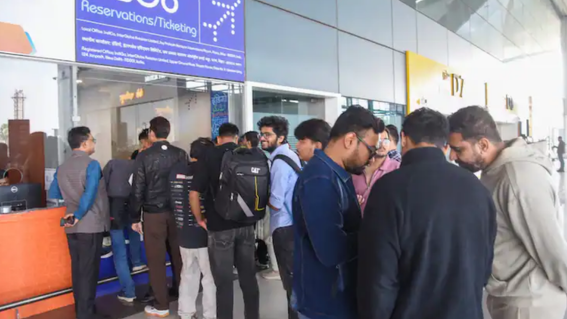
Last week, IndiGo — the country’s largest airline — cancelled hundreds of flights over several days following alleged roster mismanagement and enforcement of new safety and crew-duty norms. The cancellations left thousands of passengers stranded across airports nationwide. In the scramble to find seats on remaining flights, many travellers were forced to book with rival airlines at inflated prices — with one-way fares reportedly shooting up to ₹35,000–₹39,000, compared to typical last-minute fares of around ₹5,000.
During Wednesday’s hearing, Justice Gedela questioned the government: “If there were a crisis, how could other airlines be permitted to take advantage? How can fares go to ₹35,000–₹39,000? How could other airlines start charging so much?” The bench stressed that this wasn’t just an issue of individual passenger hardship — but a threat to the broader economy, particularly as air connectivity is critical for business, travel, and logistics.
What the Government Did — and When
The government defended its response, stating that regulatory steps — including fare caps, refunds, baggage tracing and passenger support — were initiated once the crisis escalated.
- The Ministry of Civil Aviation imposed temporary fare caps on domestic flights to curb price gouging.
- The Directorate General of Civil Aviation (DGCA) served a show-cause notice to IndiGo for alleged regulatory and safety compliance failures.
- To prevent future disruptions, the DGCA also ordered a 5% cut in IndiGo’s winter schedule, freeing up slots for other airlines.
However, the court was critical of these post-crisis measures, asking why oversight mechanisms failed to prevent fare gouging in the first place.
Legal & Regulatory Background on Passenger Rights
Under the civil aviation rules — particularly the guidelines laid by the DGCA — airlines must compensate or rebook passengers if flights are cancelled at short notice (less than 24 hours) or rescheduling is unilateral. In such cases, passengers are entitled to refund or alternate flights — plus compensation, meals, accommodation (if overnight), and other assistance as required.
Despite these rules, the chaos at airports, sudden cancellations, and massive surge in fares raised serious doubts about effective enforcement — especially under extraordinary demand. Consumer rights experts have pointed out previously that airlines frequently skirt around their obligations during disruptions.
Why This Court Hearing Matters
This is more than a case of passenger inconvenience: the HC’s stern questioning now brings into focus deeper systemic issues:
- Regulatory failure: Why were airlines allowed to dramatically spike fares even as civil aviation regulators supervise the sector?
- Economic impact: Sudden spikes and mass cancellations disrupt travel, trade and commerce — hurting livelihoods and business continuity.
- Passenger rights & consumer protection: The crisis has exposed gaps in enforcement of airline liability norms, highlighting the need for stronger consumer-level safeguards.
- Accountability and transparency: Courts are signalling the need for airlines and regulators to justify not just their response, but also inactions that allowed such profiteering during emergencies.
What Happens Next
- The court is expected to seek a detailed affidavit from the Centre, laying out exactly what regulatory oversight existed pre-crisis — and why fare spikes were not prevented.
- Meanwhile, the DGCA’s show-cause notice to IndiGo remains under review — with potential penalties, restrictions, or even temporary license suspensions depending on findings.
- There are calls for more permanent fare-cap and consumer-protection mechanisms to prevent airlines from exploiting crises.
- The larger aviation sector is under scrutiny — discussions about slot allocation, airline scheduling discipline, and pilot rostering norms may also be taken up by parliamentary and regulatory bodies.
Summary
Delhi High Court questions Centre over how airlines were allowed to overcharge up to ₹39,000 amid IndiGo flight cancellations. Court demands answers on regulatory lapses, passenger rights, and broader economic impact.