

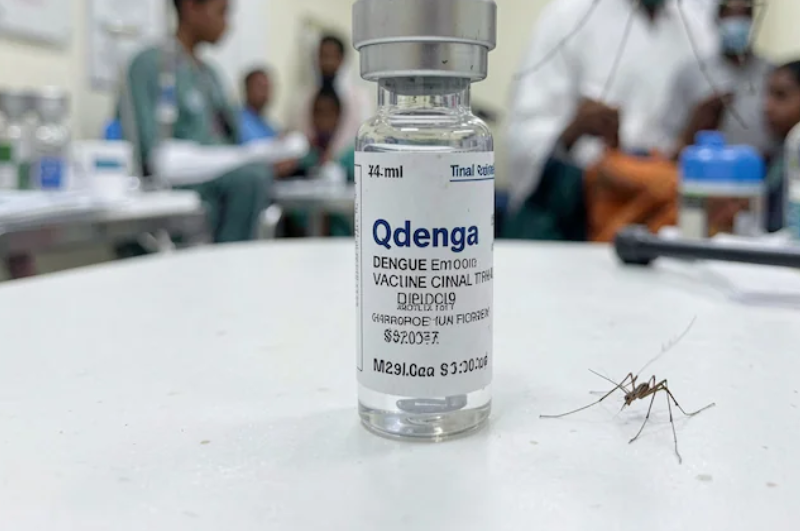
2 April 2026 (Navroze Bureau) : India is preparing to introduce a new dengue vaccine, raising hopes in the fight against one of the country’s most persistent mosquito-borne diseases. Doctors say the rollout of Qdenga could mark a major step forward in reducing infections, hospitalizations, and fatalities associated with Dengue Fever.
Dengue remains a significant public health challenge in India, particularly during the monsoon and post-monsoon seasons when mosquito breeding increases. The disease is transmitted by the Aedes mosquito and can cause symptoms ranging from mild fever to severe complications such as dengue hemorrhagic fever and dengue shock syndrome.
Qdenga, developed as a next-generation dengue vaccine, has already been approved in several countries and is now expected to be introduced in India following regulatory review. Doctors believe its availability could help reduce the burden on healthcare systems, especially during peak dengue seasons.
One of the key features of Qdenga is that it is designed to provide protection against all four dengue virus serotypes. This is crucial because infection with one serotype does not guarantee immunity against others, and subsequent infections can sometimes be more severe. A vaccine that offers broad protection could significantly improve disease control efforts.
Medical experts explain that Qdenga is administered in two doses, typically given a few months apart. This schedule is intended to ensure adequate immune response and long-lasting protection. Individuals receiving the vaccine may experience mild side effects such as fever, headache, or soreness at the injection site, which are generally temporary and manageable.
Doctors emphasize that the vaccine is expected to be particularly beneficial for individuals living in dengue-endemic regions. However, eligibility criteria will depend on guidelines issued by health authorities in India. Factors such as age, prior infection status, and overall health may influence who can receive the vaccine.
Another important aspect highlighted by experts is that vaccination does not eliminate the need for preventive measures. Controlling mosquito populations and avoiding mosquito bites remain essential components of dengue prevention. Measures such as using mosquito repellents, wearing protective clothing, and eliminating stagnant water sources continue to be critical.
The introduction of Qdenga also raises questions about accessibility and affordability. Public health experts stress the importance of making the vaccine widely available, especially in high-risk areas. Government initiatives and partnerships with healthcare providers may play a key role in ensuring equitable distribution.
India’s healthcare system has been actively working to manage dengue outbreaks through surveillance, early diagnosis, and treatment. The addition of a vaccine could strengthen these efforts by providing a preventive tool that complements existing strategies.
Doctors also highlight the importance of public awareness. Educating people about the benefits and limitations of the vaccine will be crucial in ensuring its effective use. Misconceptions and hesitancy could hinder vaccination efforts, making clear communication essential.
Clinical studies have shown promising results regarding the safety and efficacy of Qdenga. While no vaccine offers 100% protection, experts believe that even partial immunity can significantly reduce the severity of the disease and lower hospitalization rates.
The potential impact of the vaccine extends beyond individual protection. Widespread vaccination could contribute to herd immunity, reducing overall transmission rates and protecting vulnerable populations who may not be eligible for vaccination.
However, experts caution that the rollout process must be carefully planned. Monitoring for side effects, ensuring proper storage and distribution, and training healthcare workers are all critical components of a successful vaccination program.
The timing of the vaccine’s introduction is also significant. With dengue cases often peaking during specific seasons, aligning the rollout with these patterns could maximize its effectiveness. Authorities may prioritize vaccination campaigns in regions with high incidence rates.
In addition, ongoing research and data collection will be important to assess the vaccine’s performance in real-world conditions. This will help refine strategies and improve outcomes over time.
The introduction of Qdenga reflects broader efforts to combat vector-borne diseases through innovation and science. As climate change and urbanization continue to influence disease patterns, such advancements become increasingly important.
In conclusion, the expected rollout of Qdenga in India represents a promising development in the fight against dengue. While challenges remain, including ensuring accessibility and maintaining preventive measures, the vaccine offers hope for reducing the impact of the disease and improving public health outcomes.
Summary
India may soon introduce the Qdenga dengue vaccine, offering protection against all virus types, with doctors emphasizing benefits, eligibility, and continued need for mosquito control measures.