

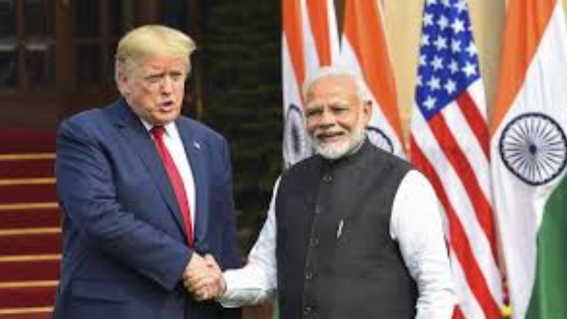
3 February 2026 (Navroze Bureau) : Indian and American industry bodies, corporate leaders, and trade experts have widely welcomed the newly announced India–U.S. tariff deal, calling it a major breakthrough that could significantly strengthen bilateral trade, boost investments, and deepen strategic economic ties between the two democracies.
The agreement, which reduces or rationalises tariffs on a range of key goods and sectors, is being seen as a confidence-building step that aligns with the long-term goal of expanding India–U.S. trade beyond current levels and making supply chains more resilient.
Strong Endorsement From Industry Bodies
Leading Indian industry associations described the deal as “timely and forward-looking.” They said the tariff rationalisation would improve market access for Indian exporters while making critical imports more affordable for domestic industries.
According to industry representatives, sectors such as engineering goods, pharmaceuticals, textiles, information technology hardware, renewable energy equipment, and select agricultural products are expected to benefit the most. Reduced duties are likely to enhance competitiveness, particularly for small and medium enterprises that rely heavily on export markets.
On the U.S. side, major trade and business groups said the deal reflects growing trust between the two countries and sends a positive signal to American companies looking to expand operations in India. They highlighted that predictable tariff structures reduce uncertainty and encourage long-term investments.
Business Leaders Call It a “Win-Win”
Prominent business leaders from both countries termed the agreement a “win-win” outcome. Indian corporate leaders noted that easier access to the U.S. market would help Indian manufacturers scale up and integrate more deeply into global value chains.
Executives from export-oriented industries said the deal could lower costs, improve margins, and increase volumes at a time when global trade remains under pressure due to geopolitical tensions and slowing growth in some regions.
American business leaders, meanwhile, emphasised that tariff relief would benefit U.S. exporters of high-value products, technology, and capital goods. They also pointed out that India’s growing consumer base presents massive opportunities for American firms in sectors such as aviation, defence manufacturing, clean energy, healthcare, and digital services.
Boost to Bilateral Trade and Investment
Experts believe the tariff deal could act as a catalyst for achieving the ambitious target of significantly higher bilateral trade in the coming years. India and the United States are already among each other’s largest trading partners, but industry bodies say there is vast untapped potential.
The agreement is also expected to:
- Encourage new joint ventures and technology partnerships
- Strengthen supply-chain cooperation, especially in critical sectors
- Support diversification away from overdependence on single-country sourcing
Trade analysts say the deal complements broader strategic cooperation between India and the U.S., particularly in areas such as semiconductors, defence production, critical minerals, and clean energy transition.
Positive Signal for Global Markets
Market observers note that the tariff agreement sends a strong message at a time when protectionism is rising globally. By opting for cooperation and negotiated solutions, India and the U.S. have demonstrated their commitment to open, rules-based trade.
Economists believe this could improve investor sentiment and enhance confidence in both economies. For India, in particular, the deal reinforces its image as a reliable global trade partner and an attractive destination for foreign direct investment.
Impact on Key Sectors
Industry-specific reactions suggest broad-based optimism:
- Manufacturing: Reduced tariffs are expected to lower input costs and support India’s manufacturing push.
- Pharmaceuticals and Healthcare: Easier market access could help Indian drug makers expand exports while supporting affordable healthcare.
- Technology and Electronics: American firms may find it easier to source or assemble products in India, aiding the country’s electronics ecosystem.
- Agriculture and Food Processing: Select tariff relaxations could boost exports while ensuring stable supply chains.
However, some industry voices have urged the government to ensure that domestic producers remain protected from sudden import surges, calling for phased implementation and monitoring.
Government Perspective
Government officials have indicated that the deal was carefully negotiated to balance domestic interests with global trade commitments. They stressed that the agreement aligns with India’s broader economic strategy of promoting exports, attracting investments, and strengthening strategic partnerships.
Officials also highlighted that the tariff deal does not stand alone but forms part of a larger framework of economic engagement, including cooperation on standards, regulations, and innovation.
Calls for Further Engagement
While welcoming the deal, industry bodies on both sides have called for continued dialogue to resolve remaining trade issues. These include non-tariff barriers, regulatory alignment, and faster dispute resolution mechanisms.
Several experts suggested that the tariff agreement could pave the way for a more comprehensive trade framework in the future, provided both sides maintain momentum and political will.
Challenges Ahead
Despite the optimism, analysts caution that implementation will be key. Smooth execution, clarity on timelines, and transparency in customs procedures will determine how quickly businesses can realise the benefits.
Global economic uncertainty, currency volatility, and geopolitical risks also remain factors that could influence trade flows. Nonetheless, industry leaders agree that the tariff deal provides a strong foundation to navigate these challenges.
Conclusion
The enthusiastic response from Indian and American industry bodies and business leaders underscores the significance of the India–U.S. tariff deal. Seen as a pragmatic and mutually beneficial step, the agreement is expected to strengthen trade ties, boost investments, and reinforce the strategic partnership between the two nations. If effectively implemented, it could mark a new chapter in India–U.S. economic cooperation.
Summary:
Indian and American industry bodies welcomed the India–U.S. tariff deal, calling it a win-win move that boosts trade, investment, supply-chain resilience, and business confidence amid global economic uncertainty.