

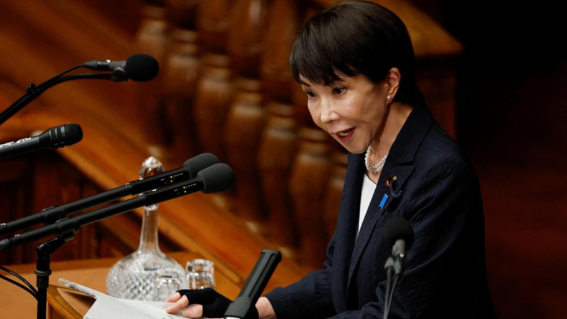
20 February 2026 (Navroze Bureau) : Japanese Prime Minister Sanae Takaichi has issued a stark warning about what she called escalating Chinese “coercion” and outlined a sweeping overhaul of Japan’s security and defense strategy, signalling a harder line in Tokyo’s approach to regional threats. The policy shift was announced in her first post-election address to the National Diet, where she spoke bluntly about the changing geopolitical environment and the need for Japan to modernise and strengthen its defense posture.
Takaichi’s remarks came shortly after her ruling coalition secured a landslide majority in parliament, giving her significant leverage to implement broad policy changes. She characterised the current security landscape as Japan’s “most severe and complex” since World War II, pointing to heightened military activity by China and its closer ties with Russia, as well as the advancing nuclear missile capability of North Korea.
China ‘Coercion’ and Regional Challenges
Takaichi told lawmakers that China has intensified efforts to “unilaterally change the status quo through force or coercion” in key strategic waterways such as the East China Sea and South China Sea, reflecting growing concerns in Tokyo about regional power dynamics and territorial security. She emphasised that Japan cannot remain passive in the face of such pressures.
Defense Strategy Overhaul
To respond, Takaichi promised a comprehensive overhaul of Japan’s defense posture. Key elements of her plan include:
- Revising Japan’s core security documents this year to produce an updated defence strategy aligned with current threats.
- Easing restrictions on military exports to expand Japan’s role in global defence markets and support domestic defence industries.
- Doubling defence spending to 2% of GDP by March — a significant mark that would place Japan among the world’s larger military spenders despite its pacifist constitution.
- Establishing a national intelligence council under her leadership to consolidate intelligence across agencies, aiming to improve threat assessment and early warning capabilities.
- Strengthening critical supply chains to reduce dependence on specific foreign sources, and screening foreign investment in sensitive sectors.
- Reviewing land purchase rules by foreign entities, a step seen as part of broader economic security measures.
- Speeding up the restart of nuclear reactors idled since the 2011 Fukushima disaster as part of energy and security policy.
Broader Security Context
Takaichi’s security agenda comes amid a diplomatic dispute with China following her earlier comments suggesting Japan might deploy military forces if a Chinese attack on Taiwan also threatened Japanese territory. Her speech reflects a broader shift among some Japanese policymakers toward a more assertive defense posture and stronger deterrence capabilities.
Japan currently lacks standalone foreign or domestic intelligence agencies analogous to the CIA or MI5, which Takaichi hopes to address via the new intelligence council — part of a wider effort to modernise Japan’s security infrastructure.
Political Momentum and Challenges
With her party controlling a supermajority of seats, Takaichi faces minimal parliamentary opposition to her plans. Her legislative push reflects not only security concerns but also economic and industrial strategies designed to bolster Japan’s resilience against external pressure, including in areas like critical materials supply and defence technology development.
Analysts note this shift coincides with broader geopolitical trends in East Asia, where rising tensions over Taiwan, territorial disputes, and alliance dynamics are shaping national defense policies across the region.
Summary
Japan’s Prime Minister Sanae Takaichi warned of China’s “coercion,” pledging a major defense strategy overhaul, including higher military spending, revised security documents, expanded exports and stronger intelligence and supply chain measures.