

9 july 2026 (Navroze Bureau) : : The monsoon season brings cooler weather and much-needed relief from the summer heat, but it also increases the risk of infections, digestive problems, and seasonal illnesses in children. A balanced and nutritious diet plays a crucial role in strengthening a child’s immune system, supporting healthy growth, and helping the body fight common monsoon-related infections.
Health experts recommend serving freshly prepared, hygienic meals rich in vitamins, minerals, protein, and fibre while ensuring children stay well-hydrated. Proper nutrition can reduce the risk of illnesses such as viral infections, stomach infections, and seasonal flu that are more common during the rainy season.
Why Nutrition Is Important During the Monsoon
During the rainy season, children may be more vulnerable to bacterial and viral infections due to increased humidity and changing weather conditions. A nutrient-rich diet helps:
- Strengthen immunity.
- Support healthy growth and brain development.
- Improve digestion.
- Maintain energy levels.
- Aid faster recovery from illness.
Parents should also encourage frequent handwashing and ensure that food is cooked and stored safely to prevent foodborne infections.
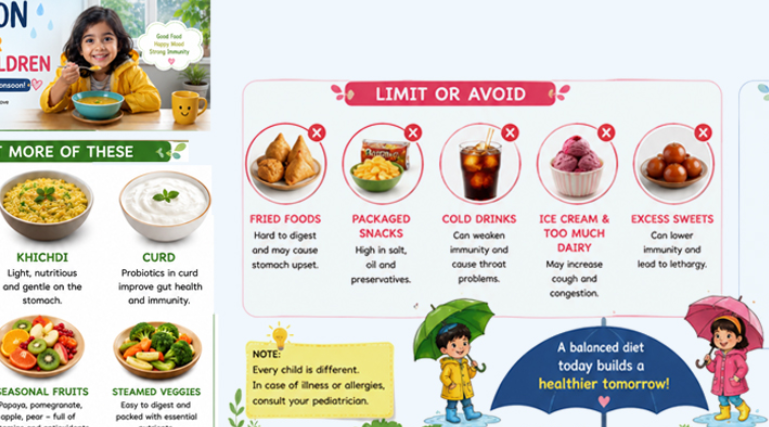
Foods to Include
A healthy monsoon diet should consist of:
- Seasonal fruits: Apples, pears, bananas, pomegranates, and papaya.
- Vegetables: Carrots, spinach, pumpkin, bottle gourd, beans, and broccoli.
- Protein-rich foods: Eggs, paneer, pulses, lentils, chicken, fish, tofu, and sprouts.
- Whole grains: Oats, whole wheat, brown rice, and millets.
- Dairy products: Milk, curd (if suitable), and homemade yogurt.
- Healthy fats: Nuts, seeds, and a small amount of ghee.
Warm homemade soups and freshly cooked meals are also recommended during the rainy season.
Foods to Avoid
To reduce the risk of infections and digestive issues, experts advise limiting:
- Street food.
- Unwashed fruits and vegetables.
- Stale or leftover food.
- Deep-fried snacks.
- Sugary beverages.
- Excess sweets and packaged junk food.
Sample Monsoon Meal Plan
Breakfast
- Vegetable poha or oats with milk
- Boiled egg or paneer cubes
- One banana or apple
Mid-Morning Snack
- Seasonal fruit
- Handful of roasted nuts (age-appropriate)
Lunch
- Chapati or rice
- Dal or rajma
- Mixed vegetables
- Curd (if well tolerated)
- Salad made with properly washed vegetables
Evening Snack
- Homemade vegetable soup
- Corn chaat or roasted makhana
- Fresh coconut water or warm milk
Dinner
- Khichdi with vegetables
- Grilled chicken or paneer
- Steamed vegetables
Before Bed
- A glass of warm milk (if suitable)
Hydration Is Equally Important
Children should drink enough clean, safe water throughout the day, even if they feel less thirsty during the rainy season. Homemade soups, fresh fruit, and coconut water can also help maintain hydration.
Healthy Habits for the Monsoon
Along with nutritious food, parents should encourage:
- Regular handwashing.
- Proper sleep.
- Daily physical activity.
- Freshly cooked meals.
- Avoiding waterlogging and unhygienic surroundings.
- Timely medical consultation if a child develops persistent fever, vomiting, or diarrhoea.
Building Strong Immunity
A balanced monsoon diet, combined with good hygiene and healthy lifestyle habits, can help children stay active and reduce their risk of seasonal illnesses. While no single food can prevent infections, a varied diet rich in nutrients provides the body with the support it needs to remain healthy throughout the rainy season.