

13 April 2026 (Navroze Bureau) : Global financial markets were jolted after oil prices surged past $100 per barrel, the US dollar strengthened, and stock markets declined following Washington’s move to impose a blockade on Iran, escalating geopolitical tensions in the Middle East.
The sharp reaction came after the United States announced plans to block Iranian oil exports by enforcing a naval presence around key shipping routes, particularly the strategically vital Strait of Hormuz. This narrow waterway is one of the most critical arteries for global energy supply, handling nearly 20% of the world’s traded oil.
Oil prices responded immediately. Brent crude surged above $102 per barrel, while US benchmark West Texas Intermediate (WTI) climbed past $104, reflecting a jump of around 7–9% in a single trading session. The spike effectively reversed the brief decline seen during a short-lived ceasefire between the US and Iran.
The rally in oil markets is being driven by fears of supply disruption. Analysts warn that the blockade could cut off up to 2 million barrels per day of Iranian-linked oil flows, tightening global supply at a time when demand remains steady.
At the same time, the US dollar gained strength as investors moved toward safer assets amid rising uncertainty. A stronger dollar typically reflects global risk aversion, as investors seek stability in US financial instruments during times of geopolitical stress.
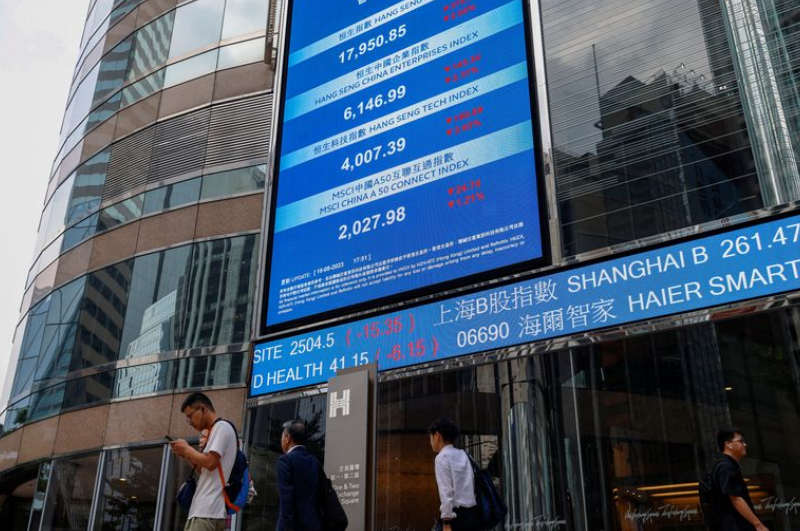
Equity markets, however, moved in the opposite direction. Major stock indices across Asia, Europe, and the United States declined as investors reacted to the heightened risk environment. US stock futures dropped, while European and Asian markets also registered losses, with sectors like airlines and manufacturing particularly affected due to rising fuel costs.
The underlying trigger for this market volatility is the collapse of recent peace talks between the US and Iran in Islamabad. Diplomatic efforts failed to produce an agreement, prompting Washington to take a more aggressive stance by targeting Iran’s oil exports.
The blockade is seen as a significant escalation in the ongoing conflict. By attempting to restrict Iran’s access to global markets, the US aims to exert economic pressure. However, such actions also risk retaliation, further destabilizing the region.
Energy markets are especially sensitive to developments in the Middle East. Any disruption in the Strait of Hormuz has immediate global consequences, as alternative supply routes are limited and often more expensive.
The surge in oil prices is already raising concerns about inflation. Higher energy costs can ripple through the global economy, increasing transportation, manufacturing, and consumer prices. Analysts warn that sustained high oil prices could delay interest rate cuts by central banks or even force further tightening.
For countries like India, which rely heavily on oil imports, the situation could lead to higher fuel prices and increased fiscal pressure. A stronger dollar also makes imports more expensive, adding another layer of economic strain.
Interestingly, while oil surged and stocks fell, gold—traditionally a safe-haven asset—showed mixed movement. This suggests that investors are balancing inflation concerns with expectations of central bank policy responses.
Experts say the current market reaction reflects a classic “risk-off” sentiment. When geopolitical tensions rise, investors typically move away from equities and toward commodities like oil and currencies like the US dollar.
The situation also highlights the interconnected nature of global markets. A single geopolitical event can trigger cascading effects across commodities, currencies, and equities within hours.
Looking ahead, much will depend on how the situation evolves. If tensions escalate further or the blockade is fully enforced, oil prices could rise even higher, potentially crossing previous peaks seen during earlier crises.
On the other hand, any renewed diplomatic efforts or easing of tensions could stabilize markets and bring prices down. However, for now, uncertainty remains high.
Market participants are closely watching developments, including potential responses from Iran and reactions from other global powers. The coming days are likely to be critical in determining the direction of both geopolitical events and financial markets.
In conclusion, the surge in oil prices above $100, combined with a stronger dollar and falling stocks, underscores the far-reaching impact of geopolitical tensions. As the US moves to blockade Iran, global markets are bracing for continued volatility and economic uncertainty.
Summary
Oil surged above $100, dollar strengthened, and global stocks fell after US announced Iran blockade, raising fears of supply disruption, inflation, and prolonged market volatility amid escalating geopolitical tensions.