

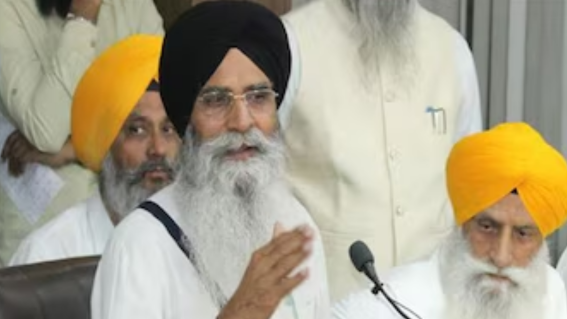
26 February 2026 (Navroze Bureau) : In a significant development within Sikh religious administration, the Shiromani Gurdwara Parbandhak Committee (SGPC) has removed Giani Raghbir Singh from the position of Head Granthi of the Golden Temple, Sikhism’s holiest shrine. The decision was taken during a key SGPC meeting and is being viewed as a major administrative move with religious and community implications.
The Head Granthi holds a highly respected spiritual role, responsible for leading religious ceremonies, reciting Gurbani, and guiding devotees at the Golden Temple. The position also carries symbolic significance for Sikhs worldwide, making any change in leadership a matter of wide attention across the global Sikh community.
Sources familiar with the meeting stated that the decision followed internal deliberations regarding administrative and religious responsibilities. While SGPC officials have not publicly detailed all reasons behind the move, the action is understood to be part of broader institutional considerations related to management practices and governance.
The SGPC, often referred to as the “parliament of Sikh religious affairs,” manages gurdwaras and religious institutions across Punjab and beyond. Its decisions carry substantial influence over Sikh religious administration, education, and heritage preservation.
Giani Raghbir Singh had served in the role with responsibility for overseeing daily religious proceedings at the Golden Temple complex. During his tenure, he participated in major religious observances, festivals, and ceremonial functions attended by thousands of devotees.
The removal decision has sparked discussion among Sikh scholars, religious leaders, and community members. Some observers see the move as an internal administrative step within SGPC’s authority, while others have called for transparency regarding the reasons behind the change.
Religious experts note that leadership roles within major gurdwaras are periodically reviewed to ensure adherence to religious protocols and effective management. However, due to the prominence of the Golden Temple, such decisions often attract heightened public attention.
Community voices have emphasized the need to maintain the sanctity and dignity of Sikh religious institutions while ensuring that administrative decisions are made in the spirit of transparency and accountability.
The Golden Temple, also known as Sri Harmandir Sahib, is a central place of worship for Sikhs and attracts millions of visitors annually from India and around the world. Its spiritual leadership plays a key role in preserving religious traditions and guiding devotees.
Following the decision, SGPC officials are expected to announce interim arrangements and appoint a successor to ensure continuity in religious services. Religious ceremonies and daily prayers at the shrine continue uninterrupted.
The development comes amid ongoing discussions about governance, accountability, and modernization within Sikh religious institutions. Community leaders have repeatedly stressed the importance of balancing tradition with administrative efficiency.
Members of the Sikh diaspora are also closely monitoring the situation, reflecting the global importance of the Golden Temple’s leadership structure. Decisions taken by SGPC often resonate far beyond Punjab, influencing Sikh communities worldwide.
Experts note that leadership transitions within religious institutions can provide opportunities to strengthen governance structures and reinforce adherence to spiritual principles. However, they also stress the importance of communication and consensus to maintain unity within the community.
While reactions continue to emerge, the SGPC’s decision underscores its central role in managing Sikh religious affairs and maintaining the operational and spiritual integrity of major gurdwaras.
Further announcements regarding the appointment of a new Head Granthi are expected in the coming days.
Summary
The SGPC removed Giani Raghbir Singh as Head Granthi of the Golden Temple, a major decision affecting Sikh religious administration and prompting community discussion about governance, transparency, and leadership continuity.