

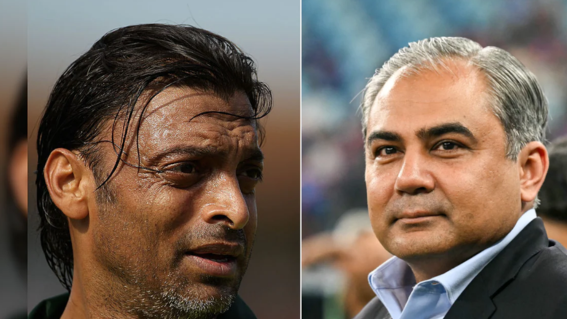
17 February 2026 (Navroze Bureau) : Former Pakistan fast bowler Shoaib Akhtar found himself at the centre of controversy after making a sharp remark against Mohsin Naqvi, only to later make an embarrassing U-turn following widespread criticism. The episode has once again highlighted the volatile nature of cricket discourse in Pakistan, where former players’ comments often trigger intense public debate.
The controversy began when Akhtar, known for his outspoken opinions, allegedly referred to Mohsin Naqvi as “illiterate” during a public discussion. The remark quickly spread across social media platforms and television debates, drawing sharp reactions from fans, analysts, and officials alike. Many criticised the former pacer for making a personal attack rather than engaging in constructive criticism.
Mohsin Naqvi, who currently holds a key administrative role in Pakistan cricket, has been under scrutiny over recent decisions related to team management and governance. Akhtar’s comments were seen by many as part of a broader pattern of former cricketers publicly questioning the competence of administrators amid Pakistan cricket’s ongoing struggles.
However, the backlash against Akhtar was swift and intense. Social media users accused him of crossing a line, while several commentators pointed out that personal insults undermine meaningful discussion about cricket administration. Some even called for accountability, urging broadcasters and digital platforms to rein in inflammatory remarks.
Within hours of the controversy escalating, Shoaib Akhtar appeared to soften his stance. In a subsequent clarification, he backtracked from his earlier comment, stating that his words had been misunderstood or taken out of context. He stressed that he did not intend to insult anyone personally and that his criticism was aimed at decisions, not individuals.
“I may have used the wrong choice of words,” Akhtar said in his clarification. “My intention was to talk about the system and decision-making in Pakistan cricket, not to demean any person.”
The reversal was widely described as an embarrassing U-turn, particularly given Akhtar’s reputation for standing firm on his opinions. Critics argued that the damage had already been done, noting that such remarks contribute to a toxic environment around Pakistan cricket.
Supporters of Akhtar, however, defended him by saying that his passion for the game often leads him to speak bluntly. They claimed that while his language may have been harsh, the underlying concerns about governance and transparency in cricket administration should not be ignored.
Mohsin Naqvi, for his part, did not immediately respond publicly to Akhtar’s initial comment. Sources close to the administrator suggested that he preferred not to escalate the issue further, focusing instead on his official responsibilities. Observers noted that the absence of a direct response may have helped prevent the controversy from spiralling further.
The incident has reignited debate over the role of former cricketers as commentators and influencers. With massive followings on television and digital platforms, their words carry significant weight. Media experts argue that while critical analysis is essential, personal attacks risk overshadowing genuine issues within the sport.
Pakistan cricket has long been plagued by internal conflicts, administrative instability, and public spats between players and officials. Episodes like this, analysts say, reflect deeper frustrations within the cricketing community but also highlight the need for more measured dialogue.
Some former players urged restraint, calling on ex-cricketers to use their platforms responsibly. “Criticism should be constructive,” said one former international cricketer. “Personal remarks only distract from the real problems that need attention.”
The controversy also sparked discussions about accountability in sports commentary. As digital media blurs the line between opinion and provocation, calls are growing for clearer standards on public discourse, especially when it involves national sporting institutions.
For Shoaib Akhtar, the episode serves as a reminder that even outspoken voices must weigh their words carefully. While his passion and honesty have earned him a loyal following, this incident has shown how quickly public opinion can turn when criticism crosses into personal territory.
As Pakistan cricket continues to navigate challenges on and off the field, fans hope that debates—however intense—remain focused on improving the game rather than fuelling unnecessary controversies.
Summary
Shoaib Akhtar faced backlash after calling Mohsin Naqvi “illiterate” and later made an embarrassing U-turn, clarifying his remarks amid criticism and reigniting debate over responsible cricket commentary.