

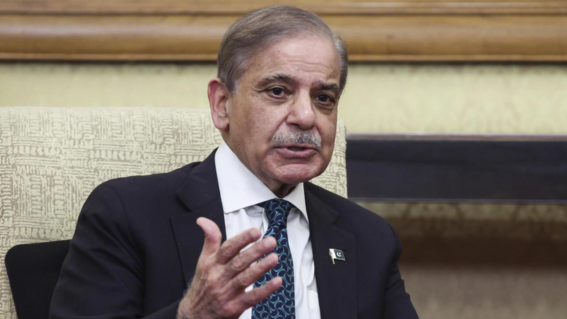
5 February 2026 (Navroze Bureau) : Pakistan Prime Minister has said that Islamabad is standing firmly with Bangladesh following reports that Dhaka is considering a boycott of its T20 World Cup match against India. Describing the position as a “considered stance,” the Prime Minister indicated that Pakistan supports Bangladesh’s concerns and views the issue as one that goes beyond cricket, touching upon broader political and diplomatic sensitivities.
The remarks come amid heightened tensions surrounding international sporting engagements in South Asia, where cricket often intersects with geopolitics. While official confirmation from Bangladesh Cricket authorities on a final decision is still awaited, the Prime Minister’s statement has added a new dimension to the unfolding situation, placing Pakistan squarely in support of its regional ally.
According to the Prime Minister, Pakistan believes that sporting events cannot be completely isolated from political realities when fundamental concerns are involved. He stressed that Bangladesh’s position should be understood in the context of its national sentiment and circumstances, and that regional solidarity was important at such a time.
The T20 World Cup, one of the most watched global sporting events, is expected to feature high-voltage matches, none more intense than games involving India, Pakistan, or their neighbours. An India–Bangladesh clash would normally be a marquee encounter, drawing massive viewership and commercial interest. Any boycott or withdrawal would therefore have significant sporting, financial, and diplomatic implications.
Cricket boards and tournament organisers are closely monitoring the situation. Sources indicate that the International Cricket Council (ICC) has sought clarity from all stakeholders, emphasising the importance of maintaining the integrity of the tournament. The ICC traditionally maintains a neutral stance on political matters, urging member boards to honour their sporting commitments.
Pakistan’s support for Bangladesh has sparked debate within cricketing and political circles. Some analysts see the statement as a strategic diplomatic signal, reinforcing regional alignments and shared positions on broader issues. Others argue that involving politics in sport risks undermining the spirit of international competition and could set an uncomfortable precedent.
Within Pakistan, reactions to the Prime Minister’s comments have been mixed. Supporters have praised the government for standing by a neighbouring country and asserting a principled position. Critics, however, have questioned whether such statements could further isolate Pakistan cricket, which has already faced challenges related to hosting international matches and maintaining consistent bilateral series.
Bangladesh, for its part, has so far maintained an official silence at the highest political level, with cricket officials indicating that discussions are ongoing. Sources suggest that Dhaka is weighing multiple factors, including diplomatic considerations, player security, public sentiment, and potential consequences from the ICC if a boycott were to take place.
India has not issued a formal response to the Prime Minister’s remarks. However, officials and former players have repeatedly stated in similar situations that sports should not be used as a political tool and that cricket serves as a bridge between nations rather than a battleground for disputes.
Former cricketers and commentators across the region have urged restraint. Many have highlighted that players prepare for years to compete on the world stage and that denying them the opportunity due to political tensions could be unfair. They have also pointed out that fans worldwide look forward to such matches, which often transcend rivalry and bring people together.
From a commercial standpoint, a boycott would be a major setback. India-related matches generate some of the highest revenues through broadcasting rights, sponsorships, and ticket sales. Any disruption could affect not only the ICC but also host nations, broadcasters, and sponsors who invest heavily in the tournament.
The Prime Minister’s use of the term “considered stance” suggests that Pakistan views the issue as a carefully thought-out position rather than a reactive or emotional response. He reiterated that Pakistan respects Bangladesh’s sovereignty and decision-making process, and that its support is based on shared understanding rather than external pressure.
As the situation evolves, the ICC faces the delicate task of balancing its apolitical charter with the realities faced by member nations. It may explore options such as rescheduling, neutral venues, or diplomatic engagement to ensure the tournament proceeds smoothly.
Ultimately, whether Bangladesh proceeds with a boycott or chooses to play will shape the narrative of this T20 World Cup. Pakistan’s public backing has ensured that the issue has moved beyond cricket boards into the realm of international politics.
For now, uncertainty hangs over one of the tournament’s potentially most anticipated fixtures. The coming days will be crucial in determining whether diplomacy, sport, or a compromise can prevail in preserving both regional relations and the spirit of the game.
Summary:
Pakistan’s Prime Minister said Islamabad supports Bangladesh’s considered stance on possibly boycotting its T20 World Cup match against India, highlighting how regional politics continue to intersect with international cricket.