

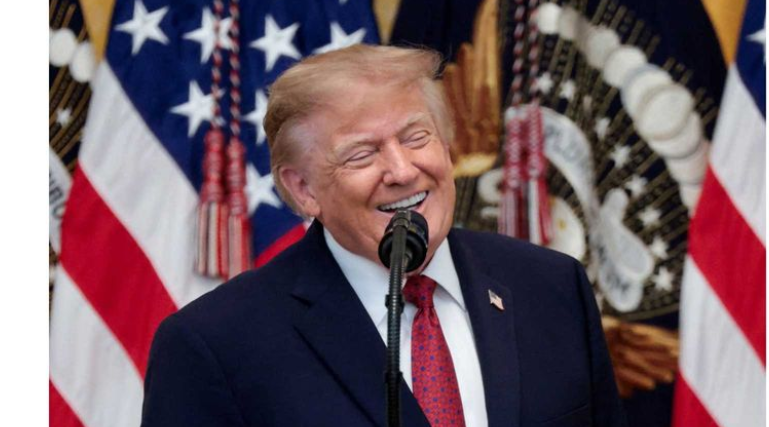
1 October 2026 (Navroze Bureau) US President Donald Trump has announced the departure of the last American forces from Iraq, marking the formal end of the US military presence in the country after more than two decades of involvement and a 12-year mission focused on defeating the Islamic State group, also known as ISIS.
Trump made the announcement on Wednesday as the final US-led coalition forces completed their withdrawal from Iraq. The move follows a phased agreement between Washington and Baghdad under which the international coalition’s military mission against ISIS in Iraq was brought to an end.
Speaking at the White House, Trump described the departure as a major milestone for the United States and Iraq. He said the withdrawal marked the conclusion of a long and costly period of American military involvement in the country. Trump characterized the US intervention as a quagmire and said the time had come for American forces to return home.
The final troops departed from Erbil Air Base in Iraq’s semi-autonomous Kurdistan region, according to US military officials. Their departure formally concludes Operation Inherent Resolve’s military mission in Iraq, which began in 2014 after ISIS captured large areas of Iraq and Syria and posed a major threat to regional security.
The US military said the orderly departure of coalition forces and equipment from Erbil marked the successful completion of the mission to defeat ISIS as an organized military force in Iraq. The Pentagon said the transition would move Iraq from a wartime coalition arrangement toward an Iraqi-led security effort supported by a more conventional bilateral relationship between Washington and Baghdad.
The withdrawal represents another major turning point in America’s long and complicated history in Iraq. The United States invaded Iraq in 2003, removing President Saddam Hussein from power. American troops remained in the country for years amid an insurgency, sectarian violence and political instability. At the height of the US occupation, the American military presence reached well over 100,000 troops.
The United States formally withdrew its combat forces from Iraq in 2011. However, the rise of ISIS dramatically changed the security situation. In 2014, American forces returned as part of an international coalition established to help Iraqi and Kurdish forces defeat the extremist organization.
Over the following years, the coalition provided air support, intelligence, training and other assistance to Iraqi security forces. ISIS eventually lost the vast majority of the territory it had controlled, including major cities such as Mosul. Although the group no longer controls large areas of Iraq, its remnants continue to operate through smaller cells and sporadic attacks.
The latest withdrawal does not mean that all security cooperation between Iraq and the United States has ended. Washington and Baghdad are expected to maintain a bilateral security relationship involving training, military cooperation, intelligence sharing and other forms of assistance. US forces involved in regional counterterrorism operations have also been repositioned outside Iraq.
The US military’s departure comes at a sensitive time for Iraq and the wider Middle East. Iraq has sought to strengthen its sovereignty while balancing relations with Washington, Iran and other regional powers. Iran maintains significant political, economic and security ties with Iraq, while several Iran-aligned armed groups continue to operate inside the country.
The presence of powerful militias remains one of the key security challenges facing the Iraqi government. Baghdad has sought to bring armed groups more firmly under state control, but some factions have resisted calls to surrender their weapons. The deadline for militia disarmament has been extended, adding uncertainty to Iraq’s post-US military environment.
There are also concerns about whether ISIS could exploit any security gaps following the American withdrawal. Iraqi security forces have gained significant experience and capabilities since the fight against ISIS began, but the extremist group remains capable of conducting attacks through underground networks.
US officials, however, have emphasized that ISIS has been significantly weakened compared with its peak. The group’s territorial control has been eliminated, while Iraqi security forces now carry primary responsibility for maintaining security across the country.
For Iraq, the departure carries strong symbolic significance. Iraqi authorities have presented the withdrawal as a step toward greater national sovereignty and an opportunity to establish a security relationship with the United States based on cooperation rather than a permanent foreign military presence.
For Washington, the withdrawal closes another major chapter in America’s post-2001 military engagements. Trump said the United States had completed its mission and that there was no reason for American troops to remain permanently in Iraq.
The end of the military presence also highlights the transformation of the US-Iraq relationship over more than two decades. From invasion and occupation to counterterrorism operations and security cooperation, the relationship has undergone several major changes.
The final departure therefore represents more than a troop movement. It marks the end of a long-running US military mission inside Iraq and begins a new phase in which Iraqi forces carry primary responsibility for the country’s security. At the same time, Washington is expected to retain diplomatic, economic and security ties with Baghdad.
As the last American troops leave, the future of Iraq’s security will depend largely on the strength of its national institutions, the ability of its security forces to contain ISIS remnants, and the government’s capacity to manage powerful armed groups and competing regional influences.