

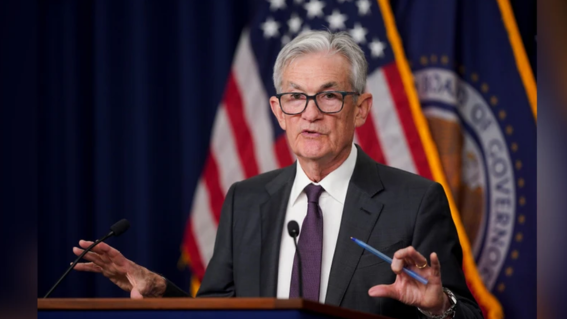
December 11, 2025 (Navroze Bureau) ; In a move that was widely expected by global markets, the U.S. Federal Reserve has once again cut its key interest rate by 25 basis points, marking the third consecutive reduction this year. With this adjustment, the federal funds rate now stands at 3.50%–3.75%, the lowest level seen since early 2022. The decision reflects the central bank’s attempt to strike a balance between persistent inflation, a softening labour market, and evolving global economic risks.
Why the Fed Cut Rates
The Federal Reserve cited multiple reasons behind the latest rate cut:
- Labour Market Weakness:
Recent data shows that job growth in the U.S. has slowed significantly, with rising unemployment claims and hiring across many sectors dropping to multi-month lows. The Fed acknowledged that although the job market remains stronger than pre-pandemic levels, signs of cooling warrant policy support. - Inflation Moderation:
Inflation has eased from its earlier peak but remains above the Fed’s preferred 2% target. Policymakers noted that while progress has been made, inflationary pressures are still too high to ignore. A controlled rate cut aims to support growth without reigniting price surges. - Global Economic Uncertainty:
Weak global demand, geopolitical tensions, and slowing economic conditions in Europe and Asia also influenced the Fed’s more cautious approach. These factors could impact U.S. exports and business sentiment if not closely managed.
Cautious Outlook for 2026
Alongside the rate decision, the Federal Reserve released updated economic projections, signalling a more restrained policy path in the coming year. The central bank now expects only one additional rate cut in 2026, compared to earlier expectations of two or more. This shift highlights the Fed’s confidence that the economy may stabilise but also its concern about lingering inflationary pressures.
Federal Reserve Chair Jerome Powell described the current economic phase as “a time for careful assessment, not aggressive action.” He emphasised that future rate decisions will depend entirely on incoming economic data rather than preset plans.
Division Among Policymakers
The December vote revealed rare internal disagreement within the Federal Open Market Committee (FOMC). Three members dissented — the highest number of differing votes in several years. Some argued that the Fed should have paused further cuts until inflation cooled more noticeably, while others believed a deeper rate reduction was needed to prevent recession risks.
Despite these differing views, the majority agreed that a modest cut offered the best compromise between containing inflation and supporting growth.
Market Reaction
U.S. stock markets reacted positively to the announcement. The Dow Jones and S&P 500 both rallied sharply, as investors interpreted the decision as a sign of the Fed’s commitment to cushioning the economy. Bond yields dipped as traders priced in a more accommodative policy environment.
The foreign exchange market also responded, with the U.S. dollar briefly weakening against major global currencies. A lower interest rate generally makes the dollar less attractive to foreign investors seeking higher returns.
Impact on Americans
For everyday consumers and businesses, the latest rate cut could bring both benefits and trade-offs:
- Borrowing Costs Fall:
Mortgages, car loans, personal loans, and business credit may become slightly cheaper. This could encourage more home purchases or refinancing activity. - Savings Rates Decline:
On the flip side, interest earned on savings accounts, certificates of deposit, and money-market funds may decline further as banks adjust their offerings. - Small Businesses Gain Relief:
With lower borrowing costs, small and medium-sized enterprises may find it easier to finance expansion, invest in new technology, or hire additional workers. - Consumer Spending Could Rise:
Cheaper credit often stimulates consumer spending, helping boost demand across retail, travel, and services.
Economic Outlook Moving Forward
The Federal Reserve expects the U.S. economy to grow steadily in 2026, though at a moderate pace. Inflation is projected to gradually cool closer to the 2% target. However, uncertainties like global oil prices, geopolitical conflicts, supply chain disruptions, and political events remain wild cards that could influence the trajectory.
Economists note that the Fed is attempting a careful balancing act — stimulating growth enough to avoid recession while avoiding over-easing that may cause inflation to rebound.
Powell stressed that the central bank is committed to “preserving stability and predictability” as the country approaches a new economic cycle. He also highlighted the importance of remaining data-dependent to avoid unnecessary policy mistakes.
What to Expect Next
Most analysts expect the Fed to pause rate cuts for the next few months to evaluate the impact of recent easing. Unless inflation falls sharply or a sudden recession signal emerges, policymakers are likely to remain conservative.
The next few inflation reports, jobs data, and consumer spending figures will play a crucial role in shaping the Fed’s decisions for early 2026. Market experts believe that if the economy stabilises as expected, the U.S. could avoid a major downturn and head toward a soft landing.
Summary
The U.S. Federal Reserve cut interest rates by 25 basis points, marking its third reduction this year, and signaled only one more cut in 2026 as the economy shows signs of stabilizing amid inflation concerns.