

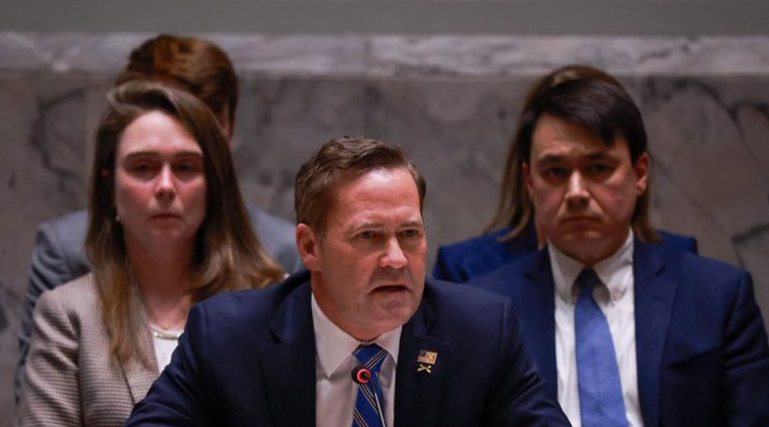
28 September 2026 (Navroze Bureau) The United States rejected Iran’s proposal to reopen the Strait of Hormuz because Tehran sought sanctions relief and access to billions of dollars in frozen Iranian assets before broader negotiations, US Ambassador to the United Nations Mike Waltz said.
Waltz said Iran’s seven-day proposal effectively asked Washington to make major concessions first, with negotiations to follow. Iran, however, has disputed the US characterisation of its proposal and said it remains open to diplomacy.
What Did Iran Propose?
Iranian Foreign Minister Abbas Araghchi said Tehran had offered a seven-day roadmap under which the Strait of Hormuz could be reopened on the sixth day, followed by negotiations with the United States on the seventh.
The proposal was transmitted through mediators and was presented as a possible route toward ending the conflict and restarting negotiations, including discussions related to Iran’s nuclear programme.
However, Iran’s proposed sequencing required Washington to first ease military and economic pressure, lift its maritime blockade, release frozen Iranian assets and allow oil sales. The reopening of Hormuz would then follow.
Why Washington Rejected the Proposal
Waltz said the main problem was that Iran wanted the concessions up front.
In an interview with CNN, he said Tehran was seeking relief from sanctions as well as access to billions of dollars in frozen funds before negotiations over its nuclear programme.
Waltz argued that the United States was not prepared to provide major economic concessions merely on the promise that Iran would subsequently negotiate. He also questioned whether Tehran was prepared to negotiate in good faith.
Frozen Iranian Assets at the Centre of Dispute
Access to frozen Iranian assets is a particularly important part of Tehran’s demands.
The Indian Express reported that Iran’s proposal included the release of an estimated $12 billion in frozen Iranian assets, along with sanctions waivers covering Iranian oil and an end to the US naval blockade.
The United States, meanwhile, maintains that sanctions have been imposed not only by Washington but also through international mechanisms. Waltz specifically referred to UN “snapback” sanctions linked to Iran’s nuclear activities.
Iran Says Diplomacy Remains Possible
Iran has rejected the suggestion that its proposal was simply an attempt to obtain economic relief without making commitments.
Araghchi said Tehran remains committed to diplomacy and that reopening the Strait of Hormuz is conditional on the terms Iran has outlined. Iranian President Masoud Pezeshkian also said Iran was prepared to negotiate on its nuclear programme and other issues but would not accept what he described as bullying or coercion.
Iran has also indicated that it is prepared for the possibility of renewed military confrontation if diplomacy fails.
Why the Strait of Hormuz Matters
The Strait of Hormuz is a critical route for global energy shipments, making its reopening a major economic and geopolitical issue.
Iran’s control over access to the waterway gives Tehran significant leverage in negotiations. Washington, meanwhile, wants the strait reopened and shipping restored without first conceding the economic and military demands made by Tehran.
Earlier reporting indicated that both sides had explored a phased arrangement in which reopening Hormuz and lifting the US blockade would occur as part of reciprocal steps.
The Main Disagreement Is Sequencing
The dispute is therefore not simply about whether Hormuz should reopen.
The key disagreement is which side acts first.
Iran wants Washington to ease military and economic pressure before reopening the waterway. The United States has rejected that sequencing and is demanding meaningful Iranian action rather than granting major concessions before negotiations.
This sequencing issue has become one of the biggest obstacles to a diplomatic breakthrough.
Nuclear Talks Remain a Central Issue
The Hormuz dispute is closely connected to the wider disagreement over Iran’s nuclear programme.
Washington has repeatedly said preventing Iran from obtaining a nuclear weapon is a major objective. Iran has said it is ready to discuss its nuclear programme but rejects negotiations conducted under military or economic coercion.
Waltz said the Trump administration wants negotiations to produce an agreement addressing Iran’s nuclear programme rather than simply securing temporary concessions on shipping.
What Happens Next?
The rejection of the proposal does not necessarily close the door to further negotiations.
Iran has continued to say that diplomacy remains possible, while US officials have indicated that Washington remains interested in a deal under terms it considers acceptable.
The immediate challenge will be finding a sequence of reciprocal steps that allows the Strait of Hormuz to reopen while addressing US demands over Iran’s nuclear programme and Iran’s demands for sanctions relief, an end to the blockade and access to frozen assets.
For now, however, the two sides remain divided over who should make the first major concession.