

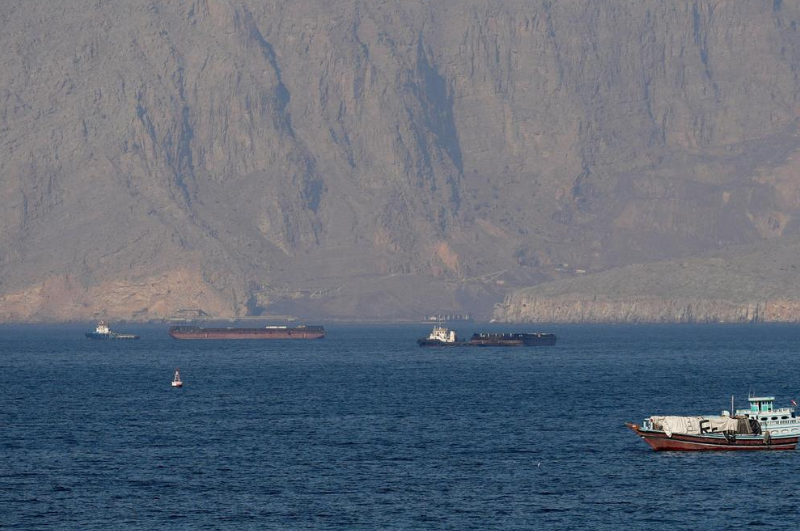
May 4, 2026 (Navroze Bureau) : A commercial oil tanker has been struck by “unknown projectiles” off the coast of the United Arab Emirates, according to the United Kingdom Maritime Trade Operations (UKMTO), raising fresh concerns over maritime security in the already volatile Gulf region.
The incident reportedly occurred approximately 78 nautical miles north of Fujairah, a key port city in the UAE located near the strategically critical Strait of Hormuz. The UKMTO, which monitors maritime security in the region, confirmed that the vessel reported being hit but assured that all crew members onboard were safe.
While details about the nature of the projectiles remain unclear, authorities have launched an investigation into the incident. There has been no official confirmation regarding the source of the attack or the extent of damage to the tanker.
Importantly, initial reports indicate that there has been no environmental damage, such as oil leakage, following the strike. This has helped avert immediate ecological concerns, though maritime agencies continue to monitor the situation closely.
The UKMTO has issued advisories to vessels operating in the region, urging them to exercise extreme caution and report any suspicious activity. The agency emphasized that shipping traffic in the area remains vulnerable amid rising geopolitical tensions.
The location of the attack is particularly significant. The waters near Fujairah lie close to the Strait of Hormuz, one of the world’s most critical maritime chokepoints through which a substantial portion of global oil supply passes. Any disruption in this corridor can have immediate ripple effects on global energy markets and supply chains.
This latest incident adds to a growing list of maritime security events in the Gulf region in recent months. Multiple vessels, including container ships and bulk carriers, have reported being hit by unidentified projectiles or facing suspicious activities while transiting through nearby waters.
Analysts link the surge in such incidents to escalating tensions involving Iran, the United States, and regional actors. The ongoing conflict dynamics have increased risks for commercial shipping, with vessels becoming potential targets in a broader geopolitical standoff.
Earlier reports have also indicated attacks involving drones and missiles on ships and energy infrastructure across the Gulf. These developments have heightened fears among shipping companies, insurers, and global markets, leading to increased insurance premiums and rerouting of vessels to avoid high-risk zones.
Maritime experts warn that even isolated incidents like this can have disproportionate consequences. “A single strike on a tanker in such a sensitive region can disrupt trade routes, raise oil prices, and escalate geopolitical tensions,” a maritime security analyst noted.
Shipping companies are now adopting additional safety measures, including enhanced surveillance, coordination with naval forces, and revised navigation routes. Some operators are also delaying shipments or avoiding the Strait of Hormuz altogether, further straining global supply chains.
The UAE authorities have not yet issued a detailed statement on the incident, but regional governments are closely monitoring developments. International stakeholders, including major oil-importing nations, are also keeping a close watch due to the potential impact on energy security.
The broader context of the incident cannot be ignored. The Gulf region has witnessed heightened military activity, including warnings, retaliatory threats, and naval deployments. This has created an environment of uncertainty where commercial shipping is increasingly exposed to risks.
Despite the attack, the absence of casualties and environmental damage has been seen as a positive outcome. However, experts caution that the situation remains fragile and could escalate quickly if similar incidents continue.
Diplomatic efforts to de-escalate tensions in the region are ongoing, but progress has been limited. Until a stable resolution is reached, maritime security is expected to remain a major concern for both regional and global stakeholders.
For now, the focus remains on ensuring the safety of crews and vessels navigating through the Gulf. Authorities and maritime agencies are urging heightened vigilance as investigations into the latest incident continue.
In conclusion, the tanker strike off the UAE coast highlights the growing risks facing global shipping routes in conflict-prone regions. While no casualties were reported, the incident underscores the urgent need for enhanced security measures and diplomatic efforts to stabilize one of the world’s most critical maritime corridors.
Summary:
A tanker was hit by unknown projectiles near the UAE coast, with crew safe and no spill reported. The incident raises concerns over maritime security amid escalating tensions in the Gulf region.