

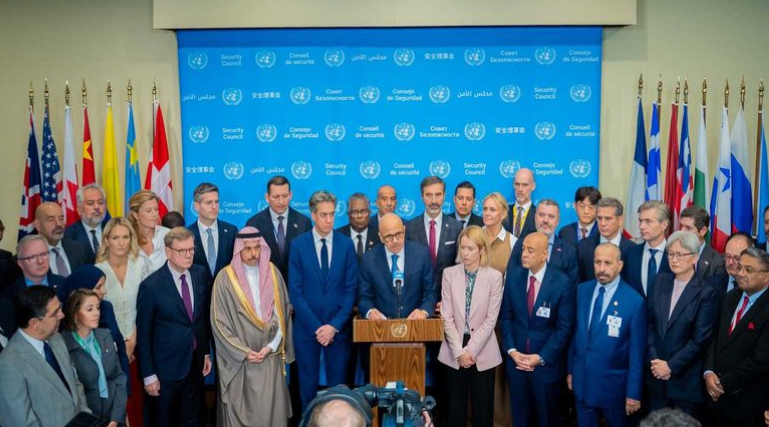
25 September 2026 (Navroze Bureau) Bahrain has led a group of 80 countries in calling for the urgent reopening of the Strait of Hormuz, demanding the restoration of safe and unrestricted maritime navigation through the strategic waterway.
The joint statement was delivered at the United Nations as the continuing West Asia conflict disrupted international shipping, energy supplies and regional security.
80 Countries Back Maritime Reopening
Bahrain’s Foreign Minister Abdullatif Al Zayani read the joint statement on Thursday, calling for the full restoration of navigational rights and principles without delay.
The participating countries said commercial vessels should be able to pass through the waterway safely and without what they described as tolls, conditions or illegal charges.
Why the Strait of Hormuz Matters
The Strait of Hormuz is one of the world’s most important maritime routes for energy supplies.
Large volumes of crude oil and other petroleum products normally pass through the narrow waterway, connecting the Persian Gulf with the Gulf of Oman and the wider Indian Ocean.
Any prolonged disruption can therefore affect shipping costs, energy markets and fuel prices far beyond the Middle East.
Countries Warn of Threat to Global Trade
The countries backing the statement said restrictions on navigation were threatening international trade and energy security.
Bahrain said the threat to maritime movement remained serious and was continuing to grow.
The call comes as attacks and security incidents around the waterway have made shipping companies increasingly cautious about sending vessels through the region.
Iran and Houthi Attacks Condemned
The joint statement also condemned Iran and its Houthi allies over attacks and disruptions affecting shipping.
Reuters reported that the participating countries said Iran’s actions in the Strait of Hormuz were threatening international security and navigational rights.
The statement represents the position of the countries that signed it; Iran’s government has disputed international criticism of its actions and maintains its own security arguments concerning the waterway.
Pressure on Global Energy Markets
The disruption has already created uncertainty in global energy markets.
Higher shipping risks can increase freight and insurance costs, while concerns over the availability of crude and refined products can contribute to volatility in international oil prices.
Countries heavily dependent on imported energy are particularly sensitive to prolonged disruptions.
Impact on India and Asia
The Strait of Hormuz is especially important for Asian economies because the region accounts for a major share of global energy demand.
Any sustained reduction in shipping through the waterway can affect oil-importing countries such as India by raising transportation and energy costs and potentially increasing pressure on domestic fuel prices.
Call for Unrestricted Passage
The 80 countries are seeking the restoration of maritime movement without additional conditions or charges.
The demand reflects concerns that commercial shipping should not become a bargaining tool during a military or diplomatic confrontation.
UN Becomes Forum for International Pressure
The joint statement at the United Nations adds diplomatic pressure to the military and economic efforts already surrounding the Hormuz crisis.
It also shows the growing international concern over the effects of the conflict on countries that are not directly involved in the fighting.
Security Remains the Central Issue
Reopening the Strait of Hormuz depends not only on political declarations but also on maritime security.
Shipping companies need assurances that vessels and crews can move through the waterway without facing attacks, mines, missile threats or other dangers.
A Critical Test for Regional Diplomacy
The Bahrain-led appeal comes at a time when efforts are also being made to explore possible arrangements for reopening the waterway.
Any agreement would have to address navigation rights, security guarantees and the competing positions of Iran and countries involved in the conflict.