

26 October 2026 (Navroze Bureau) The newly released song ‘Mangal Rang’ from the much-anticipated film Ramayana: Part One has sparked a debate on social media, with several listeners questioning its musical style and others praising its melody and visuals. Composed by Oscar-winning music director A. R. Rahman, the track features the voices of Arijit Singh and Shreya Ghoshal, with lyrics penned by Kumar Vishwas.
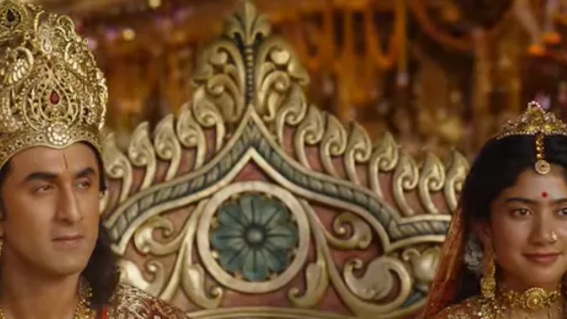
Released on October 25, 2026, the song depicts the love, wedding celebrations and sacred union of Lord Ram and Mata Sita, played by Ranbir Kapoor and Sai Pallavi in director Nitesh Tiwari’s upcoming mythological epic. While the makers have presented the track as an emotional musical expression of the couple’s relationship, its sound has divided listeners online.
Soon after the song’s release, several users on X questioned whether its qawwali- and Sufi-inspired sound was suitable for a film based on the Ramayana. Others compared parts of the composition to Rahman’s earlier work, particularly ‘Kun Faya Kun’ from the film Rockstar.
Why Is ‘Mangal Rang’ Facing Criticism?
Much of the criticism centres on the song’s musical arrangement. Some social media users said they expected a sound more closely associated with traditional Hindu devotional music or Sanskrit-based compositions for a film depicting one of India’s most revered epics.
One user questioned the use of what they described as Sufi qawwali beats in a story rooted in the Ramayana tradition. Another commented that the new song reminded them of ‘Kun Faya Kun’, suggesting that Rahman had reused a familiar musical approach.
Some listeners also alleged similarities between ‘Mangal Rang’ and the Tamil song ‘Enna Solla Pogirai’. Other online discussions referenced the traditional qawwali ‘Aaj Rang Hai’, particularly in relation to the use of the word “rang” and the track’s overall musical atmosphere.
These comparisons have contributed to the online debate, but they remain the opinions and allegations of individual listeners. No established finding has demonstrated that ‘Mangal Rang’ copies another composition.
The criticism also reflects differing expectations about how a major cinematic adaptation of the Ramayana should sound. While some audiences favour music strongly rooted in classical or devotional traditions, others welcome contemporary arrangements that reinterpret familiar stories for modern listeners.
AR Rahman’s Music Divides Listeners
A. R. Rahman is known for combining Indian musical traditions with contemporary arrangements and influences from different genres. His compositions have frequently blended devotional elements, classical instruments, electronic sounds and Western musical styles.
That approach has now become a point of discussion surrounding ‘Mangal Rang’. Some listeners have expressed disappointment, arguing that the song does not deliver the devotional atmosphere they expected from a film of this scale. Others have questioned whether the music creates the emotional impact required for a story with such deep cultural and religious significance.
However, reactions have not been uniformly negative. Some viewers have praised the track’s melody, the singers’ performances and the romantic presentation of Ram and Sita. Positive comments have also focused on the chemistry between Ranbir Kapoor and Sai Pallavi in the song’s visuals.
The contrasting responses illustrate how music for mythological films can generate strong opinions, particularly when audiences already have personal and cultural connections to the story being portrayed.
Arijit Singh and Shreya Ghoshal Bring Their Voices Together
One of the major attractions of ‘Mangal Rang’ is its vocal pairing. Arijit Singh and Shreya Ghoshal, two of the most recognisable voices in contemporary Indian film music, perform the song composed by Rahman.
Kumar Vishwas has written the lyrics, which accompany scenes depicting the relationship between Ram and Sita, including their wedding celebrations and journey together. The video features elaborate visuals intended to bring the epic’s central relationship to the screen.
The collaboration had generated considerable anticipation among music and film fans before release. However, the debate following the launch shows that a high-profile combination of singers and composer does not guarantee a unanimous response.
For some viewers, the song’s appeal lies in its melodic and emotional presentation. For others, the musical style does not match their expectations for a cinematic retelling of the ancient epic.
What Is the Controversy About the Film’s Music?
The discussion around ‘Mangal Rang’ comes amid wider public interest in Ramayana: Part One, which has attracted attention for its cast, scale and interpretation of the epic.
Directed by Nitesh Tiwari, the film features Ranbir Kapoor as Lord Ram and Sai Pallavi as Mata Sita. The cast also includes Yash, Sunny Deol, Ravi Dubey, Rakul Preet Singh, Arun Govil and Lara Dutta.
With audiences closely scrutinising the film’s casting, character portrayals, visuals and music, every new release has the potential to trigger fresh discussion. The song has added another dimension to those conversations, particularly around how contemporary filmmakers should approach music for stories with longstanding religious and cultural significance.
The film is scheduled for a worldwide theatrical release on November 5, 2026, according to published reports.
Will the Song Win Over Audiences?
The debate surrounding ‘Mangal Rang’ highlights the challenge of creating music for a story that carries deep meaning for millions of people. Audiences may have different expectations regarding instrumentation, lyrics, devotional expression and the balance between traditional and contemporary sounds.
Social media reactions provide an early indication of those differences, but they do not necessarily represent the views of all listeners. The song has received both criticism and appreciation, and its long-term reception will become clearer as more audiences hear it and the film approaches release.
For now, the central question is whether Rahman’s musical interpretation will connect with audiences once they experience the track within the larger cinematic narrative. The discussion has placed ‘Mangal Rang’ firmly in the spotlight, turning the song into one of the latest talking points surrounding the upcoming Ramayana adaptation.