

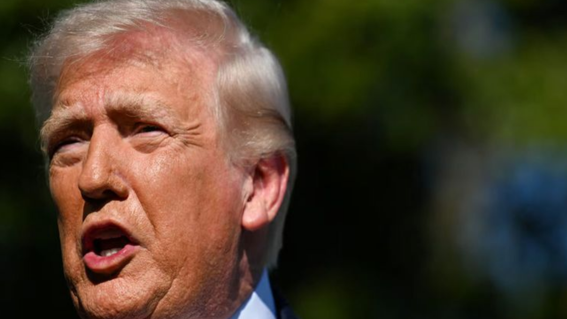
26 October 2026 (Navroze Bureau) US President Donald Trump has called on Libya to stop serving as a transit route for illegal migration, saying the practice “must end now.” At the same time, he reaffirmed Washington’s commitment to strengthening bilateral relations, combating terrorism and supporting Libya’s long-awaited political unification and national elections.
In a statement shared on his Truth Social platform on Sunday, October 25, Trump described the Libyan people as resilient and deserving of peace and prosperity. He highlighted cooperation between the United States and Libya in combating the Islamic State (ISIS), describing the group as a common enemy of both countries.
“We respect the Libyan people and the sacrifices that brave Libyans made fighting ISIS,” Trump said, while insisting that Libya could not continue to function as a corridor for illegal migration.
His statement combined a firm demand for action on migration with assurances that the United States remained committed to maintaining its relationship with Libya. However, he did not announce any new sanctions, enforcement measures or specific deadline for implementing additional controls.
Trump Calls for Stronger Migration Controls
Libya has long been a major transit point for migrants and refugees attempting to reach Europe across the Mediterranean Sea. Its location along the North African coast makes it an important departure point for people seeking to reach European countries, particularly Italy.
The migration issue has remained a concern for governments across the Mediterranean, with authorities seeking to reduce dangerous sea crossings and disrupt networks involved in migrant smuggling and human trafficking.
Trump’s latest remarks signal that Washington wants Libya to take stronger action against irregular migration routes. However, his statement did not provide details about what steps the Libyan authorities should take or how the United States would support enforcement efforts.
Libya’s divided political and security structures have complicated efforts to establish consistent governance across the country. Rival administrations and competing centres of authority have made it difficult to implement uniform policies nationwide, including those related to border security and migration management.
The United States has continued to engage with Libyan authorities on security and political matters, while migration remains an important issue in its broader regional policy.
US Backs Libya’s Political Unification
Alongside his demand for stronger migration controls, Trump reiterated Washington’s support for unifying Libya’s institutions and moving towards national elections.
Libya has experienced prolonged political instability since the 2011 uprising that ended Muammar Gaddafi’s rule. Disputes between rival political authorities, armed groups and competing institutions have repeatedly delayed efforts to establish a unified national government.
Trump said the United States remained committed to strengthening bilateral relations and supporting Libya as it moves towards national elections. He also called on Libyans to unite, reclaim their sovereignty and work towards a peaceful and prosperous future.
The statement did not specify a timetable for elections or outline a new US-led political initiative. Nevertheless, it reiterated Washington’s stated support for a political transition and stronger national institutions.
National elections have been a central issue in international efforts to resolve Libya’s political divisions. Disagreements over electoral laws, the authority of national institutions and the conditions for holding a vote have complicated the process.
Counterterrorism Cooperation Remains a Priority
Trump also highlighted the history of cooperation between the United States and Libya against ISIS. The militant group established a presence in Libya during the period of instability following Gaddafi’s fall, although Libyan forces and international partners later helped remove it from major territorial strongholds.
The US president said the sacrifices made by Libyans in fighting the group deserved recognition. His remarks indicated that counterterrorism cooperation remains an important part of the relationship between Washington and Tripoli.
Libya’s continuing security challenges, however, extend beyond the threat posed by ISIS. The presence of armed groups, fragmented security institutions and political divisions has complicated efforts to establish lasting stability.
Washington’s emphasis on counterterrorism and political unification reflects its broader interest in a more stable Libya capable of managing its territory and cooperating with international partners.
Libya Protests Earlier Trump Remarks
Trump’s comments came amid diplomatic tensions following remarks he made at a rally in Perry, Georgia, on Saturday. During the event, he described Libya and several other countries as “terror-infested” while criticising Democratic Senator Jon Ossoff over immigration-related legislation.
Libya’s Foreign Ministry subsequently summoned the US chargé d’affaires to protest against what it described as offensive remarks. The ministry said it rejected statements that undermined the dignity of the Libyan people.
Rival administrations in eastern and western Libya also criticised the remarks, objecting to what they viewed as attempts to draw the country into US domestic political debates.
Trump’s subsequent statement on Truth Social adopted a more conciliatory tone towards the Libyan people, praising their resilience and recognising their role in fighting ISIS. At the same time, he maintained his demand for an end to Libya’s role as a transit route for illegal migration.
The diplomatic exchange highlights the challenge of balancing migration and security demands with the broader objective of maintaining relations with Libya.
No New Enforcement Measures Announced
Although Trump called for immediate action, his statement did not specify whether Washington intends to introduce new restrictions, impose penalties or provide additional assistance to Libyan authorities.
The practical impact of the remarks will depend on whether they are followed by concrete diplomatic initiatives, security cooperation or measures aimed at strengthening Libya’s border and migration-management systems.
For now, the statement sets out the US administration’s priorities: reducing irregular migration, continuing cooperation against terrorism, supporting Libya’s political unification and encouraging a transition towards national elections.
The developments come as Libya continues to navigate political divisions and security challenges that have affected governance for more than a decade. Whether the renewed US appeal leads to tangible changes in migration policy or progress towards national elections remains to be seen.