

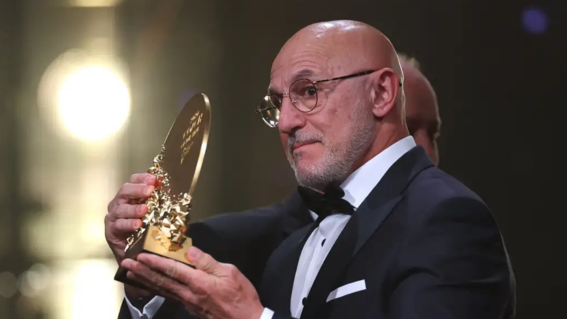
27 October 2026 (Navroze Bureau) Spain head coach Luis de la Fuente has been named Men’s Coach of the Year at the 2026 Ballon d’Or ceremony in London, receiving the prestigious Johan Cruyff Trophy after guiding Spain to FIFA World Cup glory. The award recognises his achievements with the national team during a successful period that has included major international titles.
The ceremony took place at London’s Palladium Theatre on October 26, marking the 70th anniversary of the Ballon d’Or awards. De la Fuente was selected ahead of a competitive shortlist featuring Paris Saint-Germain manager Luis Enrique, Arsenal boss Mikel Arteta, Aston Villa coach Unai Emery and Bayern Munich manager Vincent Kompany.
His victory follows Spain’s triumph at the 2026 FIFA World Cup, where the team defeated Argentina 1–0 in the final on July 19. The result secured Spain’s second World Cup title, following their first championship in 2010.
Spain’s World Cup Success Strengthens De la Fuente’s Case
De la Fuente’s leadership was central to Spain’s successful World Cup campaign. The team went through the tournament unbeaten and conceded just one goal, combining defensive organisation with attacking quality.
Spain’s campaign gathered momentum as the tournament progressed. The side defeated France 2–0 in the semi-final before facing Argentina in a closely contested final in New Jersey. Ferran Torres scored the decisive goal in the 1–0 victory, securing the world title for Spain.
The result represented another major milestone for De la Fuente, who has developed a successful team by combining experienced internationals with emerging young talent. His approach has emphasised collective responsibility, tactical discipline and the importance of players working together rather than relying solely on individual performances.
After receiving the award, De la Fuente highlighted the importance of teamwork and credited his players for their contribution to Spain’s achievements. He described the honour as recognition of years of work and praised the quality and commitment of the squad.
From Youth Football to Spain’s Senior Team
De la Fuente’s success has been built on years of experience within Spanish football. Before taking charge of the senior national team, he worked extensively with Spain’s youth sides, helping develop players who later became important members of the senior squad.
He joined the Spanish Football Federation’s coaching structure in 2013 and subsequently worked with the Under-19 and Under-21 teams, as well as the Olympic side. This experience gave him an opportunity to understand the country’s emerging talent and establish a consistent footballing approach across different age groups.
He took charge of Spain’s senior national team in December 2022. Since then, the team has collected several major honours, establishing a sustained period of success under his leadership.
In 2023, Spain won the UEFA Nations League, defeating Croatia in the final on penalties. The team then claimed the UEFA European Championship in 2024, beating England 2–1 in the final in Berlin.
The 2026 World Cup victory added another major international title to that record. Winning the European Championship and World Cup in successive major tournament cycles strengthened De la Fuente’s standing among international managers.
Strong Competition for the Coaching Award
The Men’s Coach of the Year category featured several prominent managers from European club football. Luis Enrique was nominated following his achievements with Paris Saint-Germain, while Mikel Arteta was recognised for his work at Arsenal.
Unai Emery, who has led Aston Villa through competitive domestic and European campaigns, and Vincent Kompany, manager of Bayern Munich, were also among the contenders.
However, De la Fuente’s success with Spain on the international stage proved decisive. Unlike club managers, who work with their squads throughout much of the season, national team coaches have limited preparation time between international fixtures. Major tournaments therefore place particular importance on tactical preparation, squad selection and the ability to build team cohesion quickly.
Spain’s unbeaten World Cup campaign and its record of conceding only once demonstrated the effectiveness of De la Fuente’s approach.
Spain Continues to Make Its Mark on World Football
De la Fuente’s award adds to Spain’s growing list of achievements in international and club football. The country has developed a generation of technically gifted players while maintaining a strong coaching structure through its youth development system.
The success of the national team has also coincided with Barcelona’s continued prominence in women’s football. At the same Ballon d’Or ceremony, Barcelona coach Pere Romeu received the Women’s Coach of the Year award after overseeing a successful season for the club.
For De la Fuente, the latest recognition represents another milestone in a career built through long-term development rather than a sudden rise to prominence. His journey from youth coaching to leading Spain to European and world titles highlights the importance of continuity, player development and a clear tactical identity.
With the Men’s Coach of the Year honour now added to his achievements, De la Fuente’s position in Spain’s recent football history has been further strengthened.