
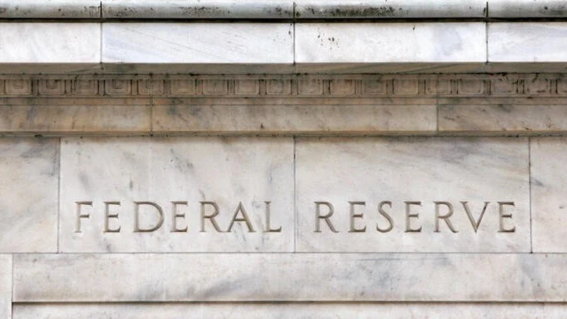
29 October 2026 (Navroze Bureau) The US Federal Reserve has kept interest rates unchanged, as widely expected, while two policymakers called for a further increase of 25 basis points amid persistent inflation concerns. The decision, announced on October 28, 2026, leaves the benchmark federal funds rate in the range of 3.75% to 4%.
The Federal Open Market Committee (FOMC), which determines the central bank’s monetary policy, voted 10–2 to maintain the current rate. Federal Reserve Governor Lisa Cook and Cleveland Federal Reserve Bank President Beth Hammack dissented, preferring to raise the target range by a quarter of a percentage point.
The decision highlights differences among policymakers over how aggressively the central bank should respond to inflation that remains above its long-term target.
Fed Signals Caution as Inflation Remains Elevated
In its latest policy statement, the Federal Reserve said economic activity in the United States was expanding at a strong pace. It also noted that domestic spending had remained resilient, productivity growth was strong and capital investment continued to be robust.
However, inflation remains elevated, creating uncertainty about the timing of the next policy adjustment. The central bank said it would assess additional economic information before determining the appropriate direction of monetary policy.
The Fed has a long-term inflation target of 2%. Bringing inflation sustainably back to that level remains a central objective, and policymakers are closely monitoring price trends, economic activity and financial conditions.
The decision to hold rates steady indicates that the majority of officials prefer to wait for further evidence before tightening monetary policy again.
Two Policymakers Support a Rate Increase
Lisa Cook and Beth Hammack were the two members who voted against the decision to maintain the existing rate range. Both preferred a 25-basis-point increase, which would have taken the benchmark rate to between 4% and 4.25%.
Their position reflects concerns that inflationary pressures may remain persistent despite previous monetary tightening. Higher energy prices, resilient consumer demand and continuing investment activity have complicated the inflation outlook.
A rate increase can help moderate demand by making borrowing more expensive for households and businesses. However, it can also increase financing costs for companies, homebuyers and consumers carrying loans.
The disagreement within the FOMC underscores the challenge facing the central bank: controlling inflation without unnecessarily weakening economic growth.
Economic Growth Remains Strong
The Federal Reserve upgraded its assessment of economic activity, describing growth as strong rather than solid. Domestic spending has remained resilient, while investment and productivity have continued to support the economy.
The labor market has also shown signs of stability, with job gains broadly keeping pace with workforce growth and the unemployment rate changing little, according to the Fed’s statement.
These conditions give policymakers room to focus on inflation, but they also complicate the decision about whether interest rates need to rise further. Strong demand can support economic activity while making it more difficult for inflation to return to the central bank’s target.
Officials will need to assess incoming economic data to determine whether inflation is easing sufficiently or whether additional rate increases are necessary.
What the Decision Means for Borrowers and Investors
The decision to keep rates unchanged provides no immediate change in the federal funds rate, but it does not rule out further increases in the coming months.
Borrowing costs for credit cards, business loans, mortgages and other financial products can respond to changes in the Fed’s policy outlook. Actual rates offered by lenders also depend on market yields, credit conditions and individual borrower profiles.
For savers, higher interest rates can support returns on some savings products, although the effect varies by bank and account type.
Investors are also watching the Fed’s communication for clues about its next move. Expectations of future rate increases can influence Treasury yields, stock valuations, currency movements and investment decisions, even before the central bank changes its benchmark rate.
December Meeting in Focus
The Fed’s next policy decision will depend on how inflation, employment and broader economic conditions evolve. Persistent price pressures could strengthen the case for another rate increase, while signs of cooling inflation may give officials more reason to wait.
Markets are closely monitoring the possibility of further tightening before the end of the year. However, the latest decision does not guarantee a December hike, and the final outcome will depend on incoming data and policymakers’ assessment of economic risks.
The October meeting demonstrates that, although most Fed officials currently favor holding rates steady, there is a growing debate over whether additional action is needed to bring inflation under control.
For now, the benchmark rate remains at 3.75%–4%, with investors and businesses awaiting further signals from the Federal Reserve.