

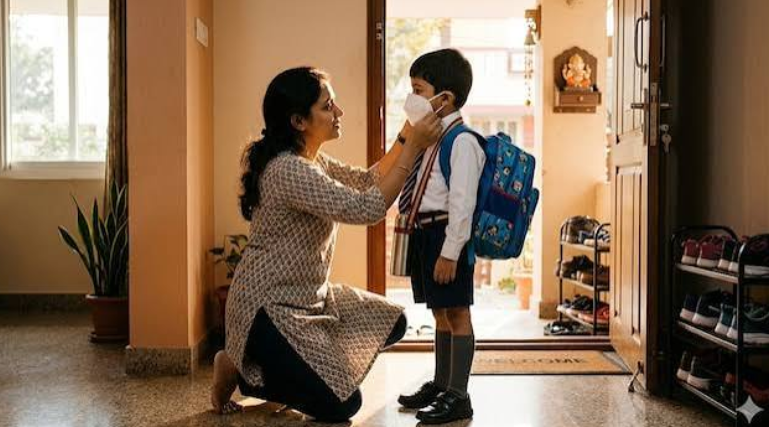
13 November 2026 (Navroze Bureau) Delhi’s air quality has deteriorated to the ‘very poor’ category following Diwali celebrations, raising concerns about the health of children returning to schools after the festive break. With pollution levels remaining high, parents and school authorities have been advised to take additional precautions to protect children from exposure to harmful pollutants.
According to air quality data reported on November 12, Delhi’s overall Air Quality Index (AQI) reached 319, placing it in the ‘very poor’ category. An AQI between 301 and 400 falls under this classification, which indicates a health alert as prolonged exposure can cause respiratory problems and other health complications.
Children are particularly vulnerable to air pollution because their lungs are still developing and they generally breathe faster than adults. Exposure to polluted air can trigger coughing, throat irritation, blocked noses, wheezing and breathing difficulties. Children with asthma and other respiratory conditions may face additional risks.
As schools reopen after the Diwali holidays, parents need to pay attention to their children’s daily travel, outdoor activities and exposure to polluted environments. Here are seven important precautions that can help reduce the health risks.
1. Use a Well-Fitted Protective Mask
Parents should consider providing children with a properly fitted, high-quality mask when they need to travel outdoors in heavily polluted areas. A well-fitted N95 mask can help filter fine airborne particles, including PM2.5, when worn correctly.
The mask should cover both the nose and mouth and fit securely around the face. Loose-fitting masks may allow polluted air to enter through gaps.
Parents should also ensure that children are comfortable wearing the mask and can breathe normally. Masks should not be treated as complete protection against pollution, and younger children should be supervised.
2. Check School Instructions and Hybrid Learning Options
Parents should regularly check school notifications and government advisories regarding attendance arrangements during periods of poor air quality.
Depending on pollution levels and official directions, schools may introduce hybrid learning, allowing students to attend classes online or physically. Families should follow the latest instructions issued by the Directorate of Education and their respective schools.
Children who have asthma, allergies or other respiratory problems may need additional precautions. Parents should discuss suitable arrangements with school authorities if their child’s condition makes outdoor travel difficult.
3. Reduce Exposure During the Morning Commute
The journey between home and school can expose children to vehicle emissions, road dust and other pollutants. Parents should try to reduce the time children spend near busy roads and areas with heavy traffic.
When travelling by car, keeping windows closed and using the vehicle’s air-recirculation setting can help limit the entry of outside pollution. School bus operators should also ensure that vehicles are properly maintained.
Parents should avoid allowing children to wait for long periods near traffic signals, crowded roads or areas where vehicles release exhaust fumes.
4. Avoid Outdoor Sports and Physical Activities
Schools should consider shifting morning assemblies, physical education classes and sports practice indoors when air quality is poor.
Running, cycling and playing outdoor games increase breathing rates, which can lead children to inhale larger amounts of polluted air. Heavy physical activity in polluted surroundings may increase respiratory irritation and discomfort.
School authorities should monitor local AQI readings and adjust outdoor schedules accordingly. Children should also be encouraged to remain indoors during breaks when pollution levels are particularly high.
5. Maintain Proper Hydration and a Balanced Diet
Parents should ensure that children drink enough water throughout the day. Sending a filled water bottle to school can encourage regular hydration.
A balanced diet containing fruits, vegetables, nuts and other nutrient-rich foods can support children’s overall health. Foods containing vitamins and antioxidants are part of a healthy diet, but they should not be considered a treatment or a substitute for protection against air pollution.
Parents should focus on regular meals, adequate sleep and healthy daily routines while limiting children’s exposure to polluted environments.
6. Follow Proper Hygiene After School
Pollutant particles can settle on children’s skin, hair, clothes and school bags during their daily commute. Parents can reduce the amount of dust and pollution brought indoors by encouraging children to follow basic hygiene practices after returning home.
Children should wash their hands and face with clean water and change out of their school uniforms. Parents can also clean frequently used school bags and other belongings when necessary.
At home, wet mopping can help reduce settled dust. Families should avoid burning waste, incense or other materials that can add to indoor air pollution. Windows should be managed according to outdoor air quality and ventilation needs.
7. Watch for Respiratory Symptoms
Parents should closely monitor children for symptoms such as persistent coughing, wheezing, throat irritation, chest discomfort, unusual tiredness or shortness of breath.
If a child develops breathing difficulties or symptoms that do not improve, medical advice should be sought promptly. Children with asthma or other respiratory conditions should follow their doctor’s existing treatment plan.
Parents should also ensure that prescribed medicines and inhalers are available when needed. If a child has an emergency breathing problem, immediate medical attention is important.
Schools and Parents Need to Work Together
Protecting children from air pollution requires cooperation between families, schools and local authorities. Schools can help by monitoring AQI levels, limiting outdoor activities, improving classroom cleanliness and informing parents about changes in attendance arrangements.
The Ministry of Health and Family Welfare’s health advisory on air pollution for schoolchildren also highlights the importance of reducing outdoor exposure, avoiding strenuous physical activities during poor air quality and taking additional care of younger children and those with existing respiratory conditions.
Delhi’s post-Diwali pollution situation has once again highlighted the challenges faced by families during the winter season. While children need regular education, physical activity and social interaction, their health must remain a priority when pollution levels rise.
Parents are advised to stay updated with official AQI readings and school guidelines rather than relying only on visible smog. Taking practical precautions during the school commute, classroom hours and outdoor activities can help reduce children’s exposure to harmful pollutants.