

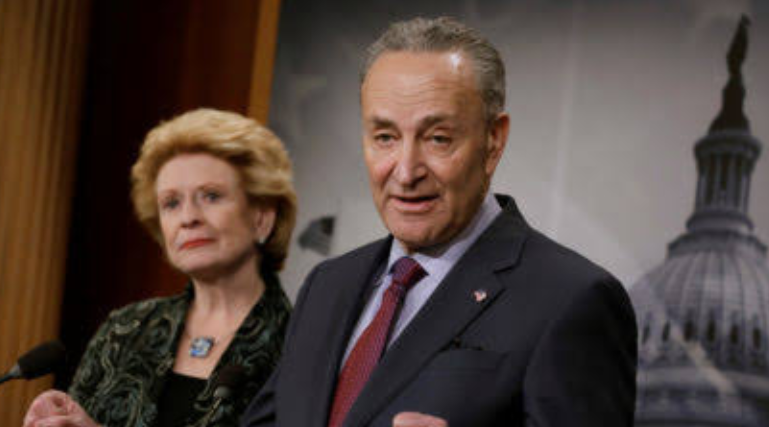
13 November 2026 (Navroze Bureau) US Senate Democratic Leader Chuck Schumer has hit back at President Donald Trump over his remarks accusing Democrats of corruption, promising to introduce measures to ban stock trading by members of Congress and White House officials.
In a statement shared on November 12, Schumer accused Trump of overlooking controversies involving his own administration while targeting Democratic-led states. He said Democrats would pursue legislation to prevent government officials from trading stocks and potentially benefiting from information obtained through their official positions.
Schumer’s response came after Trump criticised corruption in Democratic-controlled states, including California, Minnesota and Illinois. Trump also said he had directed Vice President JD Vance to focus on investigating alleged corruption and fraud in Democratic-run cities and states.
Responding to the president, Schumer said his criticism was directed at what he described as conflicts of interest involving Trump and his administration. He referred to Trump’s reported stock transactions, cryptocurrency ventures, a luxury aircraft gifted by Qatar, Truth Social-related financial arrangements and a ballroom project supported by wealthy donors.
These allegations and criticisms have been disputed politically, and references to alleged wrongdoing should not be treated as established legal findings.
Schumer also referred to Trump’s stock trading activity, claiming that the president had made nearly 30,000 stock trades over the past year, more than all members of Congress combined. He argued that government officials should not be allowed to use their positions or access to sensitive information for personal financial gain.
In his social media response, Schumer declared that Senate Democrats would ban stock trading for all members of Congress and White House officials. He also promised that Democrats would hold Trump and his administration accountable for what they describe as conflicts of interest and questionable financial arrangements.
Schumer’s Demand for a Stock Trading Ban
The proposed stock trading restrictions are part of a broader debate in Washington over financial transparency and potential conflicts of interest among elected representatives.
Schumer has argued that lawmakers should not be permitted to trade individual stocks while participating in decisions that could directly influence the financial markets. Members of Congress regularly receive information about government policies, economic developments, defence contracts and regulatory decisions that could affect the value of publicly traded companies.
Critics of congressional stock trading say these circumstances create potential conflicts of interest, even when there is no proven case of insider trading.
Schumer has supported restrictions on congressional stock trading for several years. In September 2026, he criticised a Republican-backed proposal, arguing that it contained significant loopholes and did not establish a complete prohibition.
The Republican-backed Stop Insider Trading Act sought to restrict members of Congress, their spouses and dependent children from purchasing individual publicly traded stocks. However, it allowed certain existing holdings to be retained and included other exceptions.
Democrats argued that the legislation did not go far enough because lawmakers could continue owning and selling existing stocks under its provisions. They also objected to an unrelated voter identification requirement included in the legislation.
The proposal was blocked in the Senate on September 30, 2026, after receiving 53 votes in favour and 47 against, falling short of the 60 votes required to advance. Reuters+2
Why Schumer Wants White House Officials Included
Another important aspect of Schumer’s latest announcement is his demand that restrictions extend beyond Congress to include White House officials.
Democrats argue that financial transparency rules should apply to senior members of the executive branch because government officials can influence decisions affecting businesses, industries and financial markets.
The president and senior administration officials participate in decisions involving trade policies, tariffs, technology regulations, defence spending and economic measures. Such decisions can have significant effects on individual companies and investment markets.
Schumer has therefore argued that a comprehensive ban should cover officials across the federal government rather than focusing exclusively on lawmakers.
The issue has also become part of a wider debate over government ethics and public confidence in political institutions.
Political Battle Between Trump and Democrats
The latest exchange reflects the continuing political confrontation between Trump and Democratic leaders following the November 2026 midterm elections.
Democrats have promised increased oversight of the Trump administration after their electoral gains. Their proposed investigations are expected to examine various issues involving government spending, business interests, cryptocurrency activities and potential conflicts of interest.
Trump, meanwhile, has repeatedly accused Democratic-led states and cities of failing to address corruption and financial misconduct. His administration has rejected accusations of wrongdoing made by Democratic politicians.
Schumer’s response indicates that stock trading restrictions could become an important legislative priority for Democrats when they take control of Congress.
However, passing such legislation could prove challenging because the proposal would require sufficient support in both chambers of Congress and approval through the federal legislative process.
What Happens Next?
The proposed stock trading ban could become one of the early priorities of the incoming Democratic congressional majority. Schumer has indicated that Democrats intend to pursue legislation covering both lawmakers and White House officials.
The proposal is expected to generate further debate over how government officials should manage their personal investments while holding public office.
For now, the political dispute between Trump and Schumer continues, with both sides exchanging accusations over corruption and accountability. Whether Democrats can turn Schumer’s promise into legislation will depend on the details of the proposed bill and the support it receives in Congress.
The debate has also renewed questions about financial transparency, insider information and the ethical responsibilities of public officials in the United States.