

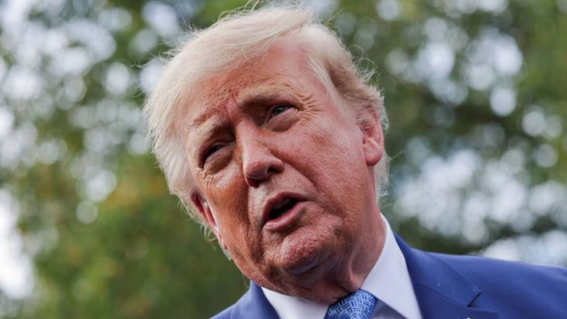
26 October 2026 (Navroze Bureau) US President Donald Trump has said that Canada has been taking advantage of the United States through its trade relationship for years, while expressing confidence that the two neighbouring countries are getting closer to reaching a new trade agreement. His latest remarks come amid an ongoing trade dispute that has strained economic relations between Washington and Ottawa.
Speaking ahead of a political rally in Port Huron, Michigan, on October 25, Trump reiterated his criticism of Canada’s trade practices and claimed that the United States had suffered financially from the existing arrangement. He said Canada had been making approximately $90 billion a year from the United States and maintained that Washington wanted an agreement that would deliver long-term benefits to the American economy.
“Canada has been making $90B/year off us for years and years. They’ve taken advantage of our country, but we’re getting close to a deal,” Trump said, according to a report published by The Tribune citing ANI. He also expressed positive sentiments about Canada while criticising some of its political leaders.
Trump emphasised that his administration was seeking an agreement that he considered beneficial to the United States rather than accepting a temporary compromise. He said he wanted to make the right deal and expressed confidence that the eventual agreement would provide lasting economic gains for America.
The president’s comments followed his October 23 remarks at the White House, where he said Canada was working hard to reach an agreement with Washington. Trump argued that the United States held a strong negotiating position and suggested that Canadian officials were increasingly interested in resolving the dispute.
On October 25, he also predicted that the trade disagreement would be settled “pretty soon” during his appearance at a rally in Michigan. However, he did not provide a timeline for the conclusion of negotiations or disclose the specific terms being discussed.
Trade Dispute Between the US and Canada
The latest statements come after trade negotiations between the United States and Canada broke down in August 2026. The collapse of the talks triggered additional tariffs and retaliatory measures, increasing uncertainty for businesses operating across the border.
Washington has defended its tariff policy as a way to address what Trump considers unfair trade practices and improve economic outcomes for American industries. Canada, meanwhile, has responded with tariffs on selected US goods and challenged Washington’s approach to the bilateral relationship.
The disagreement has created difficulties for businesses that depend on cross-border supply chains, particularly in sectors such as automobiles and manufacturing. Companies operating across the two countries face uncertainty over costs, market access and the future rules governing trade.
The dispute has also raised questions about the future of the United States-Mexico-Canada Agreement, commonly known as USMCA. The agreement provides the framework for trade among the three North American economies, and continued tensions between Washington and Ottawa could complicate discussions about the regional trade arrangement.
Canada Seeks to Reduce Economic Dependence on the US
Canadian Prime Minister Mark Carney has advocated reducing Canada’s economic dependence on the United States, which remains its largest trading partner. The latest tariff dispute has added pressure on Ottawa to consider ways to diversify its trading relationships and reduce exposure to changes in US trade policy.
The two governments have not publicly confirmed the detailed terms of a potential new agreement. Canada’s trade officials have also not announced a final settlement in response to Trump’s latest remarks.
Although Trump has indicated that negotiations are moving towards a resolution, his comments do not establish that an agreement has been finalised. Important questions remain about the tariffs currently in place, possible concessions from either side and the arrangements that could govern future trade.
What Happens Next?
Trump’s latest statements suggest that his administration believes a settlement may be approaching. However, the absence of an announced agreement means businesses and policymakers will have to wait for further details from both governments.
Any eventual deal could affect tariffs, cross-border trade costs and the commercial relationship between the two countries. The outcome will also matter for manufacturers and other businesses that rely on integrated North American supply chains.
For now, the United States and Canada remain engaged in a trade dispute, even as Trump expresses optimism about reaching an agreement. Whether that optimism translates into a formal deal will depend on the negotiations and the terms both governments are ultimately prepared to accept.