

Patti/Tarn Taran, November 4:
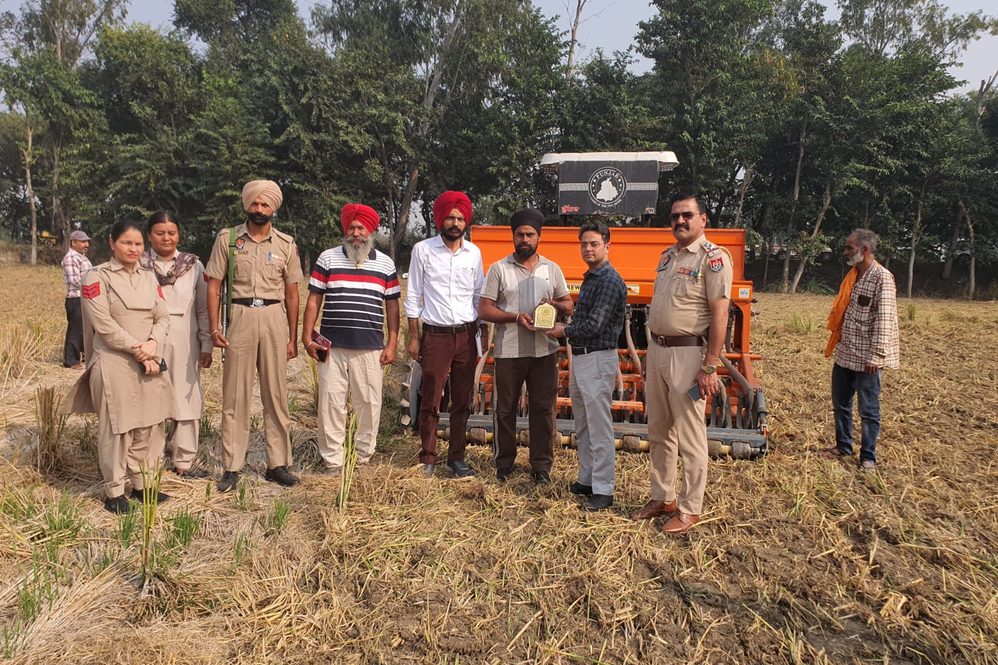
With the aim of encouraging farmers who are adopting modern scientific techniques of stubble management for sowing wheat, SDM Patti Amandeep, Block Agriculture Officer Patti Dr. Bhupinder Singh, and SHO Patti Vipin Kumar appreciated the efforts of farmer Gurjant Singh, son of Sarwan Singh, a resident of Patti, and honoured him with a memento as a mark of encouragement.
Farmer Gurjant Singh has sown wheat using the Super Seeder technique on approximately 20 acres of leased land, in addition to his own 2 acres, and around 80 acres of land taken on rent.
On the occasion, the farmer shared that besides cultivating his own land, he also farms leased land and has been consistently adopting scientific techniques of stubble management.
He said that retaining crop residue in the fields increases the organic matter content in the soil, improves soil structure, makes the land softer and more fertile, and helps achieve better crop yields.
During the visit, agricultural experts inspected the fields and informed farmers about the importance of treating wheat seeds with recommended insecticides and fungicides before sowing to protect the crop from insect pests and diseases.
The officials appealed to farmers to avoid burning crop residue and instead manage it in the fields using Super Seeder, Happy Seeder, and other modern scientific techniques. This will not only help protect the environment but also improve soil fertility and contribute to making agriculture more sustainable.
Agriculture Sub-Inspector Nishan Singh, Avtar Singh from the SDM office, police personnel, and field worker Fateh Singh were also present on the occasion.