

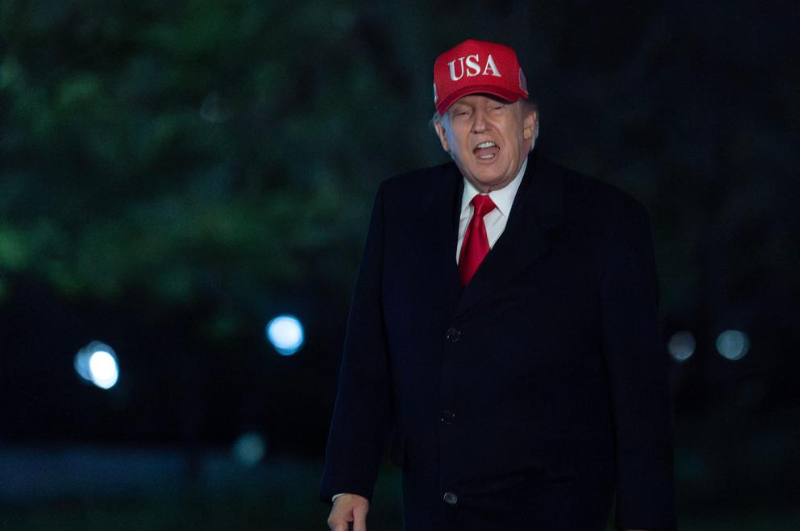
14 April 2026 (Navroze Bureau) : The ongoing conflict involving United States, Iran, and Israel intensified further after U.S. President Donald Trump issued a stark warning that Iranian warships approaching the American naval blockade would be “destroyed.”
The warning comes as the United States has begun enforcing a naval blockade targeting Iranian ports and coastal areas, particularly around the strategically critical Strait of Hormuz. This move follows the collapse of recent peace talks between Washington and Tehran held in Islamabad, which failed to produce any agreement.
According to official statements, Trump made it clear that any Iranian naval vessels, especially fast-attack boats, coming close to the blockade zone would face immediate military action. This marks one of the most aggressive statements yet in the ongoing standoff and signals a significant escalation in maritime tensions.
The blockade itself is aimed at restricting Iran’s oil exports and limiting its ability to exert control over key global shipping routes. The Strait of Hormuz is one of the world’s most vital energy corridors, through which nearly 20% of global oil supply typically passes. Any disruption in this region has immediate global economic consequences.
Iran has strongly condemned the U.S. move, calling the blockade an illegal act and warning of retaliation. Officials in Tehran have indicated that any attempt to enforce restrictions on its shipping could lead to countermeasures, raising fears of direct military confrontation in the Gulf.
The situation has also drawn mixed reactions from the international community. Several U.S. allies, including key NATO members, have reportedly declined to participate in the blockade, instead calling for diplomatic solutions to de-escalate tensions. European nations have emphasized the importance of maintaining freedom of navigation while avoiding further military escalation.
The escalation follows weeks of conflict that have already seen significant damage to Iran’s naval capabilities, according to U.S. claims. However, concerns remain about smaller, fast-moving vessels that could pose asymmetric threats in the region.
Trump’s statement also comes amid heightened fears over global energy markets. Oil prices have surged past $100 per barrel due to concerns about supply disruptions, reflecting the high stakes involved in the conflict. The blockade has added further uncertainty, with analysts warning of prolonged volatility if tensions continue.
Meanwhile, the Israeli government has signaled its readiness to continue military operations against Iran if necessary, aligning closely with the U.S. stance. The broader conflict has already expanded beyond direct U.S.-Iran tensions, involving multiple actors and raising the risk of a wider regional war.
On the ground, the humanitarian and security situation remains fragile. The ongoing conflict has affected shipping routes, trade flows, and regional stability, with ripple effects felt across global markets.
Experts warn that the combination of military escalation and economic pressure could make diplomatic resolution more difficult. While backchannel communications may still be ongoing, public rhetoric from both sides suggests that positions remain firmly entrenched.
The blockade strategy itself is seen as a high-risk move. While it may increase pressure on Iran economically, it also raises the possibility of unintended clashes at sea. Even a minor incident involving naval forces could quickly escalate into a broader conflict.
The coming days are expected to be critical. Observers are closely watching whether Iran will test the blockade or avoid direct confrontation. Any such move could trigger the kind of military response that Trump has warned about.
At the same time, diplomatic efforts by third-party countries may continue in an attempt to bring both sides back to the negotiating table. However, the failure of recent talks has reduced optimism about a quick resolution.
In conclusion, Trump’s warning to destroy Iranian warships near the U.S. blockade marks a sharp escalation in the Israel-Iran conflict. With tensions rising, global markets on edge, and diplomatic efforts stalled, the situation remains highly volatile with potential for further escalation.
Summary
Trump warned Iranian warships nearing U.S. blockade would be destroyed, escalating tensions after failed peace talks, as global fears rise over conflict, oil disruption, and potential wider Middle East war.