

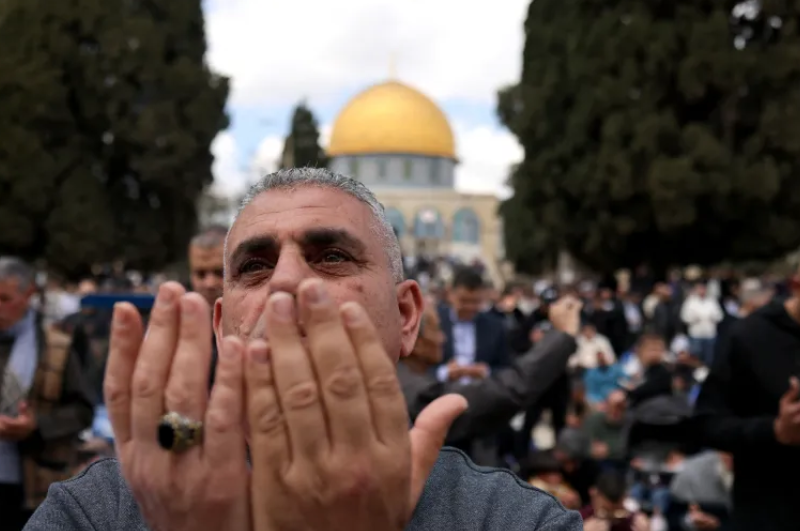
14 April 2026 (Navroze Bureau) : Tensions in the region remain high as the Al-Aqsa Mosque reopened to worshippers following recent restrictions, with controversial remarks by Israeli National Security Minister Itamar Ben-Gvir adding to the already volatile situation.
The reopening of Al-Aqsa, one of Islam’s holiest sites, came after days of heightened security measures and limited access, which had sparked protests and international concern. The mosque holds deep religious and political significance, making any developments around it closely watched across the globe.
Ben-Gvir’s statement referring to himself as the “master of the house” drew sharp criticism from Palestinian leaders and several international observers. The remark was widely perceived as provocative, further inflaming tensions in an already sensitive environment.
Palestinian officials condemned the statement, calling it an affront to the status quo governing holy sites in Jerusalem. They emphasized the need to respect religious sensitivities and avoid actions or statements that could escalate the situation.
The reopening of Al-Aqsa allowed thousands of worshippers to return to the compound, though the atmosphere remained tense. Security forces were heavily deployed in and around the area, reflecting concerns about potential unrest.
Clashes were reported in parts of East Jerusalem and the West Bank during the week, as protests erupted over both the restrictions and the controversial remarks. Demonstrators called for greater protection of religious rights and adherence to established agreements regarding access to holy sites.
The issue of Al-Aqsa has long been a flashpoint in the Israeli-Palestinian conflict. Control and access to the site are governed by a delicate status quo arrangement, which has been the subject of repeated disputes.
International reactions to the developments have been swift. Several countries and organizations urged restraint and called for respect for religious freedoms. Diplomatic efforts are ongoing to prevent further escalation.
Human rights groups have also expressed concern about the situation, highlighting the potential for violence and the impact on civilians. They have called for measures to ensure safe and unrestricted access to places of worship.
The weekly developments also included ongoing security operations in the West Bank, where Israeli forces conducted raids and arrests. These actions have contributed to rising tensions and have been met with criticism from Palestinian authorities.
Meanwhile, the humanitarian situation in Gaza remains fragile, with ongoing challenges related to infrastructure, healthcare, and access to essential services. Aid organizations continue to call for increased support and easing of restrictions.
The political landscape remains complex, with both sides facing internal and external pressures. Leadership decisions and public statements play a significant role in shaping the trajectory of the conflict.
Experts warn that inflammatory rhetoric can have far-reaching consequences, particularly in a region where tensions are already high. Maintaining calm and avoiding provocation are seen as critical to preventing further escalation.
The reopening of Al-Aqsa, while a positive step for worshippers, has not fully eased concerns. The underlying issues remain unresolved, and the potential for renewed tensions persists.
Observers note that sustainable peace will require dialogue, mutual respect, and adherence to international agreements. Efforts to address the root causes of the conflict are essential for long-term stability.
As the situation continues to evolve, the international community is closely monitoring developments. Calls for restraint, dialogue, and respect for religious sites remain central to diplomatic efforts.
In conclusion, the reopening of Al-Aqsa Mosque amid controversial remarks by Itamar Ben-Gvir underscores the fragile nature of the situation in the region. While worship has resumed, tensions remain high, highlighting the need for careful handling of sensitive issues.
Summary
Al-Aqsa Mosque reopened amid tensions after Ben-Gvir’s controversial remark, sparking criticism and protests, with ongoing clashes and international calls for restraint in the sensitive Jerusalem region.