

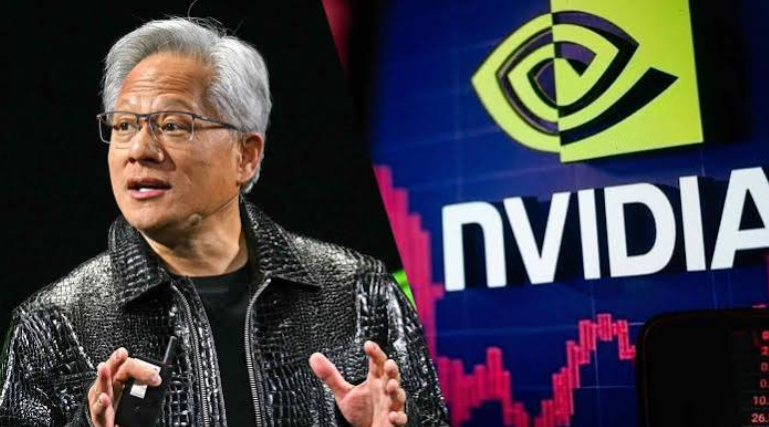
17 November 2026 (Navroze Bureau) Global semiconductor giant Nvidia is set to announce its third-quarter financial results on November 17, marking the company’s first earnings announcement since the sudden resignation of its co-founder and CEO Jensen Huang. The results come at a crucial time for the company, as investors are closely monitoring its leadership transition, growing concerns about artificial intelligence (AI) investments and increasing opposition to the rapid expansion of AI infrastructure.
Nvidia, which has become one of the biggest beneficiaries of the global AI boom, is facing several important questions about its future direction. While demand for its advanced graphics processing units (GPUs) remains significant, investors are increasingly seeking clarity on the company’s financial commitments, business strategy and ability to maintain its market position without Huang at the helm.
Huang resigned as president and CEO on November 12, following revelations concerning personal relationships and reports involving an alleged connection with a suspected Chinese intelligence asset. The company’s board appointed Chief Financial Officer Colette Kress as interim CEO while beginning the search for a permanent successor.
The leadership change has created uncertainty because Huang played a central role in Nvidia’s transformation into a leading supplier of AI computing technology. His influence extended beyond product development to relationships with major technology companies, investors and global business leaders.
The upcoming earnings conference call will therefore be particularly important. It will be the first major opportunity for investors and analysts to hear directly from Kress in her capacity as interim chief executive. Market participants are expected to seek answers about management continuity, future investments and the company’s long-term strategy.
According to market estimates reported ahead of the announcement, analysts expect adjusted earnings of approximately $2.47 per share and quarterly revenue of around $109.08 billion. Nvidia had previously projected third-quarter revenue of approximately $108 billion, plus or minus 2%.
The company’s previous quarterly performance demonstrated the continued strength of demand for AI computing infrastructure. During the second quarter, which ended in July, Nvidia reported revenue growth of more than 100% year over year, while gross margins stood at approximately 75%.
However, strong financial performance has not completely removed investor concerns. Nvidia’s shares have experienced significant pressure after reaching a peak in October, reflecting questions about valuation, future growth and the sustainability of massive investments across the AI industry.
One of the biggest issues facing the company is the growing cost of building AI infrastructure. Technology companies are spending enormous amounts on data centres, advanced processors, networking equipment and electricity infrastructure to support increasingly powerful AI models.
Nvidia is directly connected to this expansion because its GPUs are widely used to train and operate artificial intelligence systems. The company has also entered into major financial and commercial arrangements with AI infrastructure providers and technology businesses.
Some investors have raised concerns about the structure of these arrangements, particularly investments and financing commitments involving companies that subsequently purchase Nvidia’s products. Critics have described parts of this ecosystem as circular financing, arguing that companies investing in one another could create additional financial risks if demand for AI infrastructure weakens.
Investors are expected to seek greater transparency about Nvidia’s financial commitments and whether its strategy will continue under interim leadership.
Another important issue is the growing political opposition to the rapid expansion of AI data centres in the United States. Concerns about electricity consumption, water requirements, environmental effects and rising infrastructure costs have become increasingly prominent in public discussions.
The political debate has gained attention following the November midterm elections, with several newly empowered Democratic lawmakers expressing criticism of large-scale AI data centre development. Potential regulatory changes could influence the pace of infrastructure expansion and affect future demand for Nvidia’s processors.
The company is also facing increased scrutiny over its international business operations and the export of advanced AI chips. US authorities have been examining ways to restrict access to advanced computing technology by Chinese companies through overseas data centre arrangements.
These developments could affect Nvidia’s ability to expand in international markets, particularly in regions where technology exports are subject to national security restrictions.
Another major factor investors will watch is the performance of Nvidia’s next-generation Vera Rubin platform. The company has been positioning its advanced computing products as important components of the next phase of AI infrastructure development.
Market participants will want to understand whether the new platform is progressing according to expectations and how much revenue it could contribute to the company’s future financial performance.
Competition is also becoming an important consideration. Companies such as AMD and Broadcom are expanding their presence in the AI semiconductor market, while major cloud providers are increasingly exploring their own specialised chips to reduce dependence on external suppliers.
Despite these challenges, Nvidia remains an important company in the global AI ecosystem. Its technology continues to support major developments in artificial intelligence, high-performance computing and data centre operations.
The November 17 earnings announcement will therefore be about more than quarterly revenue and profits. Investors will also be looking for reassurance that the company can maintain its technological leadership, manage its financial commitments and navigate the leadership transition following Huang’s departure.
The results and management commentary could play an important role in shaping investor expectations about Nvidia’s future growth and the broader direction of the AI industry.