

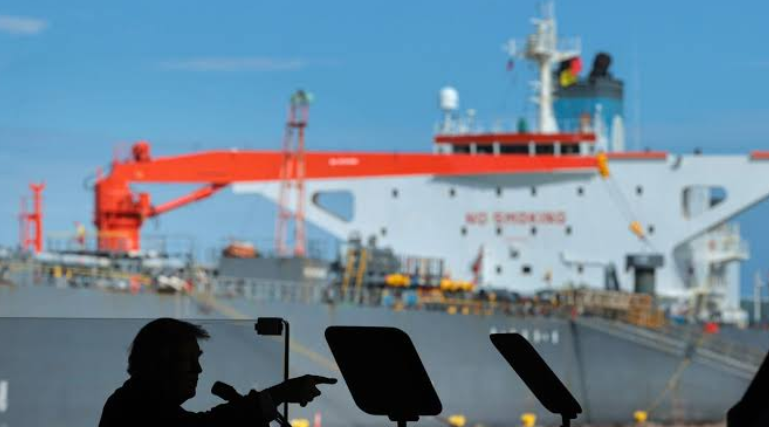
5 November 2026 (Navroze Bureau) Global oil prices plunged more than 8 per cent on Wednesday, November 4, 2026, after the Democratic Party secured a sweeping victory in the US midterm elections, taking control of both chambers of Congress. The election results have raised expectations among investors that US President Donald Trump could face increased political pressure to bring an end to the ongoing US-Israeli war with Iran.
The sharp decline in crude oil prices came as traders reassessed the geopolitical situation in the Middle East and considered the possibility of renewed diplomatic negotiations between Washington and Tehran. Investors believe that Democratic control of Congress could limit Trump’s military options and encourage his administration to pursue a negotiated settlement.
According to Reuters, Brent crude futures settled at $94.62 per barrel, falling $8.98 or 8.7 per cent. US West Texas Intermediate (WTI) crude futures dropped $7.97, or 8.3 per cent, to settle at $88.12 per barrel. Both benchmarks recorded their lowest closing levels since August 31.
Democrats’ Election Victory Triggers Oil Market Reaction
The Democratic Party’s victory has become an important factor influencing global financial markets. Republicans lost control of both the US House of Representatives and Senate, creating a new political situation for the Trump administration.
Investors are closely watching how the election outcome could affect Washington’s approach towards the Iran conflict. The war has disrupted energy supplies from the Middle East and pushed crude prices significantly higher during 2026.
With Democrats gaining control of Congress, traders believe that the administration could face greater pressure over military spending and the economic consequences of continuing the conflict.
The possibility of a diplomatic agreement between the United States and Iran has therefore become an important factor behind the recent decline in oil prices.
Trump Faces Pressure to Find a Way Out of Iran War
The ongoing conflict between the United States, Israel and Iran has created uncertainty across international energy markets.
The conflict has affected crude oil shipments from the Gulf region, raising concerns about global supplies and increasing fuel prices for consumers and businesses.
Trump acknowledged that the Iran war had contributed to the Republican Party’s disappointing performance in the midterm elections. He also indicated that the United States had no immediate plans to launch another strike against Iran.
According to Reuters, sources familiar with Gulf government thinking believe that Trump’s weakened political position could increase the possibility of a negotiated settlement.
However, analysts have cautioned that the election outcome does not guarantee an immediate end to the conflict. If diplomatic negotiations fail, tensions could increase again and put upward pressure on oil prices.
Brent Crude Falls Below $95 Per Barrel
The sharp fall in oil prices attracted significant attention from global investors.
Brent crude, which serves as the international benchmark, declined 8.7 per cent to $94.62 per barrel. Meanwhile, US WTI crude dropped 8.3 per cent to $88.12 per barrel.
The decline reflects changing expectations about future oil supplies and geopolitical risks.
Before the latest fall, crude prices had remained elevated because of concerns about disruptions to Middle Eastern oil exports. The possibility of improved diplomatic relations and a reduction in military tensions has now encouraged traders to reduce their exposure to oil markets.
However, analysts say that the market remains sensitive to developments in the Middle East, particularly around shipping routes and energy infrastructure.
Iran Remains Cautious Despite Election Results
While financial markets reacted positively to the possibility of diplomatic progress, Iranian officials maintained a cautious position.
Iran’s Supreme Leader Mojtaba Khamenei warned that American hostility towards Iran would continue regardless of which political party controlled Congress.
Iranian parliamentary speaker Mohammad Baqer Qalibaf also described the election outcome as a rejection of the war by American voters.
Despite these statements, reports indicate that Washington and Tehran remain far from reaching a comprehensive agreement to end the conflict.
Qatar has increased its diplomatic efforts to prevent further escalation and encourage discussions between the two countries.
The uncertainty surrounding negotiations remains a major risk for international oil markets.
Middle East Oil Supply Remains Under Pressure
Although crude prices have fallen sharply, the global energy supply situation remains complicated.
According to shipping data from Vortexa cited by Reuters, Gulf exports of crude oil, condensate and refined products averaged 17.1 million barrels per day in October.
This was lower than the 18.9 million barrels per day recorded in September, although exports remained around three-quarters of pre-war levels.
The figures indicate that energy shipments have not fully recovered from the disruptions caused by the conflict.
The Strait of Hormuz remains particularly important because it is one of the world’s most critical routes for international oil transportation.
The United Arab Emirates is also considering the construction of a third oil pipeline to reduce its dependence on the Strait of Hormuz and provide an alternative route for crude exports.
What Does the Oil Price Fall Mean for Global Markets?
The decline in crude oil prices could provide some relief to countries that depend heavily on imported energy.
Lower international oil prices can reduce import expenses, ease pressure on inflation and potentially lower transportation and production costs.
For India, which imports a substantial share of its crude oil requirements, a sustained decline in international prices could help reduce the country’s overall oil import bill.
However, the actual impact on petrol and diesel prices will depend on currency movements, government taxes, refining costs and domestic fuel pricing decisions.
Investors will continue monitoring developments in the US political system, diplomatic discussions involving Iran and the security situation across the Gulf region.
Oil Markets Await Further Developments
The more than 8 per cent decline in crude prices highlights how strongly global energy markets are responding to political and geopolitical developments.
Although the Democratic victory has increased hopes of a diplomatic solution, there is no confirmed agreement to end the Iran conflict.
Traders will therefore continue watching statements from Washington, Tehran and Gulf governments for signs of progress or renewed escalation.
For now, expectations of a possible reduction in Middle East tensions have placed significant downward pressure on oil prices, although the future direction of the market remains closely tied to developments in the ongoing conflict.