

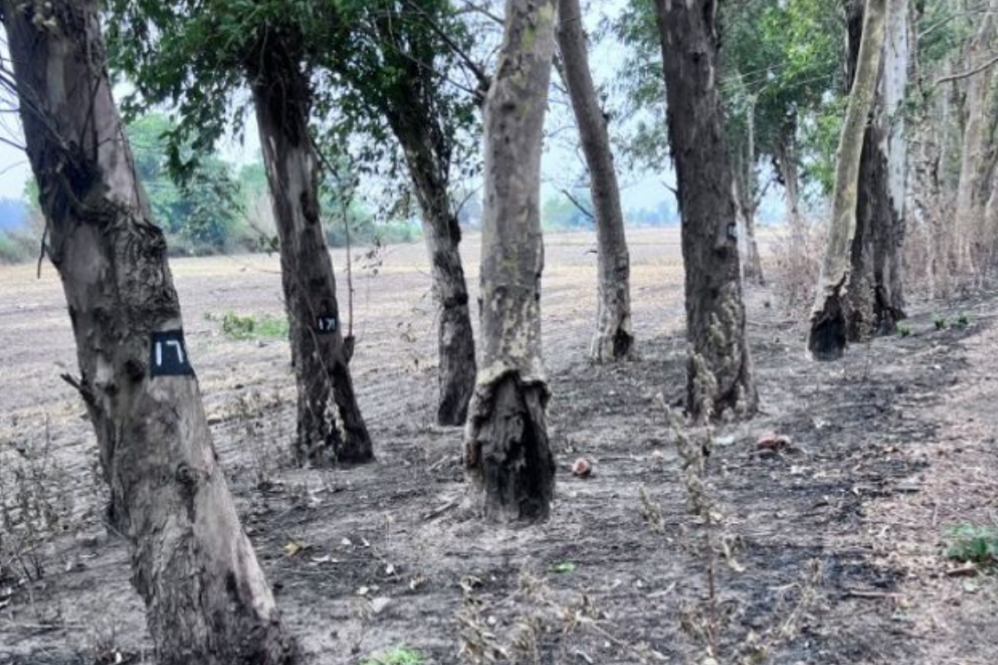
May 11 2026 (Navroze Bureau) : Large stretches of green belts and agricultural landscapes across Amritsar district are once again showing visible signs of damage due to stubble burning, reigniting concerns over pollution, environmental degradation, and public health in Punjab.
The recurring practice of setting crop residue on fire after harvest continues to leave blackened patches along roadsides, village boundaries, and cultivated fields, despite repeated government campaigns and environmental warnings.
Green Belts Bear the Impact
Several green belts in and around rural areas of Amritsar have reportedly been scarred by smoke and fire caused by stubble burning activities.
Residents and environmental observers say flames from agricultural fields often spread toward roadside vegetation and tree-lined areas, damaging plants and leaving visible burn marks across landscapes.
The problem becomes particularly severe during harvesting seasons when multiple farm fires occur simultaneously.
Air Pollution Concerns Rise Again
Stubble burning remains one of the major contributors to seasonal air pollution in Punjab and neighboring northern regions.
Experts warn that smoke released from burning crop residue contains:
- Fine particulate matter (PM2.5 and PM10)
- Carbon monoxide
- Nitrogen oxides
- Toxic chemicals and soot
These pollutants significantly affect air quality and can travel long distances depending on weather conditions.
Health professionals say exposure to such pollution may worsen:
- Asthma
- Breathing difficulties
- Eye irritation
- Lung diseases
- Cardiovascular conditions
especially among children and elderly individuals.
Farmers Cite Economic Pressures
Many farmers argue that stubble burning continues because of practical and financial pressures linked to short gaps between harvesting and sowing seasons.
Agricultural experts note that farmers often face:
- High machinery costs
- Limited time for residue management
- Labor shortages
- Pressure to prepare fields quickly for the next crop
As a result, burning crop residue remains the fastest and cheapest option for many cultivators despite legal restrictions.
Government Efforts Continue
Authorities in Punjab have repeatedly launched awareness campaigns and subsidy programs to discourage stubble burning.
The government has promoted machinery such as:
- Happy Seeders
- Mulchers
- Super Straw Management Systems
- Rotavators
to help farmers manage crop residue without burning.
Officials have also implemented monitoring systems involving satellite tracking and field inspections to detect fire incidents.
However, enforcement challenges continue due to the scale of agricultural activity across the state.
Environmental Damage Extends Beyond Air
Environmentalists stress that the effects of stubble burning go beyond air pollution alone.
Repeated fires can damage:
- Soil nutrients
- Beneficial microorganisms
- Roadside vegetation
- Biodiversity in rural ecosystems
Experts say excessive burning gradually reduces soil fertility and increases long-term environmental stress.
Green belts, which are meant to act as pollution buffers and ecological zones, often suffer direct damage when nearby fires spread uncontrollably.
Residents Voice Frustration
Residents in parts of Amritsar district have expressed concern over worsening smoke conditions during burning periods.
Some locals report reduced visibility on roads and persistent smoke entering residential areas, especially during evening and early morning hours.
People living near agricultural zones say the smell of burning residue frequently lingers for hours, affecting daily life and outdoor activity.
Experts Call for Long-Term Solutions
Agricultural and environmental experts argue that punitive measures alone may not solve the issue.
Instead, they recommend a combination of:
- Financial incentives
- Improved machinery access
- Crop diversification
- Sustainable residue management systems
- Farmer education programs
Experts also emphasize the need for stronger rural infrastructure and timely subsidy distribution.
Climate and Weather Impact
Scientists warn that stubble burning contributes to greenhouse gas emissions and environmental warming.
Combined with industrial pollution and vehicle emissions, crop fires can worsen regional climate stress and reduce overall air quality in northern India.
Weather conditions such as low wind speed and temperature inversion often trap smoke near the surface, intensifying pollution levels.
Public Health Debate Intensifies
Doctors and health experts continue urging stricter preventive action during high-pollution periods.
Hospitals in Punjab and nearby regions often report increased respiratory complaints during seasons associated with large-scale crop residue burning.
Public health advocates say reducing stubble burning should be treated as both an environmental and healthcare priority.
Balancing Farming and Sustainability
The issue reflects the broader challenge of balancing agricultural productivity with environmental sustainability.
Punjab’s farming economy plays a critical role in national food production, but experts say sustainable agricultural transitions are becoming increasingly necessary to protect long-term ecological and public health interests.
Conclusion
The visible damage to green belts across Amritsar district has once again highlighted the ongoing environmental cost of stubble burning in Punjab.
While authorities continue promoting alternatives and stricter monitoring, economic realities and agricultural pressures still drive many farmers toward crop residue burning. As pollution concerns grow each year, experts stress that long-term, practical, and farmer-friendly solutions will be essential to protect both the environment and public health.
Summary:
Stubble burning across Amritsar district has damaged green belts and worsened pollution concerns, with experts urging sustainable farming solutions as farmers continue citing economic and time pressures.