

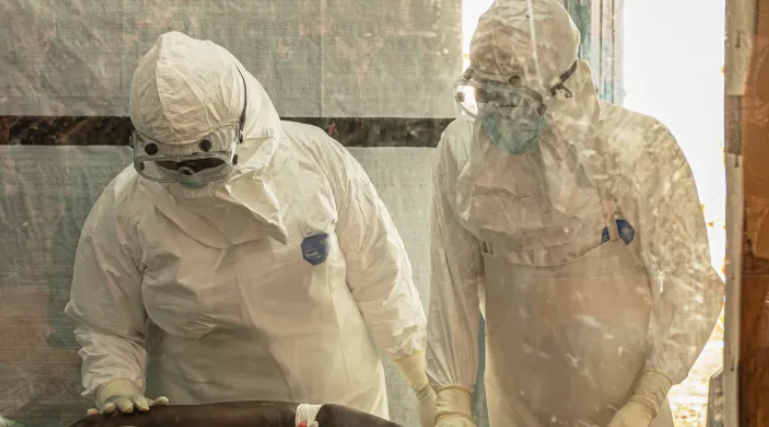
24 july 2026 (Navroze Bureau) : Health workers on the front lines of the Ebola outbreak in the Democratic Republic of the Congo (DRC) say they are battling the deadly disease under extremely difficult conditions, with some reporting that they have gone months without receiving their salaries or allowances.
The crisis has added another major challenge to an already strained response as the outbreak continues to spread in eastern DRC. The outbreak is caused by the rare Bundibugyo virus, a species of Ebola for which there is currently no licensed vaccine or specific approved treatment.
‘There’s No Salary’
Doctors, nurses and other health workers involved in the Ebola response have described financial hardship, exhaustion and difficult working conditions.
Some frontline workers say they have continued working despite not receiving expected payments. The lack of regular compensation has placed additional pressure on workers already facing the risk of infection while treating patients and helping to contain the outbreak.
In some areas, health workers have also taken industrial action over unpaid salaries and poor working conditions, raising concerns that the disruption could weaken efforts to control the spread of the virus.
Health Workers Face Infection Risk
Medical workers are among those most exposed during Ebola outbreaks because they come into close contact with infected patients and potentially contaminated bodily fluids.
The early symptoms of Bundibugyo virus disease can resemble other illnesses, making it difficult to identify cases immediately. This means health workers in ordinary clinics may sometimes be exposed before Ebola is suspected and appropriate protective measures are put in place.
WHO data previously recorded more than 100 confirmed cases among health and care workers in the DRC during the outbreak.
One of the Fastest-Growing Ebola Outbreaks
The outbreak, which was officially declared in May 2026, has expanded rapidly in eastern DRC, particularly in Ituri province.
By July 23, health authorities reported 2,536 confirmed cases and more than 1,000 deaths, making the outbreak one of the most serious Ebola emergencies in recent years. The rare Bundibugyo strain has a high fatality risk, and the absence of an approved vaccine or specific treatment has complicated the response.
Conflict and Shortages Make Response More Difficult
Health workers are also operating in an area affected by insecurity and armed conflict.
Violence can make it difficult for medical teams to reach patients, conduct contact tracing and maintain supplies. Attacks on health facilities and shortages of essential resources have further complicated efforts to contain the outbreak.
The response has also faced community mistrust and misinformation, making it harder for health teams to identify contacts and persuade people to seek treatment.
Why Unpaid Workers Could Affect Ebola Control
A successful Ebola response depends heavily on trained health workers, contact tracers, laboratory staff, community health workers and other frontline personnel.
If workers are not paid regularly or are forced to work without adequate rest and protective equipment, morale can suffer and staff shortages may worsen.
Any interruption in treatment, surveillance or contact tracing could allow the virus to spread through previously unidentified chains of transmission.
The Human Cost of the Outbreak
For healthcare workers, the crisis is not only a public health emergency but also a personal struggle.
Many are working long hours while facing the possibility of infection, emotional exhaustion and financial uncertainty. Their accounts underline the importance of ensuring that the people leading the response have adequate salaries, protective equipment, training and psychological support.
International Support Remains Crucial
The scale of the outbreak has increased pressure on national authorities and international partners to strengthen the response.
Support is needed not only for medical treatment and disease surveillance but also to ensure that frontline workers are paid and have the resources required to safely perform their duties.