

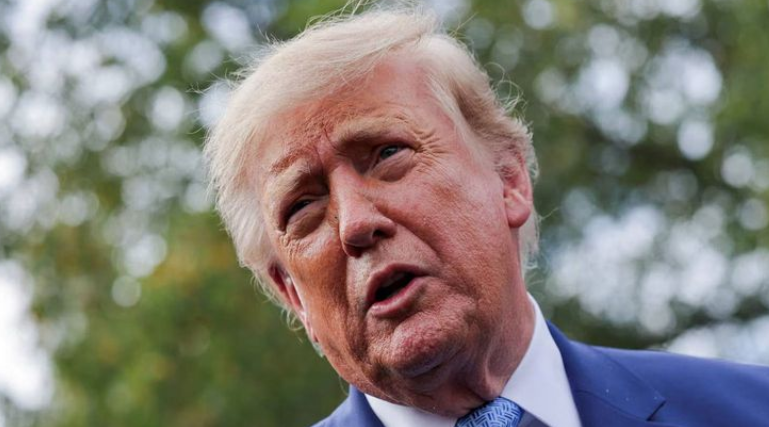
6 October 2026 (Navroze Bureau) US President Donald Trump has said he is in “no rush” to resume trade talks with Canada, signalling that Washington is not treating an early agreement with Ottawa as an immediate priority. Trump made the remarks while speaking to reporters at the White House on October 5.
Asked whether he would resume negotiations with Canada before the US midterm elections, Trump did not provide a timeline. Instead, he said Canada had treated the United States poorly and indicated that he was prepared to wait before restarting formal discussions.
Trump also accused Canada of imposing tariffs that he said had affected the United States. He did not provide specific figures or identify the Canadian tariffs he was referring to during the exchange. He maintained that the dispute would eventually be resolved but stressed that Washington was not under pressure to reach a deal immediately.
The latest comments come amid continuing trade tensions between the two North American neighbours. Negotiations between the United States and Canada have been strained by disagreements over tariffs, market access and the future framework governing bilateral trade.
US Trade Representative Jamieson Greer had already indicated in September that the Trump administration saw little urgency in reaching a new agreement with Canada. Greer said Washington remained comfortable with the existing situation and continued to receive important commodities such as oil, gas and potash from Canada while trade between the two countries continued.
The trade dispute has involved tariffs and retaliatory measures from both sides. Washington has imposed tariffs on a range of Canadian products, while Canada has responded with tariffs of its own. The measures have increased uncertainty for businesses operating across the highly integrated US-Canada supply chain.
The tensions also have implications for the future of the United States-Mexico-Canada Agreement, or USMCA. In July, the Trump administration declined to renew the agreement in its current form following its six-year review, beginning a longer process that could lead to changes in the North American trade framework. The United States said it would continue engaging with both Canada and Mexico to address what it considers shortcomings in the agreement.
Canada has continued to express interest in maintaining negotiations with Washington. Canadian Trade Minister Dominic LeBlanc has said officials from both countries remain in communication even when formal negotiations are not taking place. Ottawa has also indicated that it wants any eventual agreement to protect Canadian sovereignty and national interests.
The latest comments from Trump suggest that the timing of a possible return to formal negotiations remains uncertain. While Trump has previously said that a trade agreement with Canada could eventually be reached, his latest statement makes clear that he does not see an immediate need to restart talks.
The two countries remain closely connected economically, with substantial cross-border trade in energy, automobiles, agricultural products, industrial goods and other commodities. This economic integration means prolonged tariff disputes can affect businesses and consumers on both sides of the border.
Trump’s position also comes as Canada looks to strengthen trade relationships beyond the United States. Canadian officials have discussed diversifying the country’s trade links as tensions with Washington continue, although the US remains a major economic partner.
For now, there is no announced timetable for the resumption of formal US-Canada trade negotiations. Trump’s “no rush” stance indicates that Washington is prepared to maintain its current position while continuing to assess its broader trade policy.
The latest development leaves the future course of US-Canada trade relations uncertain. Any return to negotiations is likely to depend on whether both governments can narrow differences over tariffs, market access and the terms of their broader North American trade relationship.