

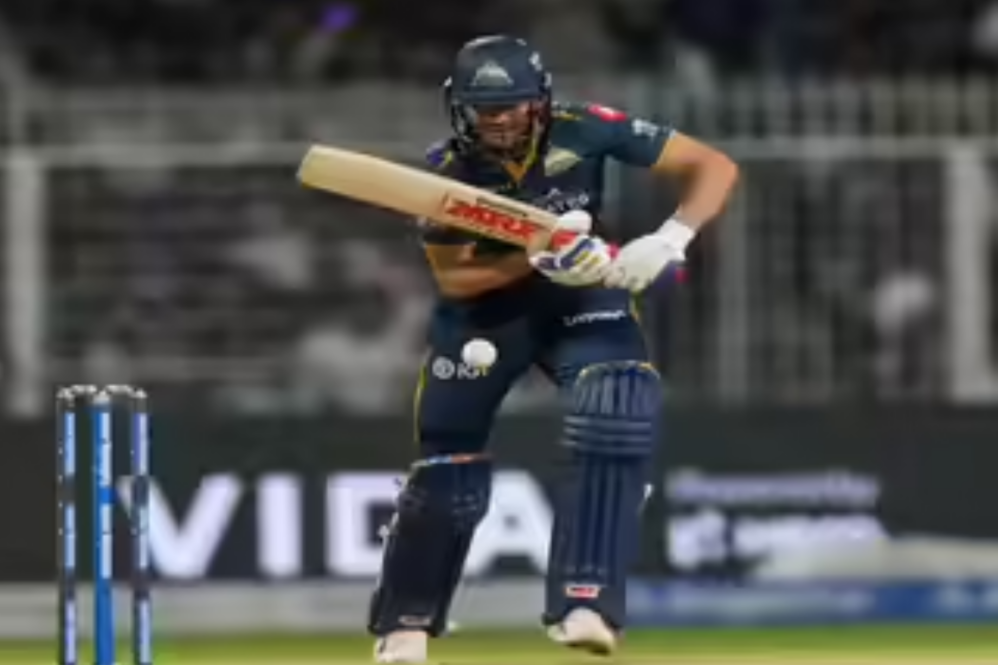
May 25 : 2026 (Navroze Bureau) : Shubman Gill’s remarkable resurgence in T20 cricket has reportedly been driven by months of intense technical correction, relentless practice sessions, and a conscious return to more traditional batting methods — including thousands of deliveries faced using a “middler” practice bat and a renewed focus on scoring through the classical “V” region.
The Indian opener’s transformation has become one of the most discussed technical success stories in recent cricket circles after critics previously questioned whether his elegant batting style could consistently dominate the fast-paced T20 format.
Gill’s recent performances, however, have silenced many doubters as he evolved into one of the format’s most reliable and explosive top-order batters.
The Struggles Behind The Success
Despite already being regarded as one of India’s most gifted young batters, Gill had faced criticism for periods of inconsistency in T20 cricket earlier in his career.
Experts often argued that while his timing and technique were ideal for Test and ODI cricket, his scoring tempo and boundary options sometimes appeared limited in high-pressure T20 situations.
Questions were repeatedly raised regarding:
- Strike rotation
- Power-hitting range
- Boundary conversion
- Intent during powerplays
- Ability against slower balls
According to reports, Gill and his coaching circle recognized the need for technical and mental adjustments without sacrificing his natural batting strengths.
The Role Of The Middler Bat
One of the most important aspects of Gill’s training reportedly involved extensive sessions using a “middler” bat — a specially designed narrow practice bat used to sharpen timing and improve precision.
Batters who train with middler bats are forced to consistently strike the ball from the exact center of the blade because of the significantly reduced hitting surface.
Sources close to his preparation said Gill faced thousands of deliveries during practice sessions using this method to refine:
- Hand-eye coordination
- Bat swing control
- Timing consistency
- Shot balance
- Middle-of-the-bat contact
Coaches believe such training improves muscle memory and helps players maintain control under pressure.
Rediscovering The ‘V’
Another major tactical shift reportedly involved Gill consciously returning to more classical scoring areas through the “V” — the region straight down the ground between mid-off and mid-on.
Modern T20 batting often emphasizes cross-batted power hitting, ramps, scoops, and leg-side dominance.
However, Gill reportedly focused on:
- Straight drives
- On-drives
- Lofted shots over the bowler
- Classical front-foot strokeplay
- High-elbow balance
Analysts say this adjustment allowed him to access safer scoring zones while maintaining control against pace and spin alike.
Balancing Tradition And Modern T20 Demands
Gill’s evolution highlights a growing trend in T20 cricket where technically sound batters are blending classical fundamentals with modern attacking intent.
Instead of radically changing his game, Gill reportedly worked on improving scoring efficiency while preserving the elegance and balance already central to his batting identity.
Experts say his success demonstrates that traditional cricketing technique can still thrive in the shortest format when combined with tactical aggression and adaptability.
Improved Strike Rotation
One area where Gill reportedly made substantial progress involved strike rotation during middle overs.
Earlier criticism often focused on his tendency to occasionally get stuck against spin when boundaries dried up.
Coaches reportedly emphasized:
- Softer hands
- Better gap selection
- Quick singles
- Wrist positioning
- Manipulating field placements
These changes helped Gill maintain momentum even during difficult phases of innings.
Mental Shift Also Played Key Role
Beyond technical changes, sources suggest Gill also underwent an important mental transformation regarding T20 batting philosophy.
Rather than attempting reckless aggression, he reportedly focused on:
- Controlling innings tempo
- Trusting natural timing
- Playing percentage cricket
- Remaining calm under pressure
- Targeting specific bowlers strategically
Analysts say this balance between composure and aggression significantly improved his consistency.
Fitness And Power Development
Gill also reportedly worked extensively on strength and conditioning to improve bat speed and power generation.
Modern T20 cricket increasingly demands explosive physical conditioning from top-order batters.
Training reportedly included:
- Core strengthening
- Bat-speed drills
- Sprint conditioning
- Explosive movement work
- Shoulder and wrist power exercises
The physical improvements helped Gill clear boundaries more consistently without relying solely on brute force.
IPL Impact
Gill’s transformation became particularly visible during his performances in the Indian Premier League, where he emerged as one of the tournament’s standout batters.
His ability to combine elegance with aggressive stroke-making drew praise from former cricketers, coaches, and commentators.
Several experts highlighted how Gill’s straight hitting and timing-based power became especially effective against both pace and spin attacks.
Praise From Cricket Experts
Former players and analysts have praised Gill for evolving without abandoning his technical foundation.
Many believe his journey could become an important example for younger cricketers attempting to adapt traditional batting skills for modern T20 demands.
Cricket experts noted that Gill’s success reinforces the value of:
- Technical discipline
- Repetition training
- Shot selection
- Batting balance
- Adaptability
India’s Future T20 Leader?
Gill’s growing consistency has also strengthened his position as one of India’s long-term batting leaders across formats.
With his improved T20 game now complementing his already strong performances in Tests and ODIs, selectors and fans increasingly view him as a central figure in India’s future cricket plans.
His leadership responsibilities in franchise cricket have further boosted discussions about his maturity and tactical understanding.
Redemption Through Refinement
Rather than reinventing himself completely, Shubman Gill’s T20 redemption appears to have come through refinement, discipline, and trust in batting fundamentals.
Thousands of practice balls with the middler bat and a renewed focus on the traditional “V” helped transform criticism into admiration.
In an era dominated by unorthodox hitting and power-based batting, Gill’s resurgence has shown that classical cricketing technique still holds enormous value — even in modern T20 cricket’s most demanding environment.