

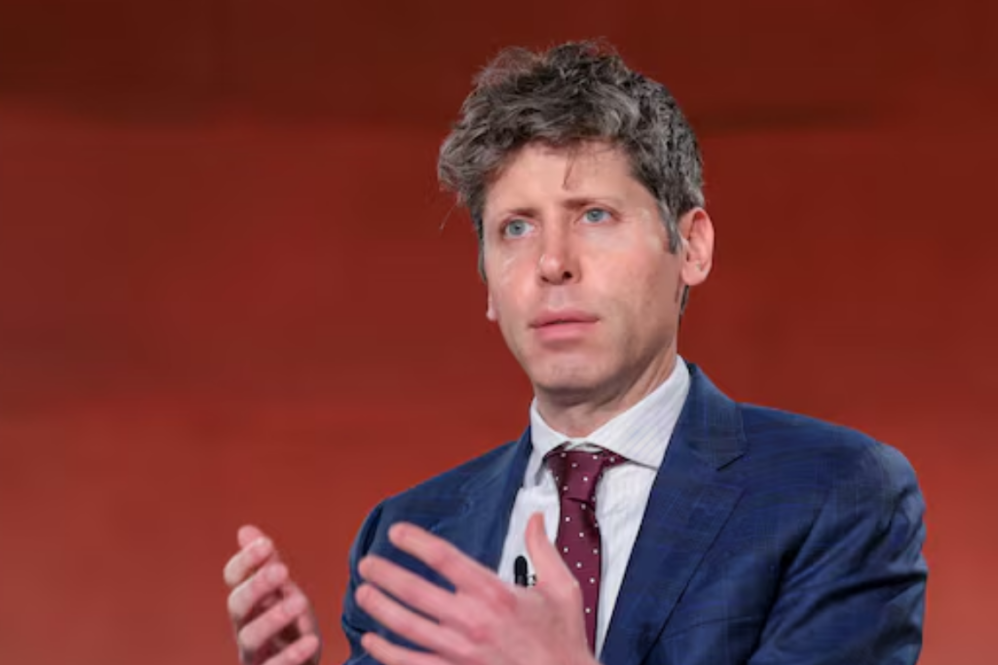
May 26 : 2026 (Navroze Bureau) : OpenAI CEO Sam Altman has said that artificial intelligence is unlikely to trigger a “jobs apocalypse,” arguing instead that AI will transform work patterns and create new opportunities rather than completely eliminating human employment.
Altman’s remarks come amid growing global debate over the long-term impact of AI systems on workers, industries, and the global economy as generative AI tools rapidly expand across businesses and public services.
Speaking about the future of artificial intelligence, Altman acknowledged that AI will significantly change many professions but stressed that technological revolutions throughout history have consistently created new forms of work even while disrupting older jobs.
AI Debate Intensifies Worldwide
The rise of advanced AI systems has sparked widespread concerns regarding:
- Job automation
- Workforce displacement
- Economic inequality
- Productivity shifts
- Ethical regulation
- Human creativity
Industries including technology, customer support, media, finance, education, and software development are already witnessing increased AI integration.
However, Altman argued that fears of total mass unemployment may be exaggerated.
Historical Perspective On Technology
Altman reportedly pointed to earlier technological transformations such as the Industrial Revolution and the internet era, noting that societies adapted over time despite initial fears about job losses.
He suggested AI could automate repetitive or routine tasks while allowing humans to focus more on creative, strategic, and interpersonal work.
Experts supporting this view often argue that technology tends to reshape labor markets rather than permanently destroy them.
New Jobs Likely To Emerge
According to Altman, entirely new industries and job categories may emerge as AI adoption expands globally.
Analysts believe growing demand could arise in areas such as:
- AI safety
- Human-AI collaboration
- Prompt engineering
- Robotics management
- Data governance
- Digital infrastructure
- AI ethics and oversight
Many experts say future employment may increasingly involve working alongside AI systems rather than competing directly against them.
Concerns Still Remain
Despite Altman’s optimism, economists and labor experts continue warning that rapid automation could still disrupt millions of jobs in the short term.
White-collar professions previously considered relatively secure are now also facing potential AI-driven changes.
Tasks involving:
- Writing
- Coding
- Translation
- Research
- Graphic design
- Administrative work
can increasingly be assisted or partially automated using generative AI systems.
Governments Examining Regulation
Governments worldwide are actively examining how to regulate AI while preparing economies for future workforce changes.
Policy discussions increasingly focus on:
- Worker retraining
- Digital education
- AI governance
- Employment transition programs
- Ethical standards
- Data protection
Several countries are also considering how taxation, labor law, and social welfare systems may need to adapt to AI-driven economic shifts.
OpenAI At Center Of AI Boom
OpenAI remains one of the most influential companies driving the global AI boom through products such as ChatGPT and advanced language models.
The company has become central to discussions about both the promise and risks of artificial intelligence.
Critics and supporters alike continue debating how quickly AI capabilities may evolve and how deeply they could reshape industries.
Productivity Gains Expected
Altman emphasized that AI could significantly increase productivity across sectors by helping workers complete tasks faster and more efficiently.
Supporters of AI adoption argue this could:
- Reduce repetitive work
- Improve innovation
- Expand access to services
- Accelerate scientific research
- Increase economic output
Some economists believe AI could eventually contribute trillions of dollars to the global economy.
Human Skills Still Important
Altman also stressed that human judgment, creativity, emotional intelligence, and social interaction would remain valuable even in highly automated environments.
Experts say professions requiring empathy, leadership, negotiation, caregiving, and complex decision-making may continue relying heavily on human involvement.
Calls For Responsible Development
Even while downplaying fears of a “jobs apocalypse,” Altman acknowledged the importance of developing AI responsibly.
OpenAI and other technology companies continue facing scrutiny regarding:
- AI safety
- Bias
- Transparency
- Misinformation risks
- Copyright concerns
- Long-term societal impact
Industry leaders increasingly support international cooperation on AI governance frameworks.
Mixed Reactions From Experts
Reactions to Altman’s comments have been mixed.
Some technology experts agree that AI will mostly augment human work rather than replace it entirely.
Others warn that the speed and scale of modern AI advancement may create labor disruptions more rapidly than previous technological revolutions.
Economists say the ultimate outcome will depend heavily on:
- Government policy
- Corporate decisions
- Education systems
- Worker adaptability
- Economic inequality management
Future Of Work Continues To Evolve
As AI capabilities continue advancing, debates surrounding automation and employment are expected to intensify further.
While uncertainty remains regarding the full long-term impact of artificial intelligence, Altman’s comments reflect growing belief among some technology leaders that AI’s future may involve transformation rather than total destruction of human employment.
The discussion has now become one of the defining economic and societal questions of the modern digital era.