

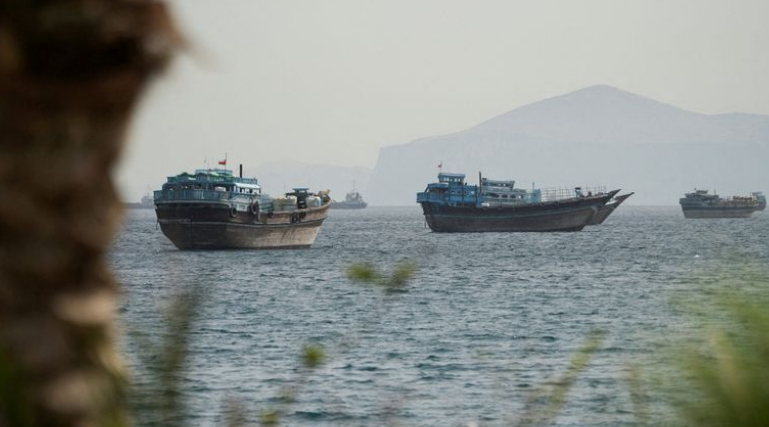
31 Aug 2026 (Navroze Bureau) : The United States military has carried out strikes against Iranian rocket launchers near the Strait of Hormuz, marking the first confirmed US military action against Iranian forces in about a month and raising fears of renewed escalation in the Middle East.
Two Iranian Launch Sites Targeted
US Central Command said Iranian Revolutionary Guard forces were preparing to launch rockets capable of deploying sea mines into the Strait of Hormuz when American forces carried out the strikes.
The targeted launchers were positioned on Larak Island, a strategically important location in the strait. US officials described the operation as a limited and precise action intended to remove an imminent threat to shipping.
First US Strike Since Late July
The operation ends a month-long lull in direct US attacks on Iranian targets.
The last confirmed US strike against Iran was reported on July 29, when American forces targeted dozens of Revolutionary Guard sites, including coastal surveillance and defence facilities. President Donald Trump had subsequently said he would hold off on further strikes following appeals from Gulf allies.
Iran Vows Retaliation
Iran condemned the American strikes and said several of its fighters and civilians were killed or injured.
Iranian state television later reported that the country had launched ballistic missiles toward US military sites in Jordan in retaliation. Jordan’s armed forces said they intercepted eight missiles that entered the country’s airspace.
Strait of Hormuz Back in Focus
The latest confrontation has placed the Strait of Hormuz at the centre of the conflict once again.
The strategic waterway normally carries about 20% of the world’s oil, making any disruption a major concern for global energy markets. Commercial traffic has remained well below pre-war levels as vessels face security risks.
Oil Prices Rise After Strikes
Crude oil prices moved higher following the renewed military action.
US crude rose 1.8% to $84.94 a barrel, while Brent crude gained 1.9% to $89.79, reflecting concerns that renewed fighting could further disrupt energy supplies and shipping through the region.
US Says Action Was Defensive
US Central Command rejected Iran’s characterization of the attack as an act of aggression.
Washington said the strikes were necessary to protect civilian mariners, commercial shipping and the free movement of global trade, arguing that Iran’s preparations to deploy sea mines represented an immediate threat.
Military Action Follows Shift to Economic Pressure
The strikes come just days after the Trump administration indicated that it intended to place greater emphasis on economic pressure and sanctions rather than continued military action to force Tehran toward an end to the conflict.
Concerns over US ammunition stockpiles and the strain of a prolonged conflict have also influenced the administration’s approach.
Risk of Wider Escalation
The exchange raises concerns that the conflict could once again move toward sustained military confrontation.
Iran retains missile and drone capabilities that could threaten vessels using the strait, while the United States has maintained a significant military presence in the region. Any prolonged disruption could have consequences for global oil markets and international shipping.
Global Shipping Under Pressure
US officials said American forces had redirected 83 commercial vessels and disabled three others as part of the blockade of Iranian ports.
Meanwhile, a British maritime monitoring agency reported that an unidentified projectile struck a tanker north of Khasab, Oman, although no casualties or environmental damage were immediately reported.
A Dangerous New Phase
The strikes represent a significant escalation after weeks in which Washington had sought to combine military pressure with economic measures.
With Iran promising retaliation and the Strait of Hormuz remaining a critical energy chokepoint, the latest developments could have implications far beyond the immediate US-Iran confrontation.